


With great power comes great responsibility. These words may first have been spoken about everyone’s favourite arachnid-inspired superhero, but they could just as easily apply to women using Bumble – the dating app that, famously, only permitted female users to send the first message after matching with a man online.
The idea of putting the power back in the hands of women, giving us control over who we wanted to initiate conversation with, was Bumble’s USP when it was launched in 2014 amid a sea of similar offerings. This central premise was held up as proof that the app was different; more than that, it was the definitive feminist choice that would save women from receiving unsolicited sexual messages.
But as of 11 August, Bumble has axed the one feature that distinguished it from its peers, and is now enabling either men or women to contact a match first. Unlike Spider-Man, it turns out women did not relish the weight of responsibility that came with all that supposed dating “power”. And I think I know why.
Like most millennial women who didn’t wind up marrying their high school sweetheart or university boyfriend, I have been on and off the apps at various points over the years, and am old enough to remember when online dating made the transition from embarrassing, lonely hearts-style shameful secret to genuinely cool, fun platforms on which to connect with like-minded singles.
 open image in gallery
Tinder, Plenty of Fish, Happn, Hinge: I dabbled in them all at one point or another, and plenty more niche ones besides (Bristlr, for women who liked men with facial hair; Salt, for trendy Christians).
When Bumble came along, it sounded refreshingly modern and forward-thinking. Why wait around for a guy to drop you a line when you could make the first move? This was the 21st century! Of course women should be in the driving seat of their own dating destiny. Especially when it means no unwanted d*** pics.
And yet my experience never quite matched up to the sexy, empowered, Samantha Jones from Sex and the City vision in my head. Rather than being the virtual equivalent of coolly sending over a Scotch on the rocks to a handsome stranger at the bar, it felt more like sending over a Scotch on the rocks to a tumbleweed flying across an endless abyss.
I would send some kind of opening gambit to every single match – a tiresome bit of daily admin – always including as interesting a greeting and question as I could muster given the paltry level of detail included in most men’s profiles. This effort was, approximately 99 per cent of the time, rewarded with nada. Zip. Bupkis.
 open image in gallery
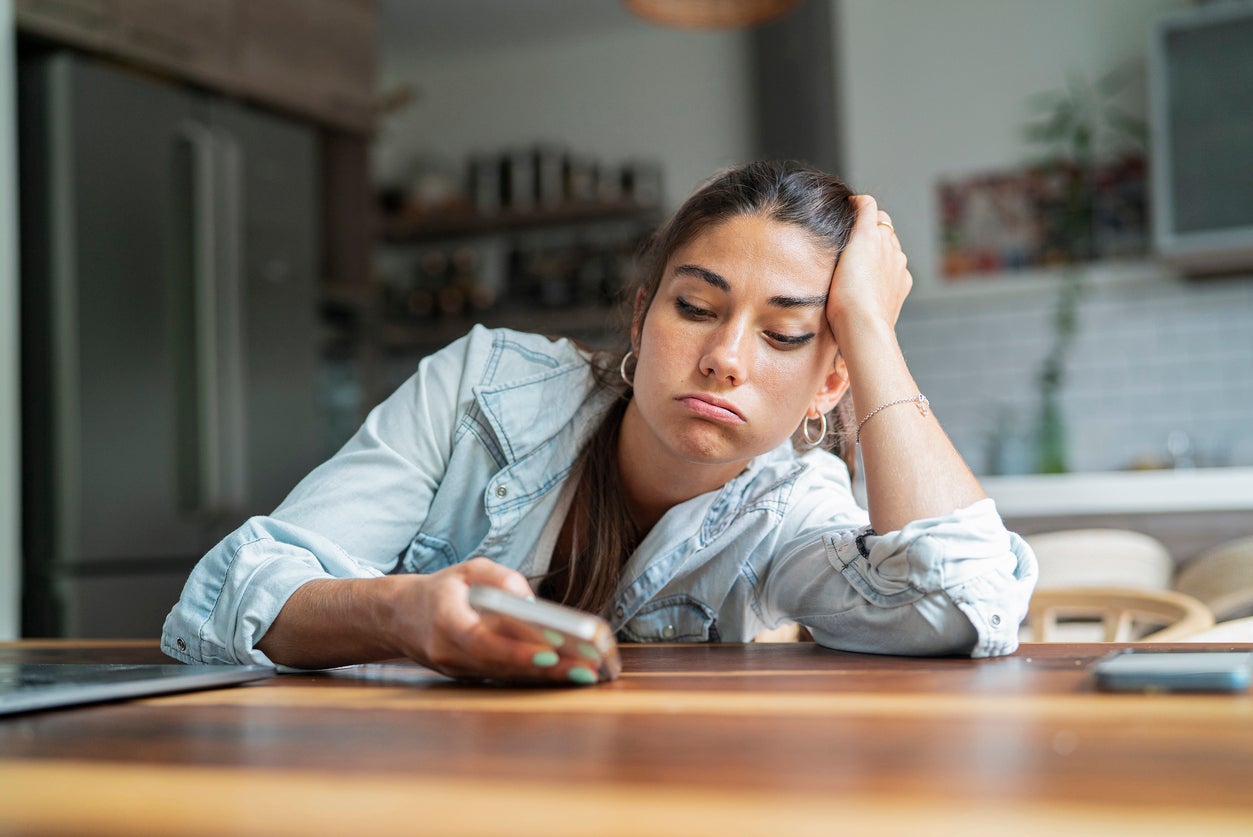
It’s not just me who’s fallen foul of the lack of reply guy. “I’m new on the Bumble app, and so far it has been crickets,” reported one disgruntled Reddit user a few months ago. “I get matches but when I speak with them nobody responds. Like, don’t swipe on me if you don’t want to talk. Any advice on how to get men to speak lol?”
Another woman shared that, having used Bumble on and off for five years, “I haven’t had anything come of it except a handful of first dates… Eighty per cent of guys don’t care enough to write a bio or answer any prompts. They barely have any pictures that are not selfies. I still give people the benefit of the doubt and swipe right. And I am just left with a bunch of matches who don’t respond to my first message.”
One woman, Alia*, tells me that she kept returning to Bumble in her twenties after hearing about success stories of other women meeting their partners, but it simply didn’t work. “I felt like my messages to men were just going out into a void. I’d very rarely hear back from men who had matched with me, and it was all so much work.”
Rarely getting replied to affected my self-esteem to the point where I eventually deleted Bumble for good and vowed not to use it again
Alia*
This lack of response, in fact, gave women a bitter taste of what men have long encountered on the apps, according to dating and relationship coach Abi Blears. “What happened with women on Bumble is what men experience across the board if they’re putting out messages to people that they’re attracted to, and they’re not getting messages back,” she says. “Basically, it gave women a bit more of a male experience than they’re used to.”
Perhaps it evened the scales a bit, but many women found the female-first messaging element detrimental to dating for several reasons.
“Other apps like Tinder and Hinge allowed men to make the first move, and it ended up feeling quite balanced,” says Alia. “On Bumble, it was all down to me and it felt like yet more emotional labour for women to do.”
And, more problematically, the energy required – along with the lack of response – brought other insecurities to the fore. “Rarely getting replied to started to feel really demoralising and affected my self-esteem to the point where I eventually deleted Bumble for good and vowed not to use it again,” explains Alia. “There’s only so much rejection you can take, and for me, as a woman of colour, it felt personal. I know people of colour get less likes on dating apps, and so while my white female friends would occasionally get messages back, I hardly ever would.”
 open image in gallery
Studies have shown the prevalence of sexual racism in online dating; Apryl Williams, a Black sociologist, wrote a book about the issue in 2024 after finding that the app algorithms’ suggestions often reflected stereotypes and biases.
Though the theory of Bumble’s original model was positive, in practice it simply didn’t always work, says Blears. Partly this is down to women being “more cautious.” She explains: “Women are quite holistic in how they assess attraction, so, if a man is only moderately appealing from his photographs and she’s not able to decipher much else, she’s less likely to initiate conversation.” Conversely, men are more likely to take a chance on a profile.
The biggest issue seems to be that, for all that we think we’ve come a long way in terms of challenging gender stereotypes, some stubbornly persist regarding heterosexual relationships. “Women don’t make the first move very often; even when they’re explicitly told they can do it, it’s so entrenched in our society and culture that they’d rather not,” says Blears.
Though her male clients are very open to being approached, “the reality is that, for a lot of women, they would still prefer it if a man made that initial contact”.
This is backed up by Bumble’s own data – hence the app’s sudden pivot to allowing messaging from either party – which found that nearly two-thirds of women globally (66 per cent) surveyed said they prefer men to send the first message.
The notion that a man should instigate any kind of romantic relationship is hard to shake. It gained real traction with the Nineties dating bestseller The Rules, which taught a generation of single women (including me) that you had to let a man pursue and “win” you in order to secure a successful partnership; that you had to be “hard to get, easy to be with”.
This easy, breezy, desirable version of womanhood guaranteed to drive men crazy was given a recent reinvigoration in popular culture through the character of Carolyn Bessette-Kennedy in the dramatised Love Story series on Disney+, with many young women holding her up as a dating role model on social media.
The reality is that, for a lot of women, they would still prefer it if a man made that initial contact
Abi Blears, dating coach
Well before that, the trope had been perpetuated through various mediums in the intervening years, from He’s Just Not That Into You (an appealingly succinct solution to women’s various dating neuroses) to the “if he wanted to, he would” dating aphorism, which stipulates that no or low effort behaviour means a man isn’t interested. Many of these theories, rather than going out of fashion, have gained new followings via social media.
Amid all of this cultural brainwashing, it’s easy to see why sending the initial “hello, how’s your week?” text might feel a daunting and unappealing task for women.
The sad part is these dating theories aren’t even true, says Blears. “I actually encourage my female clients to make first moves and they have success in doing so.”
Ultimately, although women stepping up to the plate might be better for everyone, forcing us to do it just didn’t quite hit the spot. More than six in 10 (66 per cent) of Gen Z and Millennials surveyed by Bumble agreed that they feel more confident dating when they have choice over how and when conversations start; as Blears identifies, Bumble took one dating script and replaced it with another, potentially taking choice away from both sides.
Allowing either side to initiate lets people date in a way that suits them as individuals, and doubles the chance of somebody, anybody, making a move.
In the end, whether you use an app or are looking to make romantic connections IRL, we could all do with being a bit braver. As Blears puts it: “I think that we fundamentally need to just encourage people to generally make more moves.”
*Name has been changed