


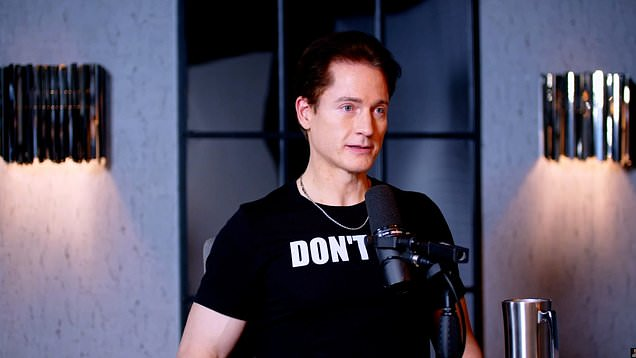
Millionaire biohacker Brian Johnson claims to have created a “clone” of himself as a newborn baby in order to test novel therapies and grow organs for transplantation.
The 48-year-old tech entrepreneur, who has become well known attempting to defy death through extreme health protocols, said his latest stunt could open up a new path to reverse aging.
“I just cloned myself… as a newborn,” he wrote in a post to X.
The cloning process refers to something known as induced pluripotent stem cell (iPSC) technology, which involves isolating cells from a blood sample and reprogramming them into cells that behave similarly to embryonic stem cells.
It is a well-established research field that was pioneered in the 2000s by Japanese scientist Shinya Yamanaka, who went on to win the Novel Prize in Physiology or Medicine in 2012.
“This baby-bryan lives in a petri dish for now,” Mr Johnson said. “This may be scary to some people… a dystopian future. But, for others, they will see it as the inevitable future of health.”
 open image in gallery
The biohacker revealed last month that he has been diagnosed with an incurable autoimmune disease, which causes his immune system to mistakenly attack healthy cells in his stomach lining.
He announced his intention to “try and solve” the illness, claiming that “AI, multiomics, and custom-built DNA” should mean that no condition is presumed incurable.
“With this clone, I can become my own blood boy, test therapies on the clone, grow organs for transplantation, develop new treatments, and inject young cells,” he said in his latest post.
“This technology gives us a path to reverse aging. I mentioned getting diagnosed with an incurable disease is one of the best things that has happened to me in a long time. It’s opened up a frontier of new paths to repair and strengthen the body. This is the first example.”
His plan has drawn criticism from some of his followers, with one writing: “Bryan Johnson is what happens when you give too much money to a man who is morbidly afraid of death.”
Mr Johnson has previously defended his unconventional approach to health and biohacking by claiming that his experiments are aimed at advancing medical discoveries.