


Benue blockade: Ominous start to 2027 campaigns
September 15, 2026 12:06 am

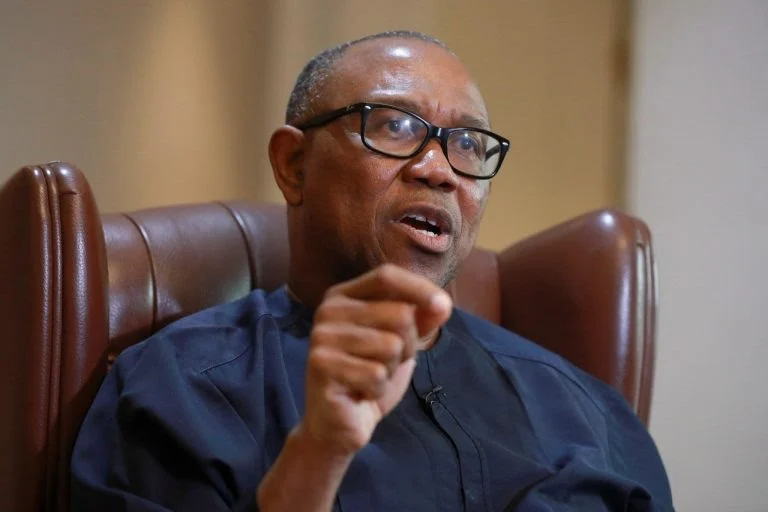
File: NDC presidential candidate, Peter Obi
CONCERNS are mounting that the 2027 elections may prove as combustible as, if not worse than, some of the elections that preceded them. The rising level of political intolerance ahead of the polls is therefore cause for serious trepidation.
On September 8, suspected thugs blocked the convoy of the presidential candidate of the Nigeria Democratic Congress, Peter Obi, on Gboko Road, near the Air Force Base, in Makurdi, the Benue State capital.
In a viral video of the incident, Obi’s convoy was seen turning back as the thugs, wielding sticks, stones and other dangerous objects, pursued the vehicles.
Obi, who described the incident as unacceptable, said he was in the state to show solidarity with communities affected by the Yelwata killings in 2025.
The denial by the Benue State Government that it sponsored the thugs is hollow. Denials are not enough.
The government must demonstrate its commitment to the rule of law by ensuring that the 46 suspects arrested by the police over the incident are thoroughly investigated and prosecuted where evidence establishes their culpability. Others linked to the blockade must also be identified and prosecuted if found culpable.
This is particularly important because the incident did not occur in isolation.
The state governor, Hyacinth Alia, had stopped Obi from making a scheduled visit to an internally displaced persons camp in the state in April 2025.
Alia, who warned Obi against making what he described as an unscheduled visit to the state, said he could not guarantee the safety of anyone visiting Benue without his knowledge or clearance.
That position is an overreach. There is nowhere in Nigeria’s Constitution that requires a citizen to seek clearance or authorisation before visiting another state. Governors are not proprietors of the states they administer, and political opponents do not become unwanted visitors merely because their presence is inconvenient.
It is disturbing that, rather than concentrating on finding solutions to the renewed attacks on several communities in Benue, some political actors appear more interested in fanning the embers of political intolerance.
Across the country, similar cases of intolerance have continued to play out. Politicians, particularly those in the ruling All Progressives Congress and their accomplices, have engaged in violent rhetoric that further endangers the country’s already fragile democracy.
This is an ominous replay of what happened in the run-up to the 2023 general elections, when opposition parties and their supporters faced threats and intimidation in some states.
Musiliu Akinsanya, popularly known as MC Oluomo, threatened opposition party supporters in Lagos not to come out to vote.
Thugs suspected to be loyal to the ruling party attacked the campaign train of the then governorship candidate of the Labour Party, Gbadebo Rhodes-Vivour.
Voter suppression and intimidation were also reported in parts of Lagos on Election Day.
Now, with the 2027 elections approaching, hired thugs have disrupted opposition political party events in parts of the country, including Lagos, Ekiti, Kebbi, Rivers, Edo and Oyo states.
In March 2026, Yoruba Nation activist Sunday Adeyemo, popularly known as Sunday Igboho, warned that no opposition figure, particularly former Vice-President Atiku Abubakar and Obi, should campaign in the South-West ahead of the 2027 presidential election.
A viral video that surfaced in October 2025 also showed the Lagos State Chairman of the National Union of Road Transport Workers, Mustapha Olanrewaju, popularly known as Sego, warning that anyone who made the mistake of not voting for the APC in 2027 would face consequences.
These developments should not be dismissed as the usual political theatrics. They are warning signs.
Nigerian politicians and their supporters must understand that allowing peaceful campaigns and a credible electoral process to thrive is in their own interest.
If their actions and utterances eventually help to destroy this democracy, they will be among its worst losers.
The collapse of the First and Second Republics, owing largely to political crises, intolerance, violence and corruption, should provide a sobering lesson. Nigeria has enjoyed uninterrupted civilian rule since 1999, but politicians and their thugs are unwittingly placing that remarkable democratic run under unnecessary strain.
This must not continue.
President Bola Tinubu should give clear directives to the security agencies to deal decisively with any candidate, political party, or supporter found fomenting trouble before, during or after the 2027 elections.
Those parading themselves as thugs must be arrested and prosecuted in accordance with the law. Political connections must not become shields against accountability.
A democracy without a vibrant opposition is a dead democracy. Nigeria must not descend to the level of some African countries where governments make a caricature of democracy by systematically muzzling, intimidating or disabling the opposition.
Politicians must realise that the popularity of candidates is decided by voters at the ballot box, not through violence, intimidation or political thuggery.
The Benue blockade should therefore be treated not merely as another ugly political incident, but as a warning shot. If Nigeria waits until violence becomes the language of the 2027 campaign before acting, it may already be too late.
All rights reserved. This material, and other digital content on this website, may not be reproduced, published, broadcast, rewritten or redistributed in whole or in part without prior express written permission from PUNCH.
Contact: [email protected]