


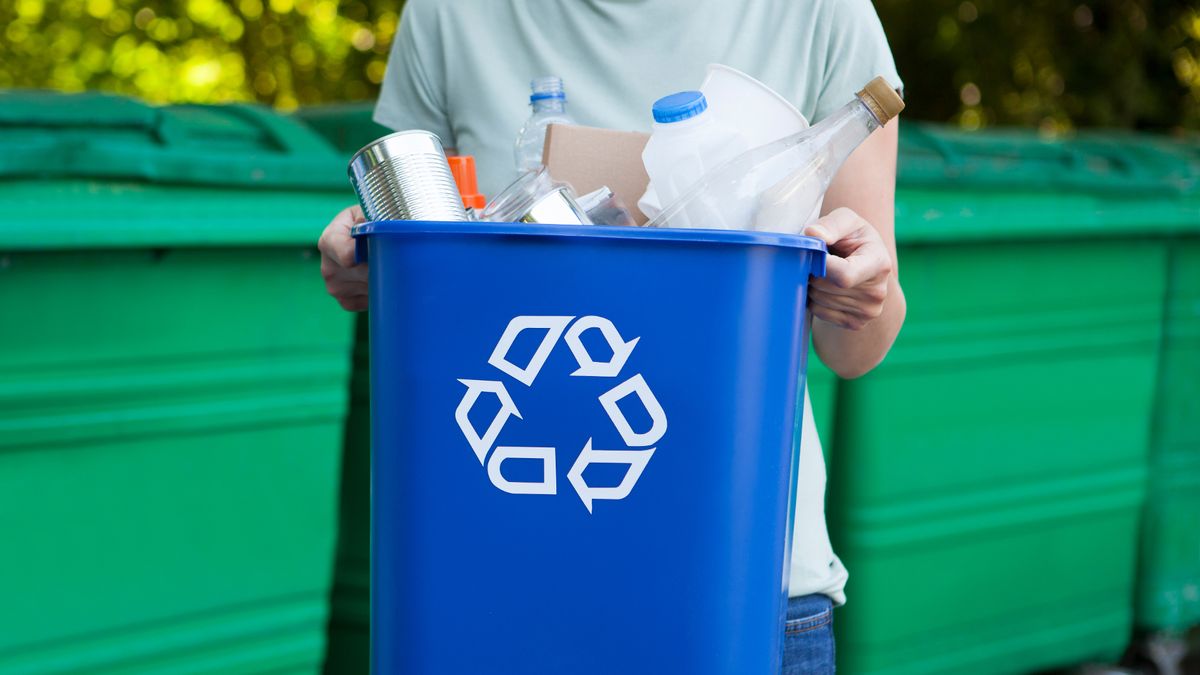
There has been a major change in how recycling is done in England this year. New rules have laid out certain items that cannot be placed in recycling bins.
If you ignore the latest guidelines, your bin might not be collected. The UK’s Simpler Recycling reforms, under the Environment Act 2021, have enforced mandatory and consistent recycling for businesses and households in England.
It includes having separate collections for food waste, paper and card, glass, metal and plastic. The aim is to streamline recycling, reduce landfill waste, and increase sustainability.
When it comes to bathroom waste, there can be confusion about what can and cannot be recycled. The new rules came into force on March 31.
Local authorities need to provide clear information about what can be recycled. Some local councils are exempt from the new regulations until at least 2040.
As a result, it is important to check with your local authority to see whether these new rules apply.
 View 3 Images
Certain bathroom items can’t be recycled (Image: scu)
Under the new rules, local authorities do not need to collect absorbent hygiene products (AHPs). These items include nappies, period products and incontinence products.
Never flush these items down the toilet. Different councils have different rules, but you should dispose of AHPs in general waste bins or through specialised hygiene collection services.
These are commonly used in bathrooms, but cannot be recycled. Instead, you should put cotton wool and makeup pads in the general waste bin. The items cannot be flushed down the toilet as they expand in water and can cause plumbing blockages.
 View 3 Images
Only put toilet paper down the toilet(Image: Getty Images)
You might think tissues and toilet paper can be recycled, as they are made of paper. But they contain very short fibres that are not of high enough quality to be recycled.
Instead, tissues should be placed in the general waste bin, and toilet paper can be flushed.
Wet wipes include baby wipes, cosmetic wipes, cleaning wipes and moist toilet tissues. These are not recyclable or flushable. Instead, they need to be placed in the general waste bin.
Most bathrooms have mirrors, but if it is time to say goodbye to yours, they can’t be placed in the recycling bin. Mirrors often have a metallic coating, which is why they cannot be placed into a glass recycling bin.
Article continues below
The coating will contaminate pure glass products that can be recycled. Instead, take the mirror to your local recycling centre, where it will be processed and disposed of responsibly.
Alternatively, if the mirror is in good condition, you can donate it to a charity shop or ask a friend or family member if they could use it instead.