


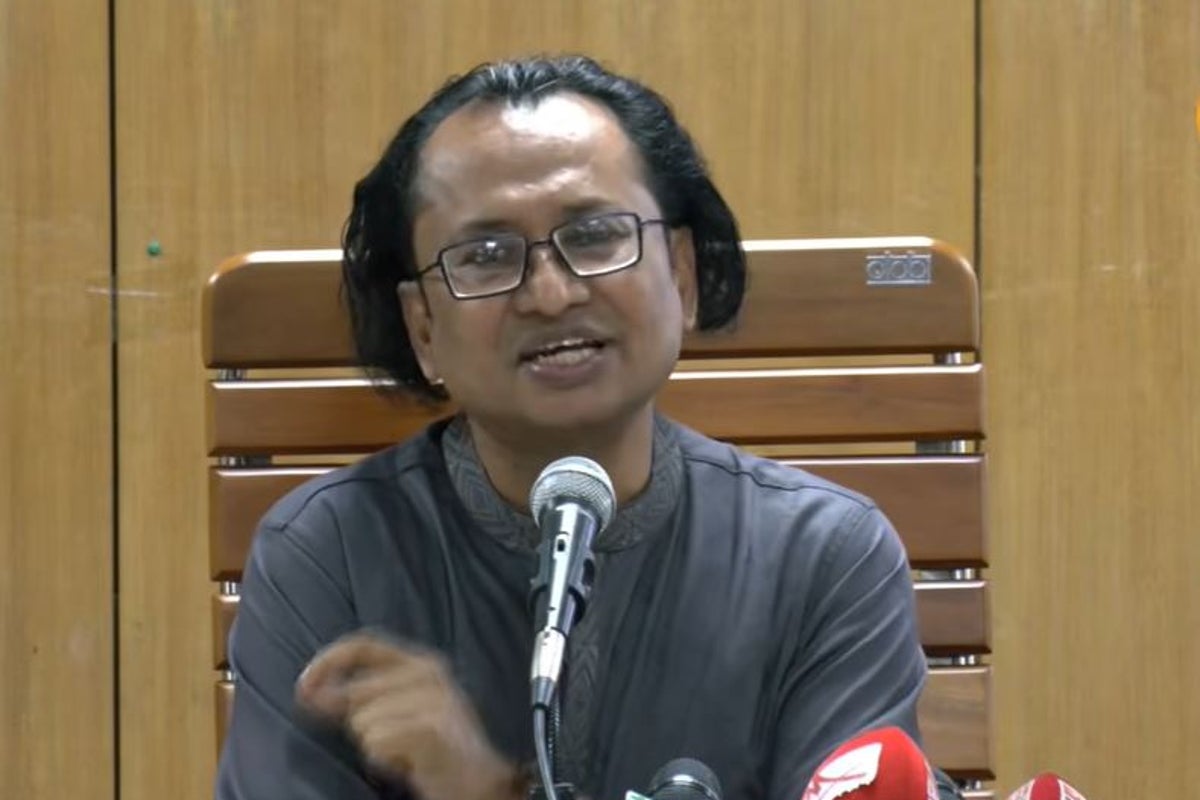
Bangladesh has lodged a diplomatic protest after prime minister Tarique Rahman‘s advisor said he was “humiliated” upon arriving at an Indian airport.
Bangladesh’s government strategy adviser Zahed Ur Rahman was stopped upon arrival in New Delhi and interrogated for around two-and-a-half hours by Indian authorities.
Mr Rahman had arrived in the Indian capital to attend a meeting of the Indian Ocean Rim Association scheduled to be held this week. He was eventually cleared to enter India after hours-long interrogation, but Mr Rahman said he chose to return to Dhaka to protest.
Bangladesh’s foreign minister Khalilur Rahman described the incident as “unexpected and unfortunate”. Dhaka summoned Indian deputy high commissioner Pawan Badhe late on Monday to express “deep disappointment”.
The incident took place at a time when fragile ties between India and Bangladesh were gradually mending following the February election, which resulted in the victory of the nationalist party led by Tarique Rahman.
The advisor was reportedly on the immigration watchlist for his criticism of prime minister Narendra Modi and the Indian government. It is learned that Mr Rahman was travelling with his regular Bangladeshi passport with a South Asian Association for Regional Cooperation [SAARC] sticker instead of the official diplomatic passport.
As officials grilled him for hours, Bangladesh high commissioner Riaz Hamidullah waited at the airport to receive him. Despite being eventually cleared to enter India, Mr Rahman decided to leave for Dhaka via Colombo as there were no direct flights.
“I felt there needed to be an instant protest,” Mr Rahman told reporters on Tuesday.
He said India’s foreign ministry was informed about his participation at the meeting at least two days ahead of his Delhi visit.
“I did not go there as an individual. I went as a representative of the government and the state. What happened to me there required an immediate response from our side, which is why I decided to return,” he said.
Mr Rahman added: “I felt a message needed to go out, both inside and outside the country, that this is not Sheikh Hasina’s government, it is a government elected by the people.”
When asked if he would be open to visiting India again, he said: “Of course I will.” “If I receive a proper invitation, I will definitely go [there]. I want to engage with India rationally and logically.”
Although ties between both nations have imporved this year, relations have remained strained since the 2024 uprising that ousted former prime minister Sheikh Hasina, who has since remained in India despite repeated requests from Bangladesh for her extradition.
The two countries have also been at odds over Bangladesh’s allegations that Indian authorities have attempted to push undocumented migrants across the border without following agreed repatriation procedures.
Dhaka said border guards have foiled several recent “push-in” attempts and raised the issue during last week’s talks between the Border Guard Bangladesh and India’s Border Security Force in New Delhi.
While both sides agreed during the talks to strengthen intelligence-sharing and coordinate border patrols, the migrant issue remains a source of friction between the neighbours.
The Independent has reached out to India’s Foreign Ministry for comment.