



At least 30 people were killed reportedly in police firing in Pakistan-administered Kashmir as parts of the region went to the polls amid heavy security.
According to the Awami Action Committee (JAAC), at least 25 people were killed on Monday and five more on Tuesday as the police fired at the supporters of the banned civil rights group, reported the Guardian.
Imtiaz Aslam, a core member of the JAAC, had earlier claimed in a video that several of its supporters died in clashes with the police.
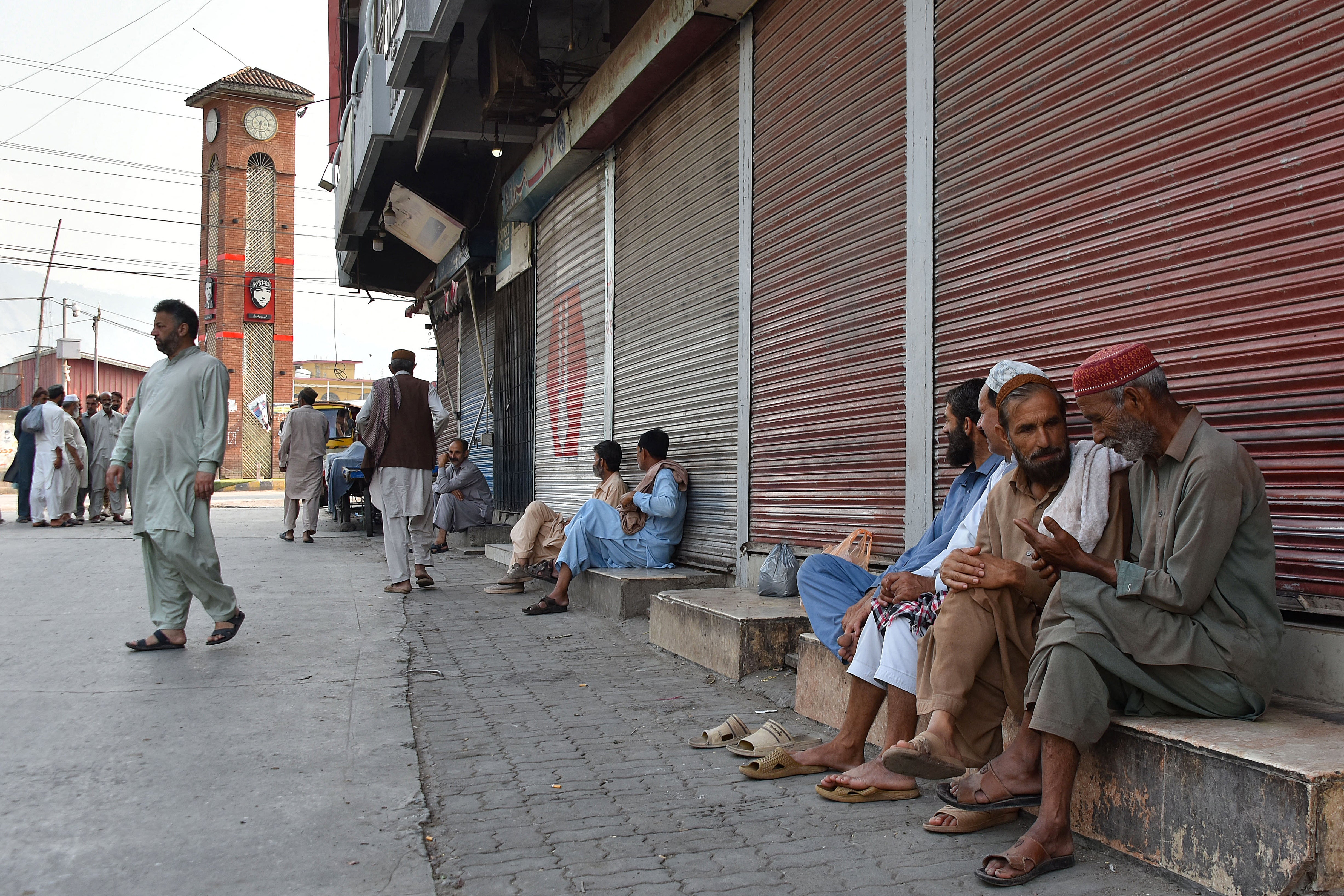 open image in gallery
“Today, the forces from Pakistan opened fire on our innocent youths. As a result, 14 of our young people have been martyred. Among them is Usman Nazir, the younger brother of the movement’s founder, Omar Nazir Kashmiri.
“Other martyrs include a companion from Khaigala, one from Kotli city, one from Tattapani, one from Banja-Baspoor, one from Chhota Gala, and one from Haveli.
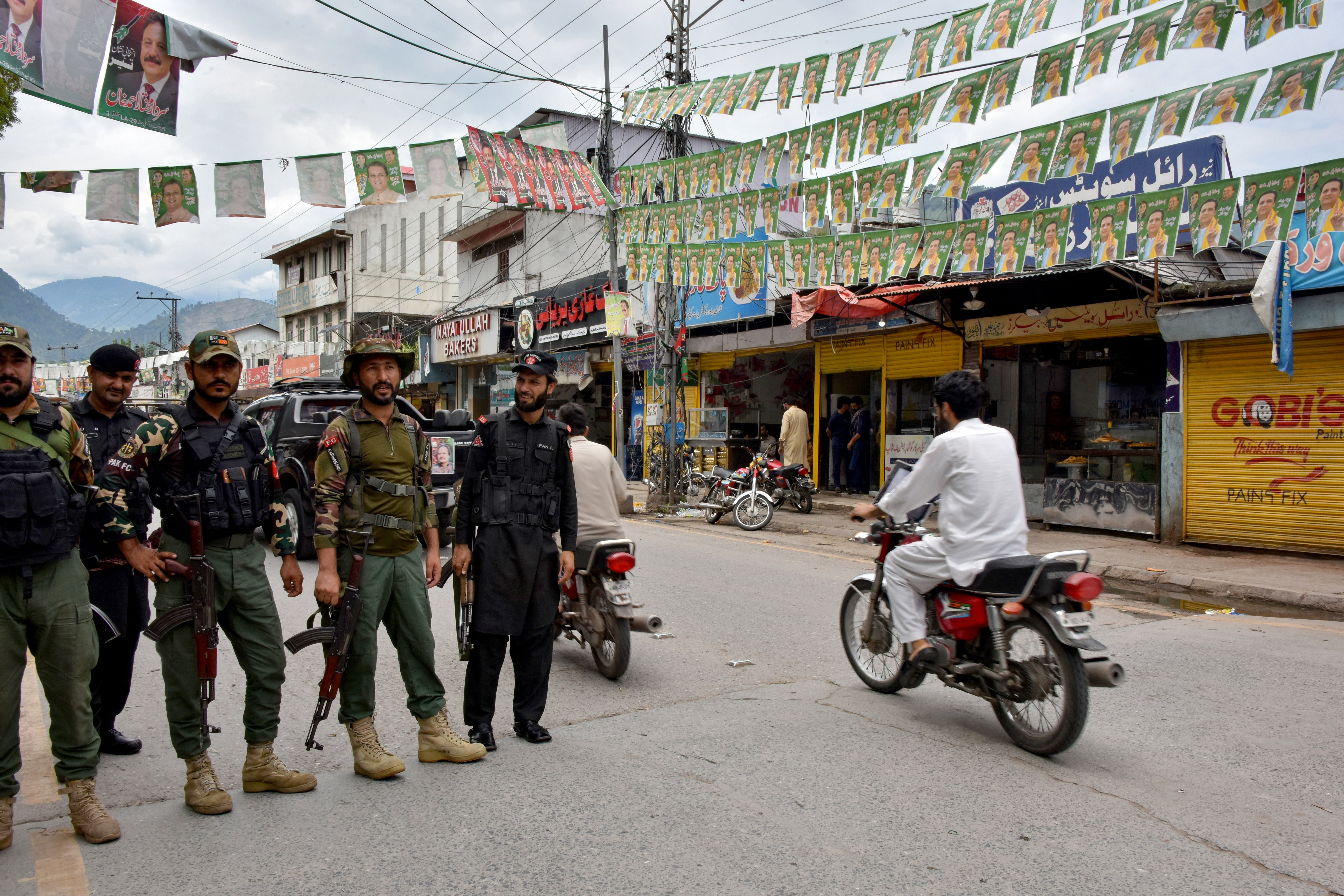 open image in gallery
“In total, 14 have been martyred, including two of our Baloch friends. Almost two dozen others are injured,” he had said earlier.
Spokesperson for JAAC, SA Khan, alleged that Pakistan’s security agencies fired at unarmed protesters in Mirpur on Tuesday and then took away the “dead bodies” to remove the proof.
“We have the photos and video evidence of dead bodies lying on streets in a pool of blood. The security forces abducted the dead bodies to erase the evidence.”
The Independent has reached out to Pakistan’s prime minister’s office for comment.
Amnesty International demanded a “prompt, independent and transparent investigation” in the allegations of the use of force by security forces against protesters. The human rights body also demanded the restoration of internet on the ground.
The organisation’s acting regional director for South Asia, Isabelle Lassee, said: “We urge the Pakistani authorities to restore all communications access and allow media and independent observers into the area.”
“Tensions around this election are being heightened by the unlawful ban on the Jammu and Kashmir Joint Awami Action Committee (JAAC). Amnesty International has repeatedly called on the Pakistani authorities to lift the ban on this protest movement and stop weaponising anti-terror laws to silence and arbitrarily detain JAAC members and supporters. The ban cannot be used as an excuse to mete out deadly violence against protesters.”
While Pakistani authorities have rejected the accusation of killing civilian protesters, information minister, Atta Tarar, accused India of financing the protests in the region.
Rejecting the allegation, Mr Khan said: “It is nothing new: people asking for political or economic rights are termed India-sponsored or anti-state in Pakistan, same goes in India.”
Founded in 2023, the JAAC is a grassroots coalition of businessmen, students, and civil society activists that has demanded subsidised food prices for the locals.
The alliance had been staging sit-ins at multiple locations since last month, demanding the abolition of 12 of the 53 seats in the regional legislative assembly reserved for refugees who migrated to Pakistan from Indian-administered Kashmir decades ago.
The group argues the reserved seats give disproportionate political influence to people who live outside the territory.
The dispute escalated in early June after the regional Supreme Court ruled that the refugee seats are protected and cannot be abolished without a constitutional amendment.
The seats were created to represent people displaced from Indian-administered Kashmir by the decades-old dispute over the Himalayan region.
India and Pakistan each administer part of Kashmir but claim the territory in its entirety. The nuclear-armed neighbours have fought two of their three wars over Kashmir since gaining independence from British rule in 1947.
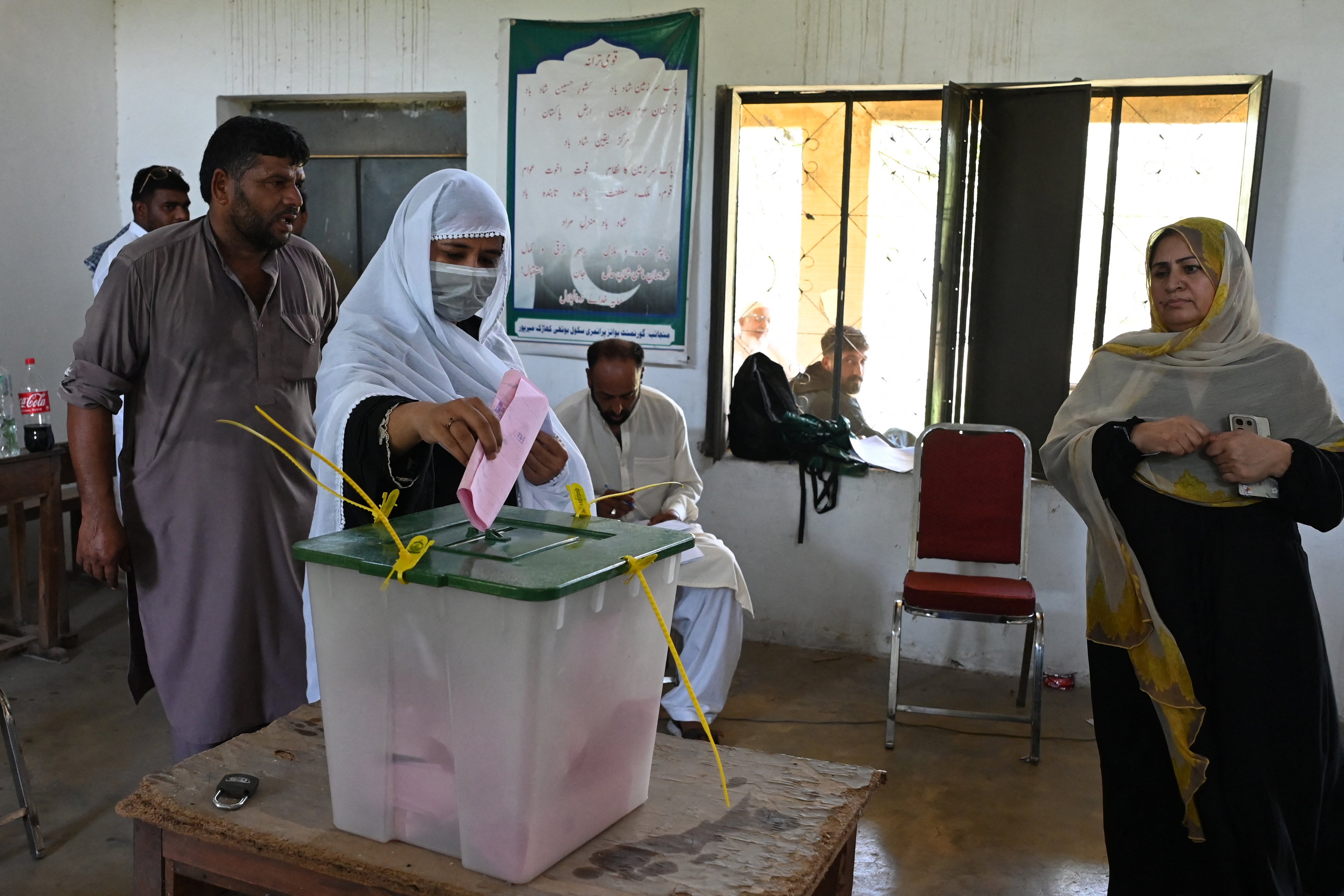 open image in gallery
The clashes in the region are the latest in the spate of violence erupting in the region, as the group clashed with the security forces in the region.
Earlier, on 14 July, at least nine people were killed and several wounded in clashes that erupted after Pakistani authorities reopened roads that followers of the banned JAAC had blocked for nearly a month.
Residents have complained of food and medicine shortages as well as restricted transport due to the group’s blockade, according to a police statement.
Polling, originally scheduled for a single day, will now take place in three phases, with first phase of voting completed on 27 July.
The other two phases are scheduled for 2 August and 10 August. The revision of dates came amid concerns over stretched security personnel, reported Al Jazeera.
About 40 people have been killed in poll violence since early June of which 34 were protesters and remaining six were police and paramilitary forces, reported the BBC. The violence has prompted authorities to suspend mobile and internet services across most of the territory.
“The internet shutdown has created serious difficulties … for political candidates and the electoral process itself. Reaching voters has become much harder,” Malik Alauddin, an independent candidate, told the AFP.
“If the internet were available, a single social media post could reach thousands of voters, but now we have to travel to every small village,” he said.