


At least 15 people were killed by floods and landslides in the Philippines after nine days of incessant rainfall that left one mountain city receiving more than twice the precipitation London gets in a year.
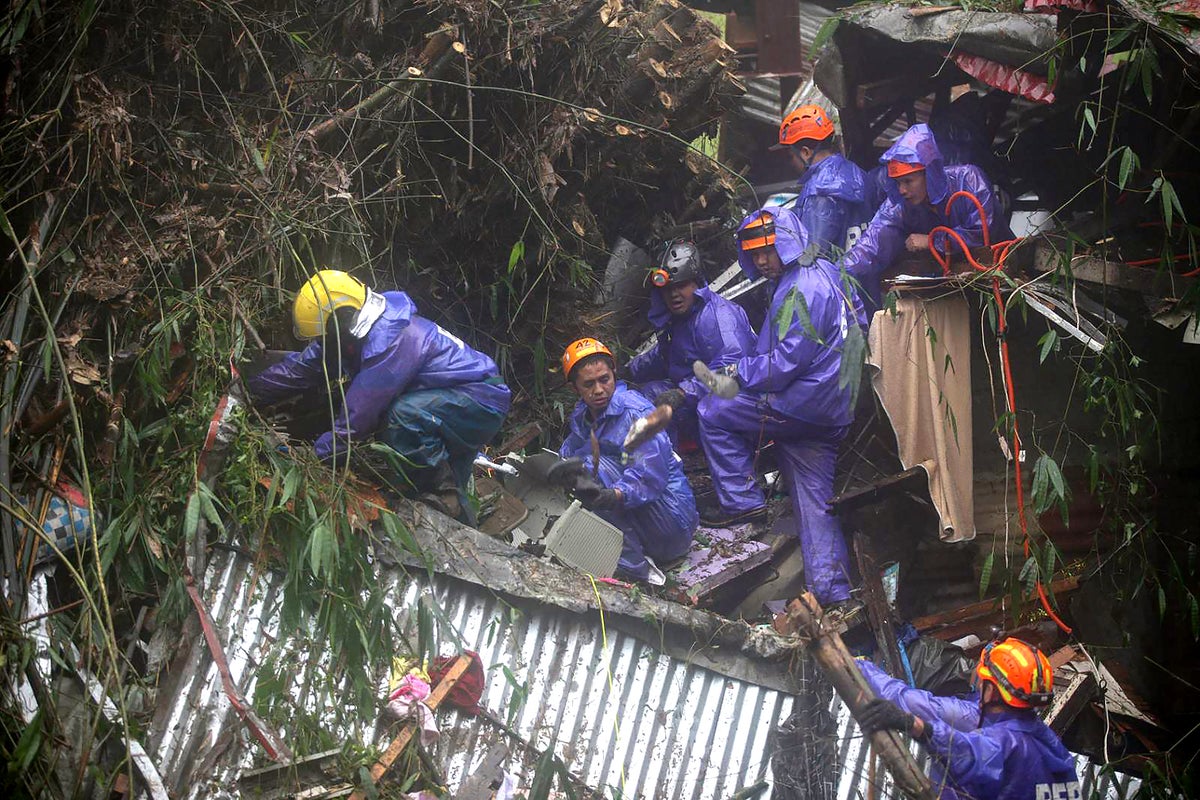
Ten people died in a landslide on Sunday evening, when a hillside battered by more than a week of rain collapsed onto three houses in Baguio, a city north of the capital Manila.
Thirteen people were inside the houses when the landslide struck but rescuers managed to pull out three of them alive.
The dead included two nine-year-old children, a 17-year-old girl, and a 56-year-old man, police said.
Baguio recorded 1,413mm of rain between 1 and 9 August, the highest anywhere in the country, against a normal August total of 963mm, the weather service Pagasa said. London receives about 600mm of rainfall in an average year. Several parts of Metro Manila received about 90 per cent of the total August rainfall in the same period.
The rain came from the southwest monsoon, known locally as the “habagat”, intensified by tropical cyclones Luis and Maymay and by Typhoon Dolphin, which passed to the north on its way to China without making landfall in the Philippines.
The rain and floods have affected more than 1.3 million people across 10 regions, according to the Office of Civil Defence, with 98,000 driven from their homes and tens of thousands forced to take shelter in government evacuation centres.
 open image in gallery
A landslide on the island of Luzon buried a roadside eatery at La Trinidad in Benguet, killing two people working as cooks. Another landslide killed two people clearing mud near their home at Atok, a rockslide killed as many people at Rodriguez in Rizal province, and a falling tree killed a delivery rider in Antipolo.
Incidents of drowning and electrocutions were also reported by local media.
Some 150 rescuers worked in rotation at the Baguio site through Monday while officials monitored a dozen more landslides in the city.
“The area is very challenging, and there are many risks and hazards,” mayor Benjamin Magalong said. “We’re monitoring the mountainside because it’s a hillside and very steep. The soil there’s really very loose.”
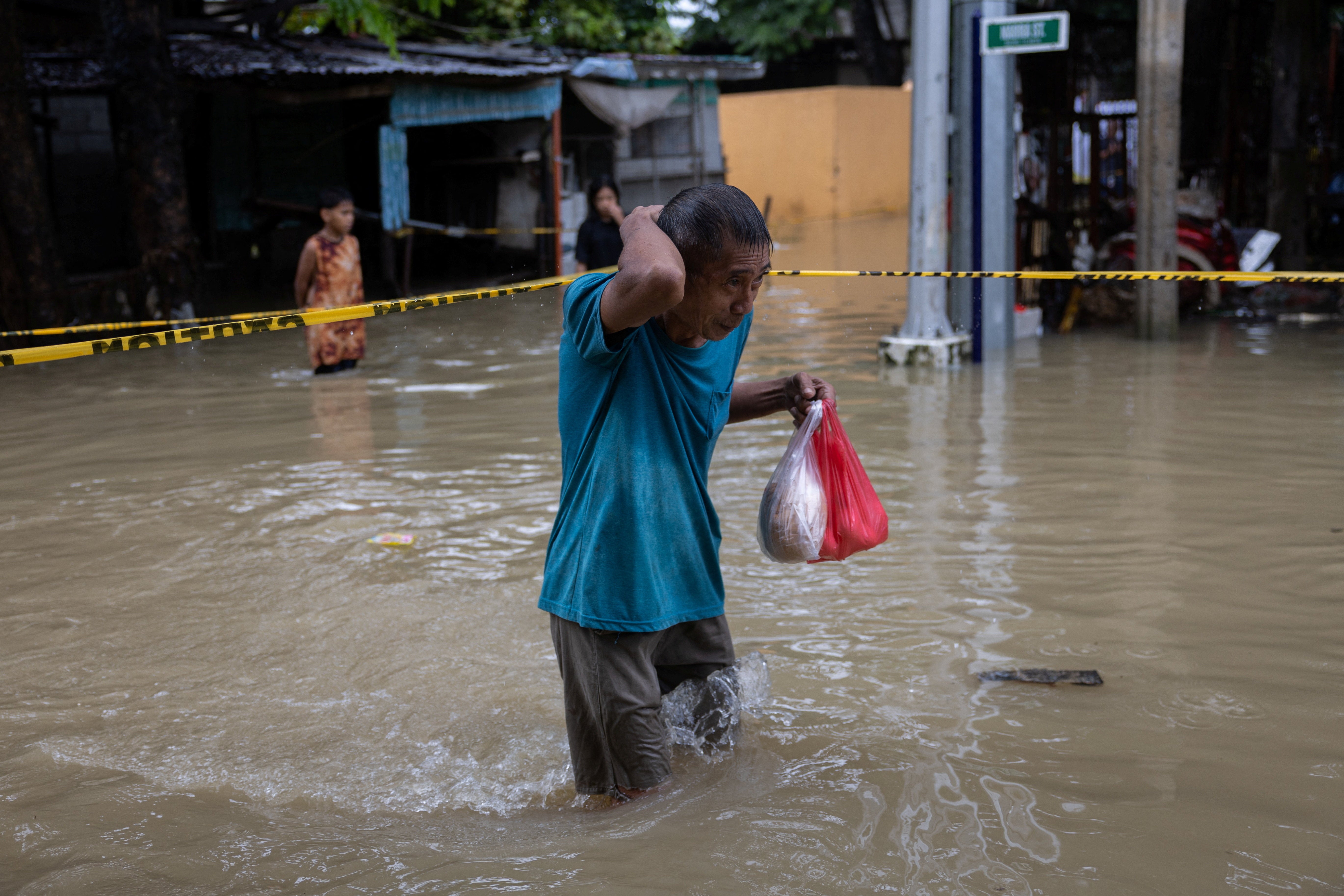
President Ferdinand Marcos Jr ordered government staff to work from home and told his officials to move schools to remote learning in Metro Manila, where floodwaters were waist-deep in some parts, and more than a dozen provinces.
The coastguard suspended operations at 20 ports in central and eastern Philippines, disrupting ferry services.
 open image in gallery
Mr Marcos directed the health department to open fast-track lanes for dengue and leptospirosis, an infection spread through floodwaters contaminated with animal urine.
Dagupan city in Pangasinan declared a state of calamity after 90,015 people were affected, with 23 of its districts still under water and main roads impassable to cars. The declaration obliges insurers to pay disaster claims without delay and to relax the usual documentary requirements.
Public works secretary Vince Dizon said on Monday evening that floodwaters were receding, though the weather service had forecast more heavy rain and warned that saturated slopes raised the risk of further landslides.
The Philippines is hit by about 20 tropical cyclones a year, more than any other country, and the monsoon that runs from June to September brings the bulk of its rain. Scientists say a warming atmosphere holds more moisture, making the heaviest downpours heavier.