


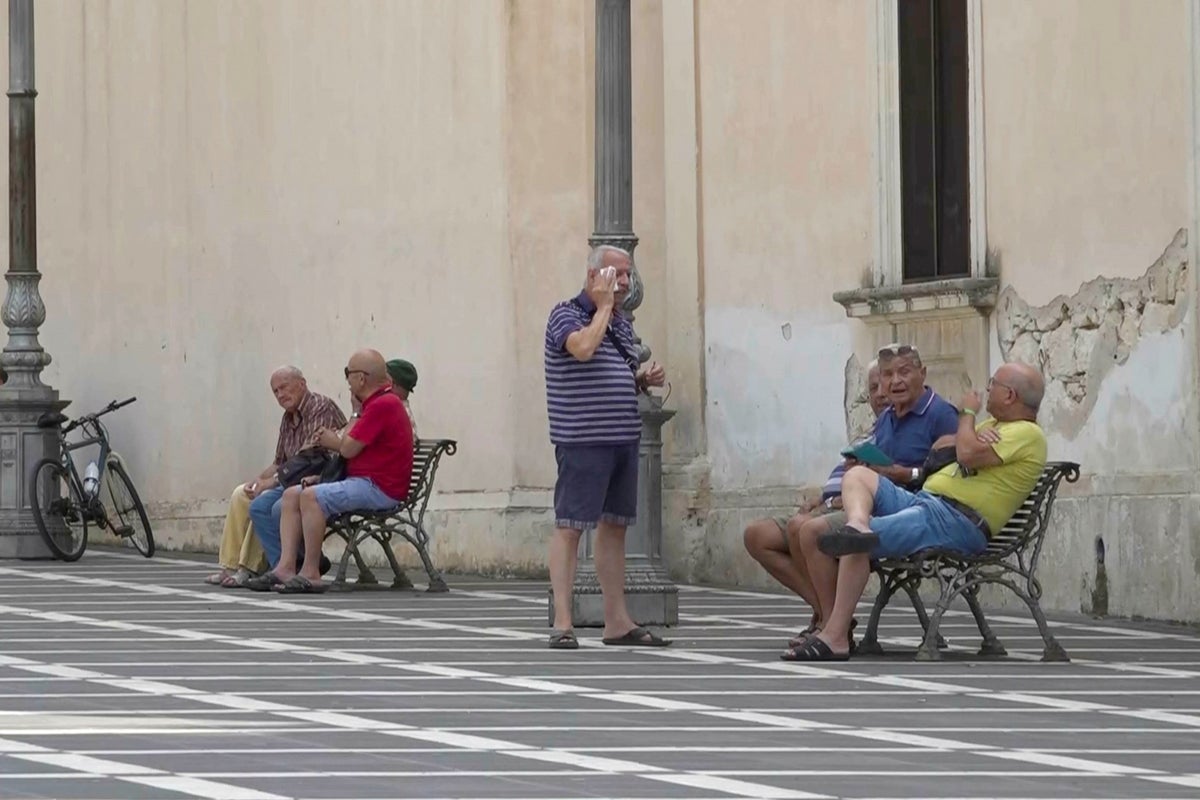
Five years on from recording the highest temperature in European history, the inhabitants of Floridia measure extreme heat not by records, but by its toll on daily life—forcing people indoors, damaging livelihoods and eroding social ties.
Reaching 48.8 degrees Celsius (119.8 degrees Fahrenheit) in August 2021, the Sicilian town became a stark emblem of Europe’s warming climate as the continent emerged from Covid-19 restrictions.
Today, more frequent and prolonged heatwaves leave streets and piazzas deserted, prompting some locals to compare the conditions to a new kind of lockdown.
This shift is clear across the town of 20,000 near Syracuse, on Sicily’s south-eastern coast. Piazza del Popolo, long the central gathering spot with its cafes, palm trees and civic buildings, now stands largely empty for much of the day.
Mapped: Floridia
The heat persists late into the evening, disrupting the cherished local tradition of ‘pigghiari u frescu’, when families bring chairs outside their homes to catch the breeze and socialise.
“It’s awful because many people end up shut indoors. In a way, we are all experiencing another kind of lockdown,” Floridia’s culture councillor Serena Spada said.
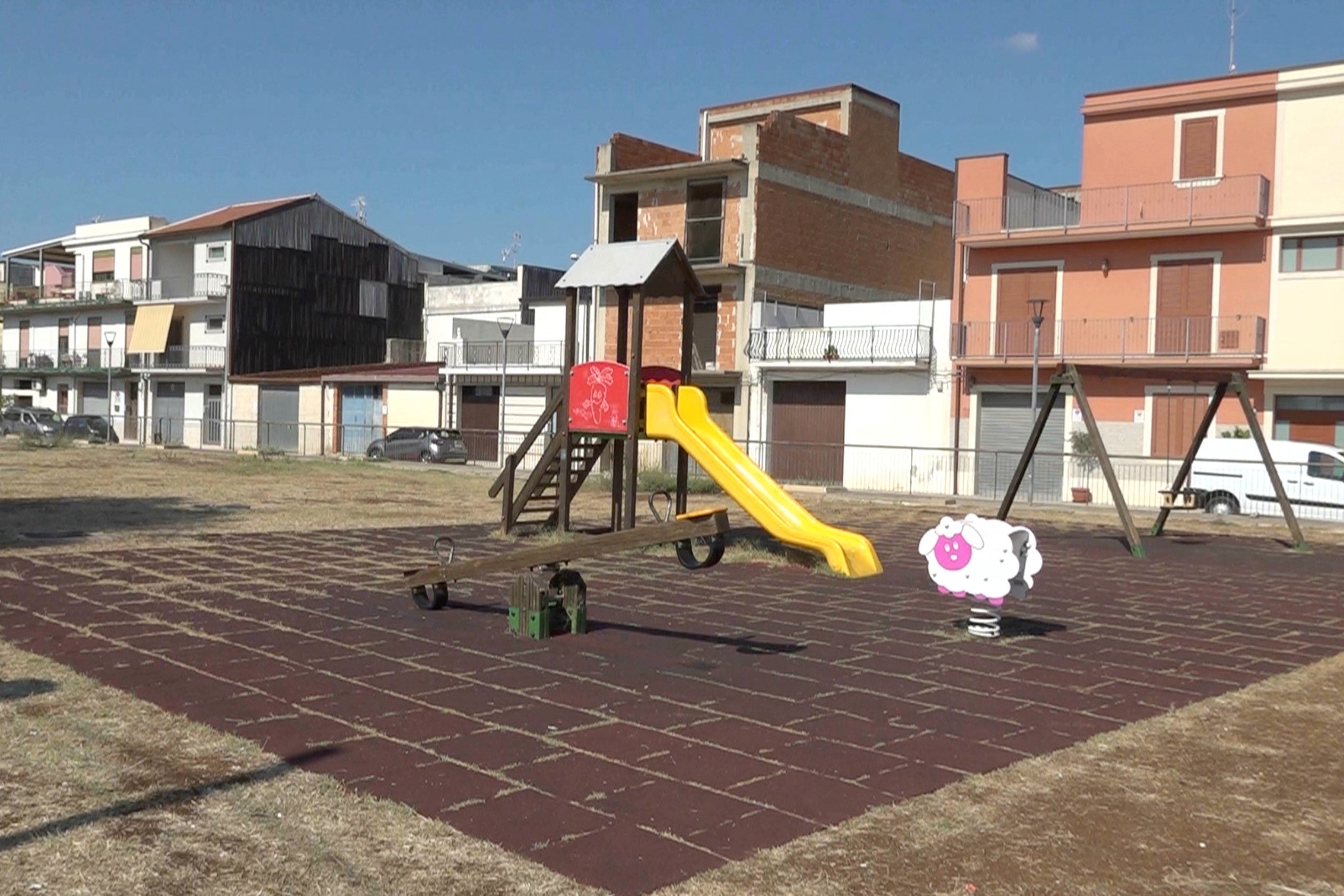
“Even people with small children find themselves in this situation. Children cannot go to the park or play outside because, until late afternoon, temperatures are genuinely hostile.”
 open image in gallery
On August 11, 2021, Sicily’s Agrometeorological Information Service (SIAS) measured a temperature of 48.8 C in Monasteri, a rural district about 5 km (3 miles) from Floridia’s centre. In 2024, the World Meteorological Organization certified it as the highest temperature ever recorded in continental Europe, a mark that still stands.
“As I walked, I began struggling to breathe and thought: ‘I could die here in the street, with no one around to help me’,” said resident Ugo Tomasello.
Many residents assumed the record would prove an isolated event. Instead, hot summers became the norm.
“It turned out to be a very sad warning sign,” Spada said.
While the temperature record drew international attention, climate scientists say individual extremes are less significant than the steady rise in average temperatures.
Reuters Climate Monitor data showed Floridia reached 33.3 C (92 F) on August 12, 2026, 4.1 C (7.4 F) above the average for the 1961-1990 historic norm.
“It is really the increase in average temperatures that worries us,” SIAS director Luigi Pasotti said.
“We are no longer talking about extreme temperature peaks lasting one or two days, as happened in 2021. We are talking about entire weeks, even months during which temperatures remain consistently high.”
Night-time temperatures are climbing too, leaving little respite from the daytime heat.
“This year in particular, we are recording exceptionally high numbers of tropical nights in some parts of Sicily, as well as super-tropical nights,” Pasotti said.
 open image in gallery
Across Europe, climate change has been linked to increasingly frequent and intense weather extremes, from drought and wildfires to torrential rainfall.
Sicily has emerged as one of Europe’s climate frontlines.
In January, Cyclone Harry produced a record 16.66-metre (55-foot) wave between Sicily and Malta. Wildfires have taken a growing toll with the island accounting for roughly 70% of southern Italy’s burned area between January and July, according to a Legambiente analysis based on EFFIS-Copernicus data.
Agriculture, a pillar of the island’s economy, is increasingly vulnerable to climate change.
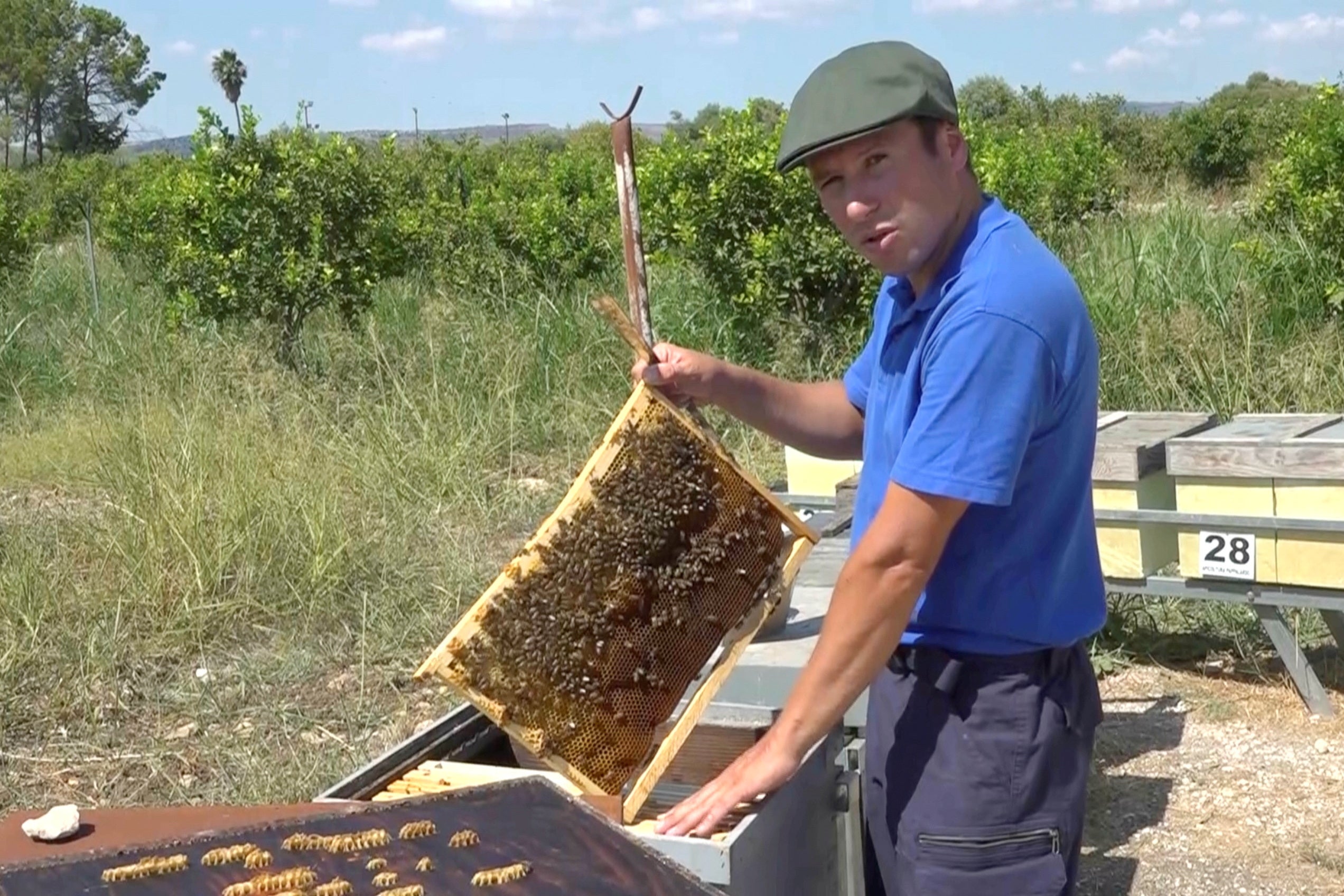
In 2021, more than 3,000 beehives were lost in the area of Floridia and honey production plunged by 80%.
“The decline in bee populations and the number of beekeepers, together with the loss of pollinators due to climate change and the widespread use of pesticides, is leading to a reduction in biodiversity and lower quality and yields in agricultural production,” agronomist Francesco Bellomi said.
For beekeepers in Floridia, summer has become a season of anxiety.
“There’s much more concern about getting through the summer than there used to be,” said beekeeper Francesco Pappalardo, 33, who began working with his father as a child.
“The heat can cause individual colonies to collapse and sometimes entire apiaries can be lost, as happened to me in previous years.”