


Adopt CNG transport scheme, lawmaker urges states, LGs
August 28, 2026 5:24 pm

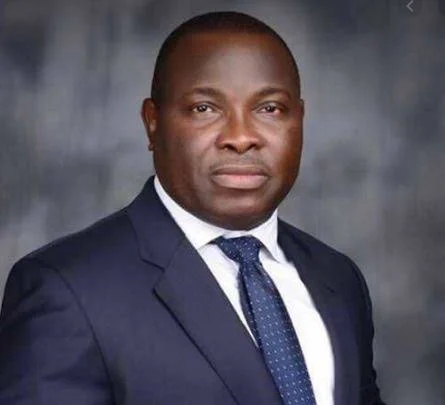
The Chairman of the House of Representatives Committee on Public Assets, Ademorin Kuye
Photo: Web
The Chairman of the House of Representatives Committee on Public Assets, Ademorin Kuye, has called on state governors and local government chairmen across the country to adopt effective mass transit schemes to cushion the impact of high transportation costs on workers.
Kuye made the call on Friday following the rollout of 37 Compressed Natural Gas-powered buses in the Federal Capital Territory by the Presidential Compressed Natural Gas Initiative.
The buses are expected to provide subsidised transportation for civil servants and other commuters in Abuja, coming against the backdrop of sustained increases in transport fares and the wider cost-of-living crisis triggered by the removal of the petrol subsidy.
Commending the Federal Government for the intervention, the Lagos lawmaker said the initiative came at a critical time, particularly for workers whose earnings have been increasingly consumed by transportation costs.
“The high cost of transportation has for months constituted heavy burdens on the take home pay of Nigerian workers, with fuel dependent transit fares consuming a disproportionate share of monthly earnings for junior and mid-level workers.
“By providing a subsidised, low-emission mass transit option, the Federal Government has taken a concrete, measurable step toward cushioning the effect of the removal of the petrol subsidy on the ordinary worker,” he said.
According to the lawmaker, the initiative would provide direct relief to civil servants who spend a significant portion of their salaries commuting to and from work, while also reducing dependence on Premium Motor Spirit.
He said the use of CNG-powered buses could also deliver environmental and public health benefits because of the lower emissions associated with CNG compared with petrol and diesel.
Kuye further described the scheme as a more sustainable form of intervention than one-off cash transfers, arguing that a functioning mass transit system could provide recurring relief while offering room for expansion as additional buses and CNG conversion infrastructure become available.
He said the initiative could also help restore public confidence in the government’s ability to translate its policies on subsidy removal and palliatives into practical interventions that directly affect citizens.
However, Kuye said the 37 buses being deployed in Abuja would not be sufficient to meet the transportation needs of the Federal Government’s workforce in the capital, stressing that state and local government workers face similar challenges.
“While this step of Federal Government is commendable, 37 buses cannot accurately meet the transportation needs of the government’s workforce in Abuja, let alone the millions of state and local government employees across the federation who face the same cost-of-living.
“I therefore call on state governors and local government area chairmen to emulate this initiative and urgently procure CNG buses for the purpose of conveying civil servants and or convert buses to use CNG for the seek of conveying civil servants and other passengers,” he said.
The lawmaker urged state and local governments to work with the Presidential Compressed Natural Gas Initiative and private sector operators to facilitate access to conversion kits, affordable financing and technical expertise.
Kuye also appealed to the Federal Ministry of Transportation and the PCNGI to accelerate the expansion of the programme beyond Abuja, noting that a wider rollout would enable more workers and commuters to benefit from lower transportation costs.
He called on members of the various State Houses of Assembly to use their oversight responsibilities to encourage state governments to commence similar initiatives without delay.
The Federal Government introduced the CNG initiative as part of its response to the economic effects of the petrol subsidy removal, with the aim of reducing transportation and energy costs by encouraging a shift from petrol and diesel to natural gas.
The latest rollout in Abuja is expected to complement other government measures aimed at reducing the burden of transportation on workers and commuters, although questions remain over the scale and speed required to make CNG-powered mass transit available across the country.
Dirisu Yakubu is a journalist at Punch Newspapers with over a decade of experience covering parliament, politics, and development issues. He specializes in reporting that provides context and insight into legislative and governance matters. Dirisu’s work reflects extensive newsroom experience and a commitment to accurate and impactful journalism.
All rights reserved. This material, and other digital content on this website, may not be reproduced, published, broadcast, rewritten or redistributed in whole or in part without prior express written permission from PUNCH.
Contact: [email protected]