


AdvertisementArtificial intelligenceTechTech Trends
In FocusA rural city, once known for livestock, now provides China’s AI computing fuel
6-MIN READ6-MIN Listen
Ben Jiangin BeijingPublished: 10:00am, 24 Aug 2026Updated: 10:05am, 24 Aug 2026
For generations, Ulanqab – a city several hundred kilometres northwest of Beijing whose Mongolian name means “red cliff pass” – was known for its windswept pastureland, where cattle grazed and potatoes thrived under long hours of sunlight.
Its economy hinged on the weather, driven by the cool, strong breezes sweeping through the Yinshan mountain range.
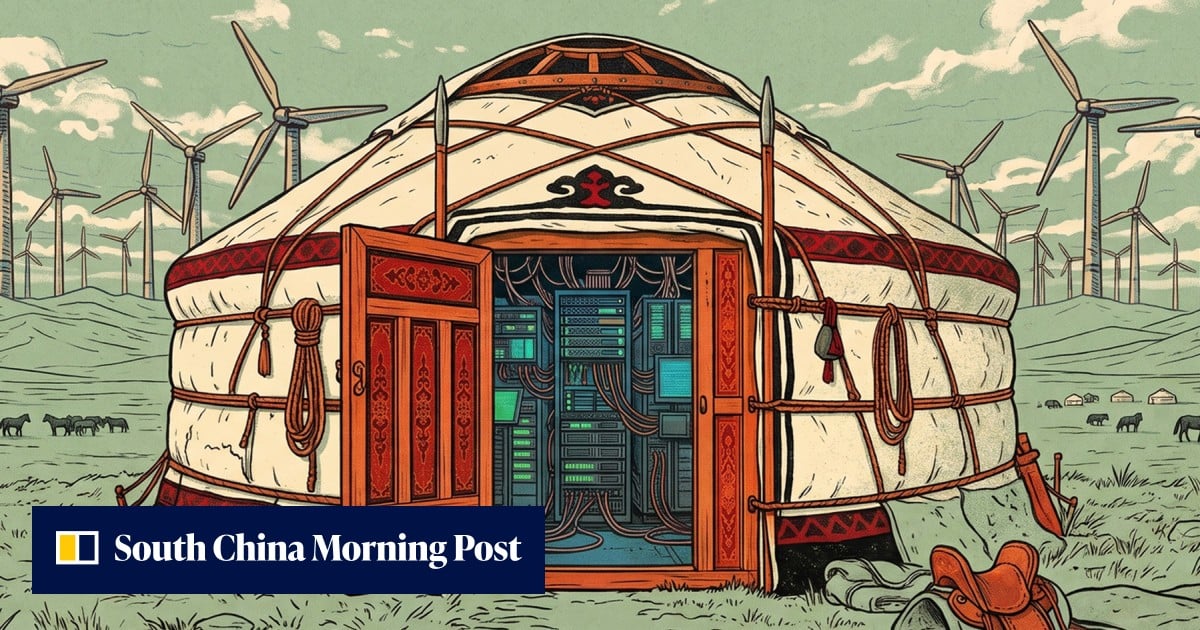
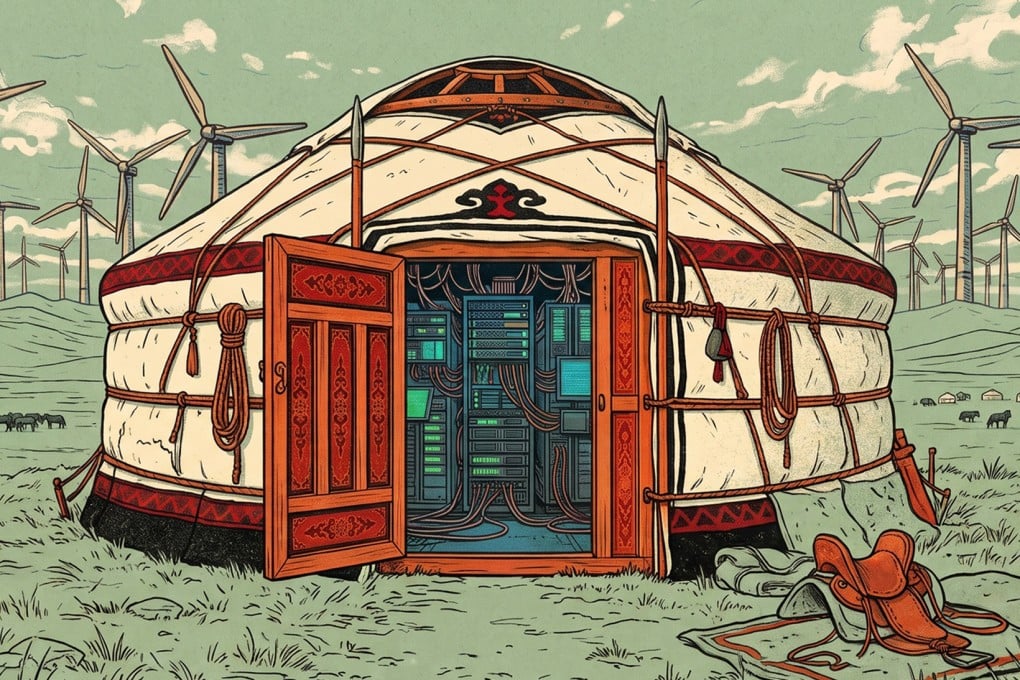
Today, giant wind turbines stand next to livestock across those sloping grasslands.
As the global artificial intelligence boom fuels a scramble for more computing power and electricity, the same climate that has sustained Ulanqab’s pastoral economy is turning this Inner Mongolian city into one of China’s most coveted industrial assets.
Earlier this month, Chinese renewable energy company Envision Group brought its Galaxy Campus online in Ulanqab. The AI computing facility has, at its heart, a 120,000-square-metre AI data centre, roughly the area of 20 standard football pitches, according to a company statement.
Designed to accommodate up to one million AI accelerators, the campus has a planned power capacity of over two gigawatts, a scale that would make it one of the world’s largest AI computing facilities.
For comparison, Colossus 2, the massive US-based AI data centre run by Elon Musk’s SpaceXAI, has a projected 1.5-gigawatt IT power capacity, according to a ranking by consultancy Epoch AI.
AdvertisementSelect VoiceSelect Speed00:0000:001.00x