


A rail nightmare: what it’s like on England’s busiest commuter-only train
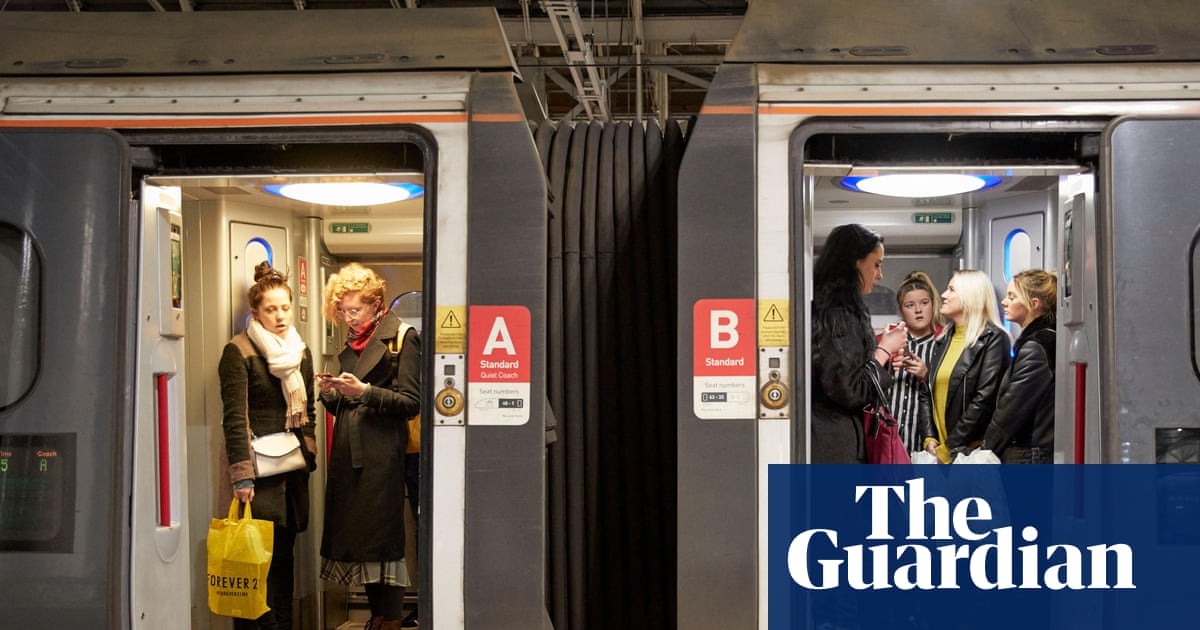
This evening service from London to Crewe is hot, sweaty and heaving with people, many having to stand or sit in the gangways
The 5.46pm train from London Euston to Crewe is the low point of Nikhil Patel’s week. “I’ve never gotten a seat. I always stand up even when I get here early,” says the 22-year-old, struggling to keep his balance while the gangway underneath sways from side to side.
Painfully for Patel, who is commuting back and forth to the capital for a computer science internship, it’s the first leg of a three-hour journey home to Walsall. He grabs the back of a chair to remain steady but says he’s just thankful that the train has left on time – and that it’s even on the move at all.
“There’s been a couple of times where everyone’s boarded and then the train’s been cancelled and we all had to get off,” he says. On another occasion, his journey home took five hours because this service was delayed, meaning he missed a connecting train.
This rush-hour service, operated by London Northwestern Railway (LNR), is the busiest commuter-only journey in England and Wales, according to figures by the Department for Transport.
Overall, it’s the second busiest commute, the No 1 being a morning Thameslink service from Bedford to Three Bridges – which passes through three international hubs: St Pancras International, and Luton and Gatwick airports.
We decided to join commuters getting the packed, two-hour-plus service on Thursday evening. According to the DfT, the service had a load factor – how many people are on a train compared with its maximum capacity – of 170% when the analysis was carried out last autumn. LNR says the number of seats on the service has increased from 460 to 812 since the data was gathered.
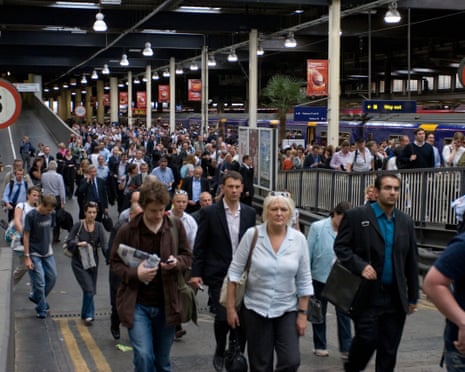
There is the familiar scrum moving towards the train after the platform is announced, an infamous tradition at Euston station. At first it seems as if this crop of commuters has lucked out, as it isn’t overly busy. But as the clock approaches 5.46pm, the carriages begin to heave with people.
Some fan themselves to keep the summer heat at bay. When the train is finally on the move, most gangways are cluttered with unlucky commuters unable to snag a seat. Some stand but others sit, bearing the rough and tumble of the shifting metal surface underneath.
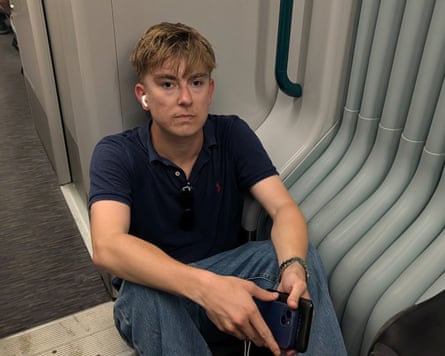
Among them is Daniel Garrill, 23, who regularly gets this service. “I know I’m going to be sitting in some dodgy spot,” the data analyst says, having never got a seat during the week.
He travels between London and Manchester at least twice a week, meaning he has to bring a suitcase – which is tricky because there’s “nowhere to put your bag either”. He has to keep fiddling with his luggage to ensure it doesn’t escape down the carriage.
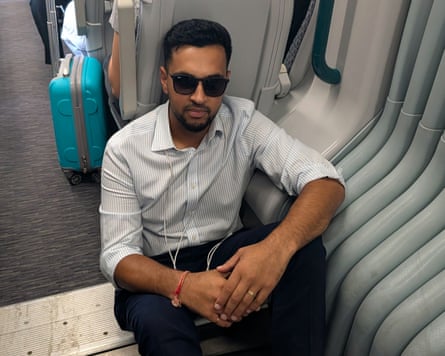
On the other side of the gangway is Akshay Vaghela, 31, who is commuting to Rugby. He says he is forced to stand half the time, and more often than not is “resigned to finding a seat on the floor”. This train is particularly busy because it is cheaper than the shorter Avanti service also heading to Crewe.
“I’ve gotten used to it because I know what booking this service means. It’s a free-for-all for the seats, otherwise you’re standing,” he says. Despite the train being kitted out with air conditioning, Vaghela says it’s still “stuffy, hot and sweaty” because there are so many people on it. “Unless you’ve got water, you’re struggling until you get home,” he says.
There is a chance things might not stay this way. Andy Burnham, newly installed as prime minister, has had rail operators in his sights for a while, making headlines for calling out poor performers while mayor of Greater Manchester.
He has previously said nationalising railways is a “no brainer” and launched the Bee Network as mayor, which brought privatised bus and tram networks into the local government’s control and capped fares at £2. Rail services across Greater Manchester will start to join the network by the end of the year.
He faced a rude reminder of the state of our railways last month. After his election as MP for Makerfield, he took a 10.54am Avanti West Coast train from Manchester to Euston. The service was delayed by 21 minutes, making him eligible to claim compensation.
The transport secretary, Heidi Alexander, has also faced a bumpy train journey, saying she sat on the floor of a packed service from London Paddington to her constituency in Swindon.
after newsletter promotion
Burnham hinted in May that there could be a swifter move towards rail renationalisation – a number of operators were brought under state control while Keir Starmer was prime minister – saying it would “reduce train fares and make them affordable to people again”.
Vaghela is optimistic that Burnham will enforce some change. He says “priority routes like this one which connect main parts of the country should be looked at”, especially because “everyone’s paying the same price and some people get seats and others don’t, there’s a disparity there”.
As we advance further down the carriages, we squeeze past commuters packed together by the platform doors, sidestep buggies and grab on to windows, poles or even fellow passengers to avoid tumbling to the floor.
Standing among a group of commuters in a packed gangway is retiree Andy Simms, 65. He has a lucky escape, only having to bear the service for half an hour. He’s getting off at the first stop: Milton Keynes Central.
Simms isn’t too bothered about the packed train. “It’s fine but busy,” he says, though he admits: “If you’re doing this every day it must be very annoying, especially if you’re paying for a season ticket.”
Overall, he thinks trains are better than he remembers. “Things used to be a lot worse on trains back in my youth. It was scruffy, dirty and violent,” he says.
On the prospect of Burnham making changes to the rail system, he’d rather he keep his focus elsewhere. “I think social care is more important than train journeys. I’d rather he fix that than this,” he says, while holding on to a pole behind for balance.
An LNR spokesperson said: “Our services to and from Euston are extremely popular, which is why we have made a major £1bn investment in new trains to provide extra space for our customers.
“Since this data was gathered we have added hundreds of extra seats to this particular service, increasing its capacity by 77% and significantly reducing its load factor to provide more comfortable journeys for passengers.”
Explore more on these topics