



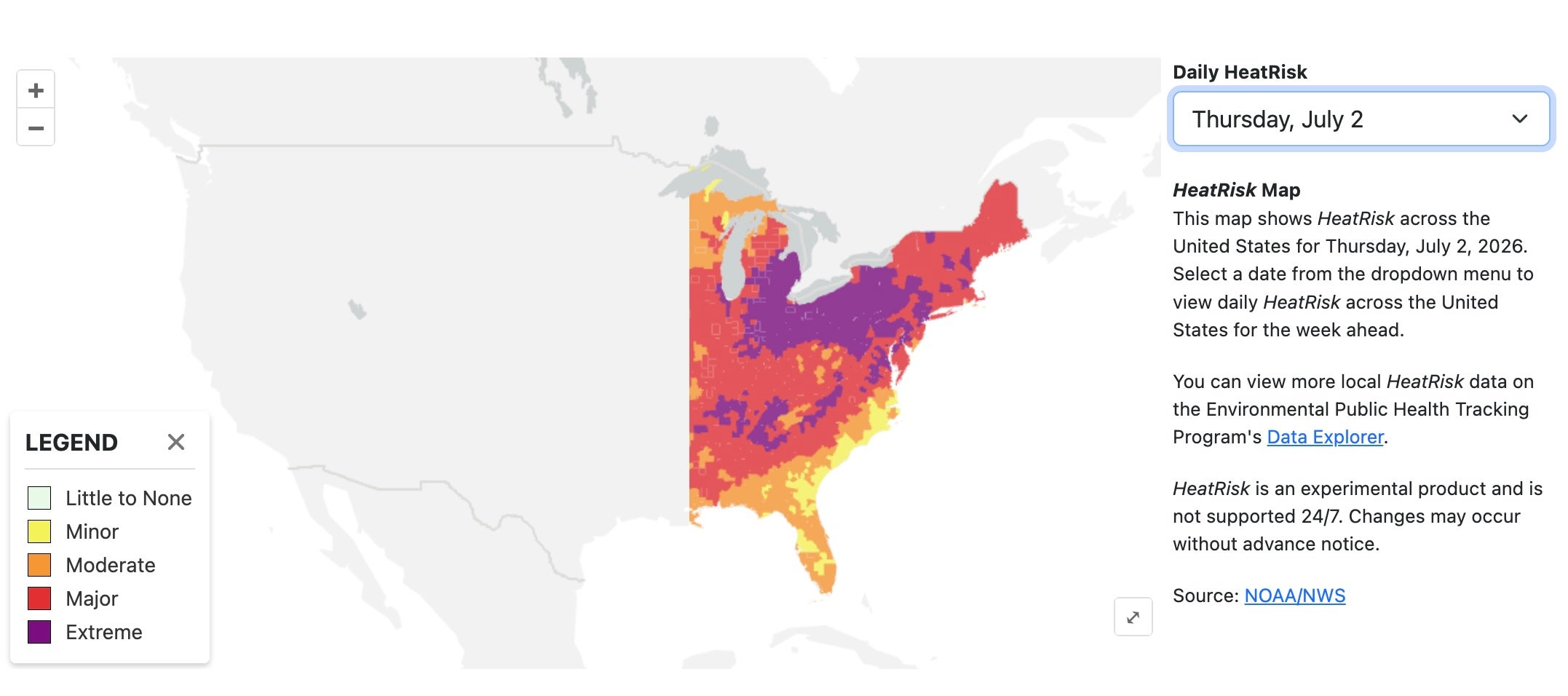
High temperatures are once again hitting triple digits across the U.S. this week, bringing dangerous impacts for heart health.
The hot and humid weather makes the critical organ have to work harder than normal to regulate body temperature and keep your body functioning normally, the American Heart Association warned Wednesday.
“When your body is trying to cool down, your heart rate increases and your blood vessels expand. For people with heart disease, and even those who are otherwise healthy, that added strain can become dangerous quickly,” Duke Health’s Dr. Manesh Patel, volunteer president of the association, explained in a statement.
That’s part of why heat is the top weather-related killer, leading to what experts say is thousands of deaths each year now.
Heat deaths surged by more than 50 percent over the past 20 years, according to a study from the Yale School of Public Health.
 open image in gallery
And the risk is rising thanks to human-caused climate change, which brings record temperatures and longer heat waves, raising the risk from year to year.
Heat-related heart disease deaths could more than double within the coming decades, the association said in 2023. There are about 2,000 deaths a year from heat issues and 100,000 emergency room visits.
Heat can complicate function for people with heart disease because their arteries are clogged.
When it’s hot, the body sends extra blood to the blood vessels, which widen to let the heat escape. However, clogged arteries may mean the body doesn’t have that ability.
“You can develop a mismatch between what the heart needs when it’s working harder to face the heat and what the body is able to deliver,” Lauren Siewny, medical director of the Duke University Hospital Emergency Department, recently told The Washington Post.
 open image in gallery
So, what can you do to avoid related risks?
People with and without heart disease should take a lot of the same precautions, according to the Centers for Disease Control and Prevention.
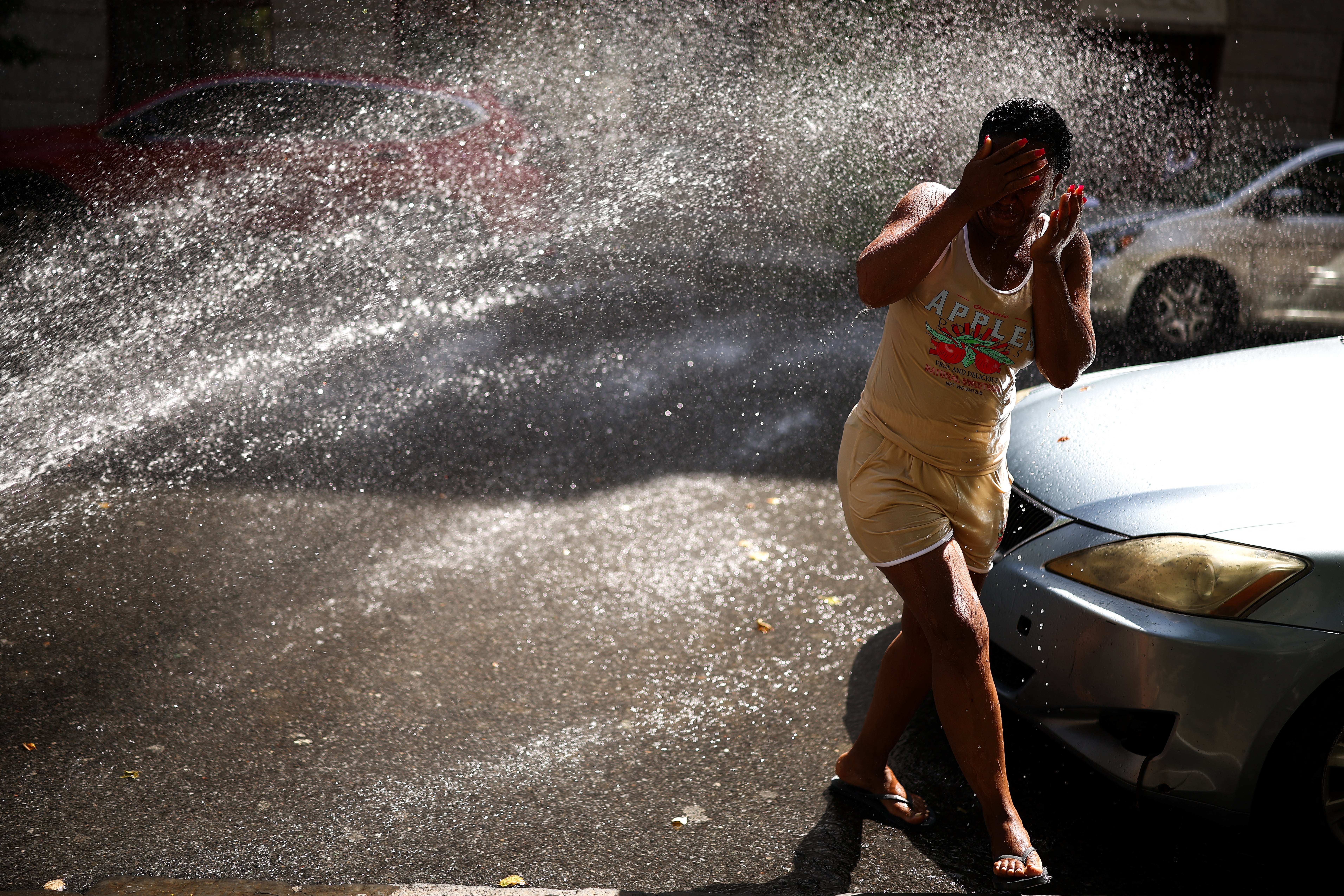
For one, make sure to stay cool and limit outdoor activity in the early afternoon, when temperatures are at their highest. If you have to be outside, stay in the shade as much as possible and take breaks when you can.
Use air conditioning and a fan inside when indoor temperatures are below 90 degrees Fahrenheit, the agency says.
 open image in gallery
Staying hydrated is also critical before and after you’re outside because we lose fluid as we sweat. That means avoiding alcohol and caffeinated drinks that can contribute to dehydration, too, the association notes.
Dress for the weather, too. Put on sunscreen, wear UV-protective glasses and wear a wide-brimmed hat and light-colored clothing.
Lastly, be aware of concerning symptoms, such as headache, clammy and cool or pale skin, a fast but weak pulse, dizziness, muscle weakness or cramps and nausea or vomiting.
“If you experience any of these symptoms, slow down any physical activity and move to a cooler place, cool down immediately by dousing yourself with cold water and re-hydrating. You may need to seek medical attention,” the association says.