


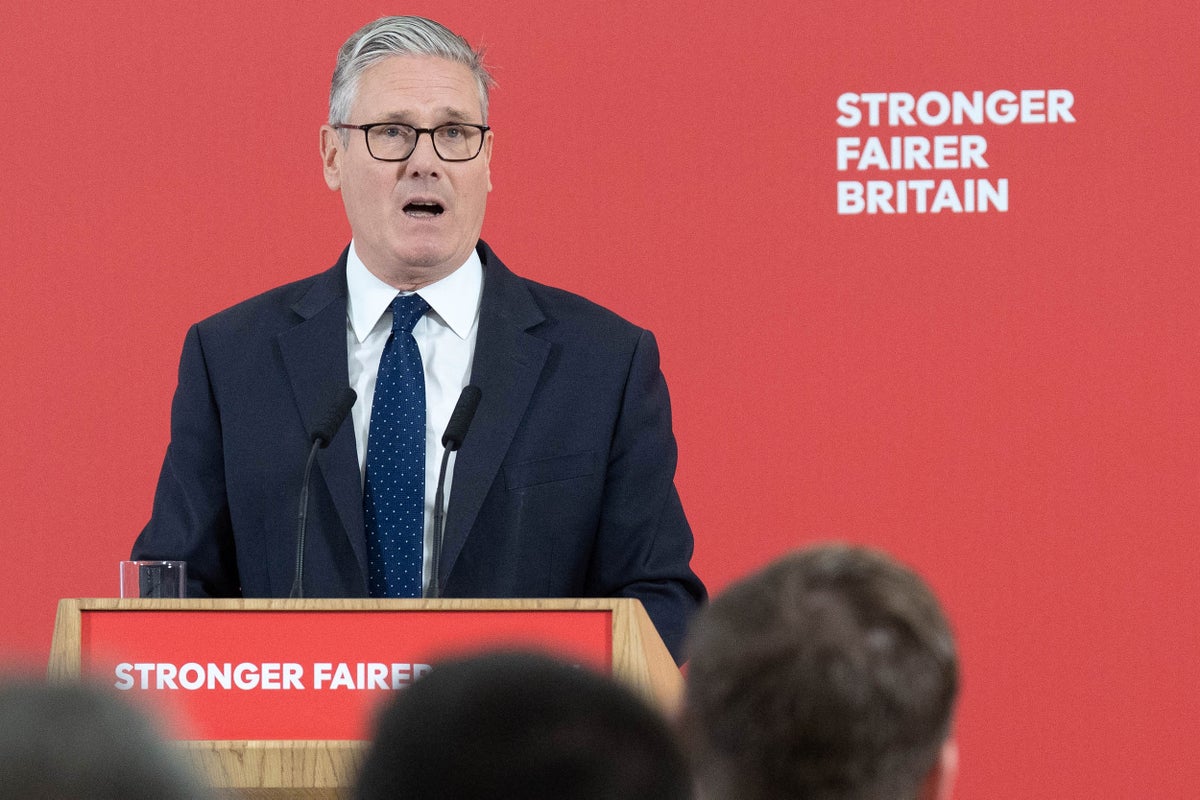
Sir Keir Starmer, has described his long-delayed Defence Investment Plan (DIP) as “a huge, historic shift for our nation – and a legacy in which I take pride”.
It is a curious sort of memorial for his brief premiership. Even on the most generous assumptions of what constitutes defence spending (such as including pensions for the armed forces), the planned spending rise to 4.2 per cent on national income by 2035 is still below the 5 per cent target set by Nato – and demanded by Donald Trump last year.
Sir Keir was keen to have the DIP ready before he leaves office, and something he can take to the Nato summit in Ankara next week. Nato’s secretary general Mark Rutte was complimentary about the British plans, but his job is to publicly flatter his nation-state members while quietly cajoling them to do more behind the scenes.
The marginal nudge upwards in UK “core” defence spending to 2.7 per cent of national income in 2028-29 in fact looks derisory, given the international situation. What’s more, the DIP hardly enhances Sir Keir’s chances of succeeding Mr Rutte at Nato in due course.
Other leaders will be unimpressed. Mr Trump is never easily pleased. Already disaffected by the reluctant British response to his war in Iran, his final encounter with Sir Keir will be more awkward than their early “bromance”. Mr Trump already regards the best the Royal Navy has to offer as “toys”, and under the DIP it may shrink further before it acquires its new “hybrid” range of crewed vessels and waterborne drones in the early 2030s.
So Sir Keir’s critics at home and abroad may feel that an inadequate, below-par defence plan is, ironically, a fitting tribute to his underperformance in office. But it is at least progress, and, hopefully, the plans will form a floor to the UK’s defence ambitions rather than set a limit to them.
Andy Burnham is at liberty to revisit them. Encouragement can also be taken from the way new war technologies – AI, robotics and, above all, drones on land, in the air and the seas – are revolutionising procurement. The conflicts in Ukraine and the Gulf have shown how dramatic the battlefield shift has been – multi-million dollar tanks, fighter planes and navies wiped out by drones costing a few thousand, mass manufactured using relatively simple technologies in primitive factories.
Iran showed how a nuclear superpower could be defied with a modest arsenal and a flair for tactics. Similarly, much of Russia’s Black Sea fleet was humiliatingly sunk by the nominally outgunned Ukrainians. Ukraine’s skill and bravery is rendering Russia’s traditional superiority in personnel numbers almost irrelevant – they cannot operate in the open.
As well as embracing this revolution, it would also be encouraging to see the Ministry of Defence mend its disastrous long-term record in defence procurement – one unspoken reason why the Treasury was so wary of injecting huge new funds into its budget.
Nato warns that Russia could attack a member state by 2030, a credible assessment. None of the new kit catalogued in the DIP will be ready by then. It is shameful that governments of all parties over the last two decades have been so careless about the defence of the realm as to have left the nation so weak – in an era of visibly growing threats from a revanchist Russia and more assertive China. The UK, indeed, is already under attack: espionage, incursions in airspace and territorial waters, cyber attacks such as the one on Jaguar Land Rover, assassinations on British soil, online interference in politics, and even a terror attack on the prime minister’s home.
As the old saying goes, if Britain wants to get anywhere, it shouldn’t start from here. It didn’t have to be this way. What should have happened is that when the Strategic Defence Review was completed a year ago, the prime minister should have ordered the chancellor to find the necessary funds – some £13bn more than currently allocated – required to fulfil it. Yet the DIP was delayed, delayed and delayed again, and it has emerged underfunded. Even after the uber-loyal John Healey resigned as defence secretary in protest, only another £1.5bn was found for the DIP – a rounding error in the vast universe of UK public expenditure. Mr Healey has gently pointed out that the DIP remains unsatisfactory and not yet credible.
In other words, the DIP should have been resourced and funded by the end of last year, as planned. If it had, then this controversy would not have been dragging on, the defence secretary wouldn’t have resigned, and the prime minister and chancellor would have had a better chance of hanging on to their jobs. Above all, Britain and its allies would be safer in the coming years. That would have been a prouder legacy for Sir Keir to leave behind.