


The arbitrariness of star ratings is a tricky aspect of appraising books, films, music, plays – or Airbnb kitchens. In Benji Wilson’s breezy, enjoyable Rate This Book: How Star Ratings Took Over the World (New Modern Arcade), the TV critic unpicks the history, psychology, trustworthiness and impact of those little classification symbols, which are taking over every area of modern consumer life. It perhaps won’t be too long before a person’s death earns its own ranking.
Richard Coker’s Timor Mortis: How We Live with Death, also published by New Modern Arcade, a newish non-fiction imprint of Putnam, evaluates our final bodily transaction. Public health doctor Coker blends humour and profound wisdom in this rambunctious book. Grief, ageism, end-of-life decision, disease, shame, the sheer cost of corpse disposal – this could easily have been a depressing read, but is instead strangely life-affirming.
Some of the stories in Timor Mortis are shocking – including that of a patient of Dr Coker whose groin lacerations came after an attempt to have sex with a particularly resistant and sharp-clawed cat. In the “Executions” section, Coker discusses “last words”. As these go, it’s hard to top the memorable bon mot from convicted murderer George Appel, who, as he was being strapped into the electric chair, quipped, “Well, gentleman, you are about to see a baked Appel.”
In James Dale’s pithy The Future of Bananas (Melville House), the professor discusses the yellow Cavendish variety eaten all over the world. He issues a stark warning: “The banana as we know it faces commercial extinction, due in large part to Panama Disease tropical race 4 (TR4) which is decimating plants globally.” So, add TR4 to the things to worry about. The story of the fruit itself is one of ruthless business practices, greed and political coups. It’s all pretty bananas, frankly.
Another sobering read is Robert Barrington’s Corrupted Kingdom: Britain’s Disappearing Integrity – and How We Can Get it Back (Profile Books), which features a murky mélange of suspects, including Peter Mandelson, Boris Johnson, Nigel Farage, and the former Prince Andrew. As Barrington notes: “Britain is complacent about corruption, but the threats are rising and the defences are weakened. The rotten apples are starting to look like a rotting barrel.”
On a brighter note, I would recommend two works of foreign fiction by debut novelists that are out this month. Joanna Elmy’s Born of Guilt (Faber, translated by Angela Rodel) explores the complicated relationship between Yana and her Bulgarian doctor mother; while Spanish writer Marta Pérez-Carbonell’s I Made You Up Inside My Head (Sceptre, translated by Rosalind Harvey) is an inventive story about deception, which is partly set on a sleeper train from London to Edinburgh.
The choices for novel, non-fiction book and bio-fiction of the month are reviewed in full below:
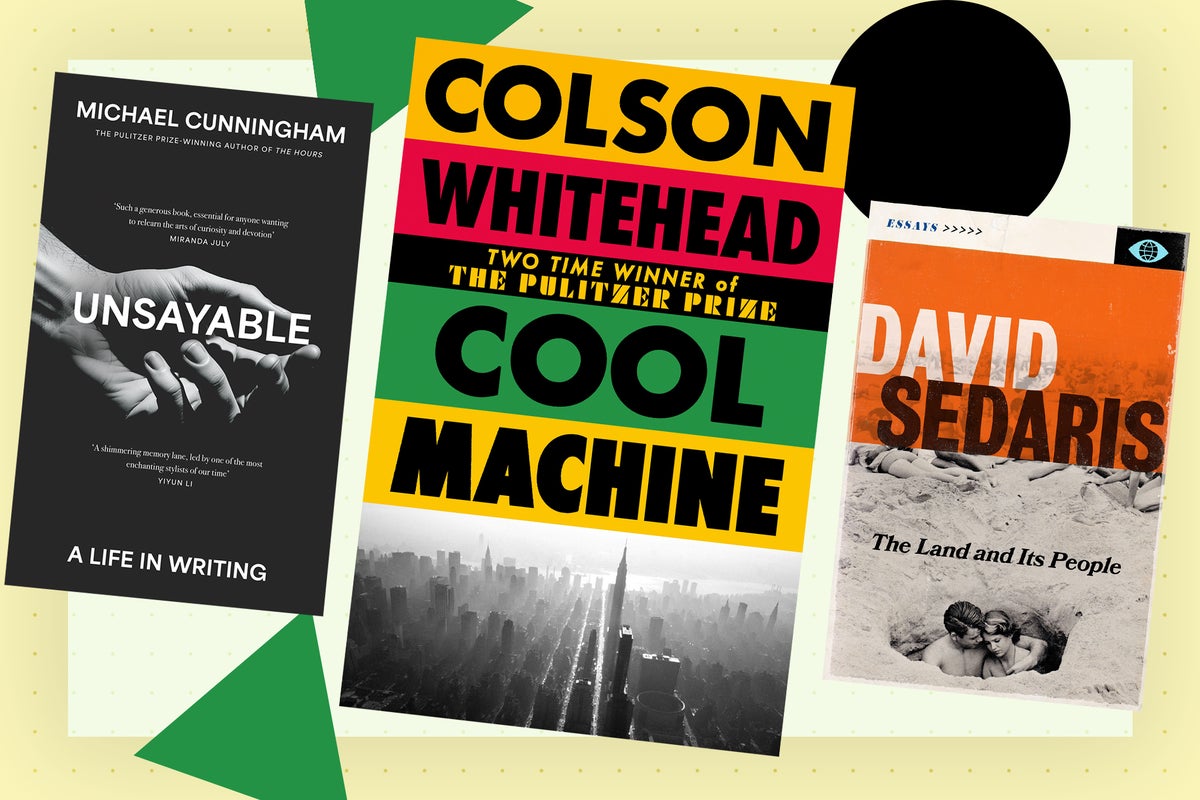
Non-fiction Book of the Month: The Land and Its People by David Sedaris
★★★★★
 open image in gallery
The Land and Its People, David Sedaris’s first collection of essays in four years, is up to the American’s usual splendid, caustic and witty standards.
In “Care and Feeding”, Sedaris, who turns 70 in December, offers a wickedly funny account of not quite joyfully looking after his partner Hugh after a hip replacement. We also find out why Sedaris hates boxer shorts and uncircumcised penises. Sedaris can turn mundanity into humour gold, whether he’s dealing with anal itching or an unwanted hotel hustler.
In “Trophy Room”, Sedaris explains why he took only one photograph during an entire African safari. He did not snap lions or elephants, only a sign that read “No Smorking”. He is on top form about his late father – the account of his stinginess when it came to present-giving is hilarious. Of an “insanely handsome” boyfriend, whose infidelities were stacking up, Sedaris admits, “I became like the mad king in a fairytale. ‘Is somebody stealing my gold?’”
My favourite of the 28 essays, some of which had previously appeared in The New Yorker and The Free Press, is “In Lieu of My Biography”. Its eight sparkling pages are bursting with sharp, gossipy tales and literary anecdotes. I learnt that Buster Keaton’s father tried to remove his own prostate with a kitchen knife. “He was suffering from dementia, but how much of an excuse was that really?” writes Sedaris, being typically Sedaris. In that essay, he also jokes about the manuscript marks poet Philip Larkin left on the draft of Lucky Jim, a novel by his friend (and rival) Kingsley Amis. One abbreviated note said “HSofA” – Larkin’s verdict of “horrible smell of ass”. “Every editor should adopt this”, Sedaris remarks drolly.
If you are looking for a hugely entertaining read, especially one perfectly designed to be consumed in bite-sized chunks, then splash out on the splendid The Land and its People… there’s not a single “HSofA” moment in 261 pages.
‘The Land and Its People’ by David Sedaris is published by Abacus on 2 July, £20
Novel of the Month: Cool Machine by Colson Whitehead
★★★★
 open image in gallery
“There was no bigger canvas than New York City,” writes two-time Pulitzer Prize winner Colson Whitehead in Cool Machine, the concluding instalment in his Harlem Trilogy, following 2021’s Harlem Shuffle and 2023’s Crook Manifesto. Readers with an appetite for Whitehead’s noir fiction and stylishly exuberant storytelling are rewarded with an atmospheric, stylish finale.
The three interwoven stories here – set in 1981, 1983 and 1986 – are again based around furniture retailer and part-time criminal Ray Carney and his sociopathic partner-in-crime Pepper. The violent Pepper has a cynical view of his country. “Returning stolen goods was f***ing with the laws of nature,” he reflects, “and un-American to boot”. Everything is a racket in Cool Machine, especially in a rapidly gentrifying city.
Whitehead brings 1980s New York to vivid, unforgettable life. It is a place of mobsters, predators, pimps, malevolent and oafish police officers, mad killers and “frenzied stickup men missing parts of their personality”. One hitman is neatly described as having the temperament of “a lid tapping on a pot of boiling water”.
Racism bubbles under the surface. Carney’s wife Elizabeth keeps getting turned down for loans by “an identical succession of white-haired mummies in tweed … scratching codes in the margins of her applications, banker graffiti, to alert the manager that the business was black-owned – nix.” That “nix”, so perfect as a punchline word. Whitehead’s gift for description and denigration is as potent as ever; he describes the hangdog blokes of Brooklyn and Queens as “paunchy, corned-beef white men with pinkie rings and fat ties”. Caustic humour is present throughout, too, including in a discussion of John Hinckley’s assassination attempt on Ronald Reagan and the “strengths and weaknesses of Volvo vis-à-vis getaways”.
We leave Carney at 55, having found out whether or not he saves his grandnephew’s life and whether he did finally get rich. Whitehead fans will miss this oddball protagonist and his capacity for terrible decision-making and botched criminality.
‘Cool Machine’ by Colson Whitehead is published by Fleet on 21 July, £22
Memoir of the Month: Unsayable: A Life in Writing by Michael Cunningham
★★★★
 open image in gallery
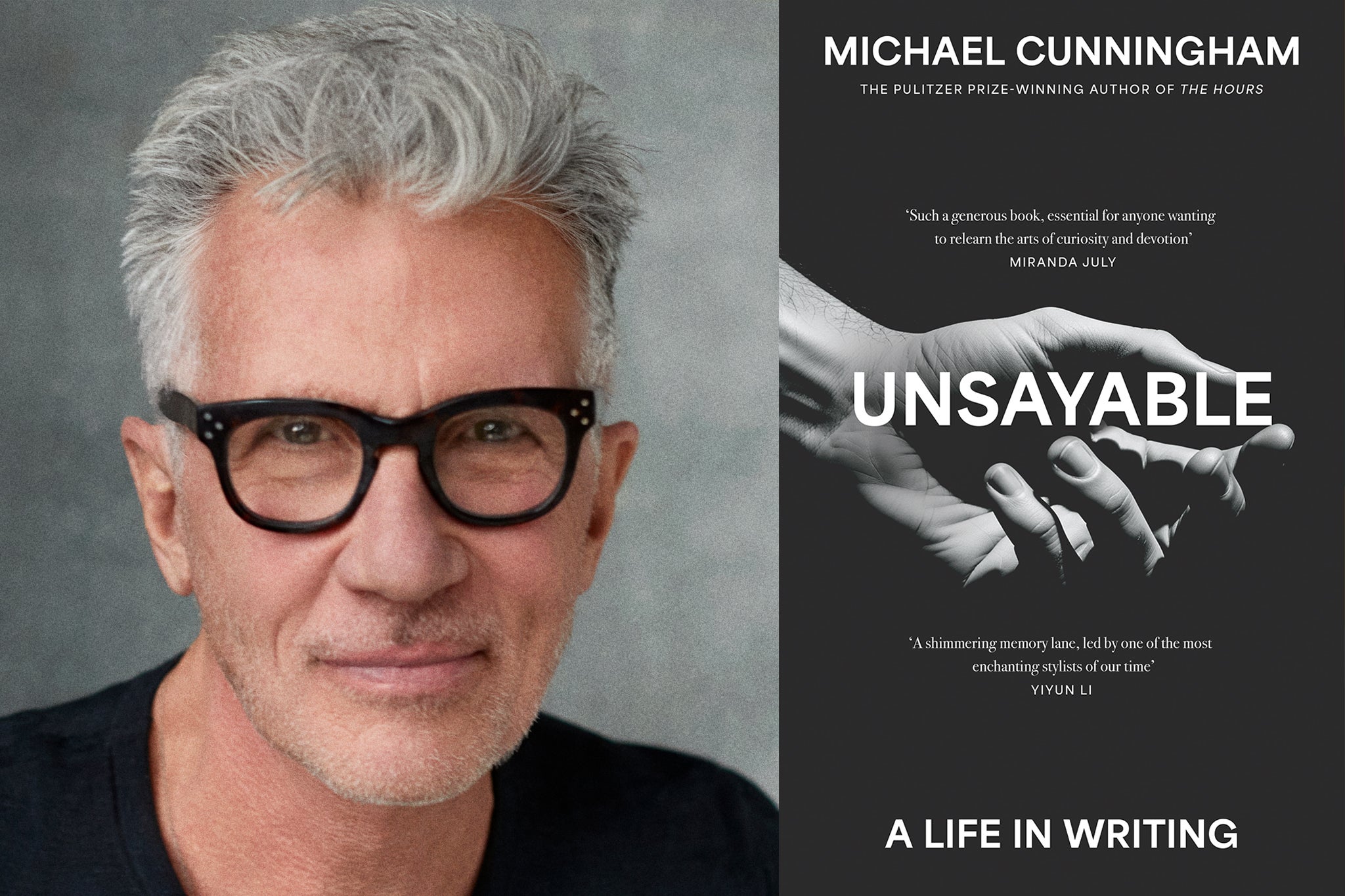
Writers are “a mutant strain”, admits screenwriter and author Michael Cunningham in Unsayable: A Life in Writing, “and it’s probably best, for families, if none of their children grow up to be writers”.
Cunningham, who was born in Cincinnati, Ohio, in 1952 and went on to win the Pulitzer Prize for Fiction with his 1998 novel The Hours, has penned a thoroughly engrossing trip-down-memory-lane memoir. The book mixes erudite and witty reminiscences, starting in early childhood when the sight of a finch and its surprisingly large pair of dusty-pink feet was “the beginning of my citizenship in the realm of human life”. It also includes an account of his attempts to woo a senior girl known as Queen Mab, a prelude to finally acknowledging his own true desires. “I was never cured of my homosexuality,” he states.
Cunningham is sharply entertaining about the period in young manhood during which he travelled to San Francisco at weekends to work as a rent boy. His customers included “the guy with a colostomy bag, which he did not mention until we got to his hotel room” and he describes one middle-aged “john” as having “a half-basketball belly” and skin with “mottled, splotches of pallid pink that looked like a rash impervious to healing”. On the page, they seem a lonely lot, and Cunningham says he stopped turning tricks because in the end “I could not abide their unhappiness.”
As well as sampling his amusing encounters as he travels across America in his Draft Dodge, the reader is allowed into his private, insecure life as an author. These sections are candid, sensitive and enthralling to anyone interested in the craft of writing. When it comes to evaluating novels, I take particular note of the strength and originality of similes, so I smiled at Cunningham’s scolding of “slightly off-the-mark similes”. He says they should be “an act of veneration” and have nothing to do with the writer’s “own cleverness”. He also offers delightful “takes” on other books, including his verdict that “Madame Bovary at heart, really only wanted to go to better parties”.
Cunningham states that when it comes to memoir writing, “there is no such thing as objectivity” – although he brings an admirable honesty to his account of how disheartening it is at times to be a writer, especially when you believe what you are creating is “tinny and false” and you feel you are constantly “falling short of the mark”. When it comes to writing, Cunningham admits he would be “hard-pressed to name another undertaking that brings you into quite such intimate contact with your own limitations.”
His own self-questioning aside, Unsayable is a shining example of the power of elegant autobiographical writing. And it stands as a love letter to the worth of literature.
‘Unsayable: A Life in Writing’ by Michael Cunningham is published by 4th Estate on 23 July, £16.99