


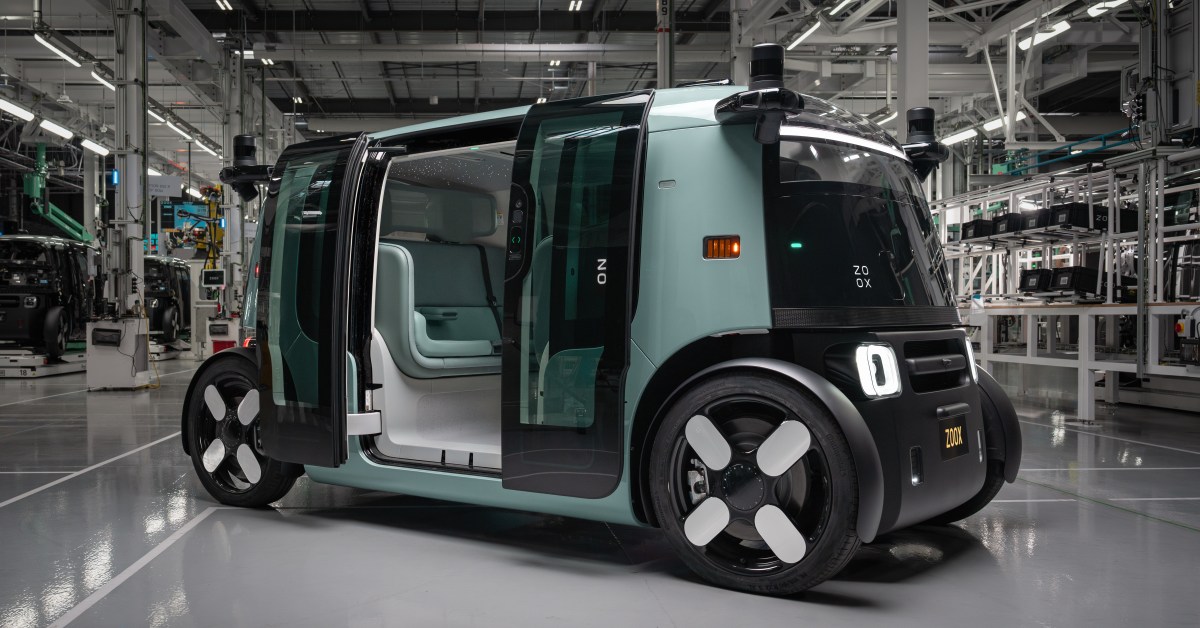
Zoox’s purpose-built robotaxi is getting a refresh
The interior is getting a new color, and the seats are getting some extra cushioning.
The interior is getting a new color, and the seats are getting some extra cushioning.
by Jun 24, 2026, 3:00 PM UTC Image: Zoox
 Andrew J. Hawkins is transportation editor with 10+ years of experience who covers EVs, public transportation, and aviation. His work has appeared in The New York Daily News and City & State.
Zoox, the autonomous vehicle company owned by Amazon, unveiled a new look for its boxy, bidirectional robotaxi, calling it the “next evolution” of the vehicle intended for mass production. The company is currently operating a free robotaxi service in San Francisco, Las Vegas, Austin, and Miami while it waits for the federal government to approve its request for an exemption from safety rules that require production vehicles to have traditional controls, like steering wheels and pedals.
While other robotaxi operators have typically relied on vehicles with familiar nameplates for their fleets, Zoox is unique in its embrace of a purpose-built robotaxi that has been expressly assembled for autonomy and only autonomy. Zoox says that’s because it has designed its vehicle around passengers as opposed to drivers. That means no traditional driving controls, like steering wheels or pedals. The vehicle’s carriage-style cabin includes two bench seats facing each other for a more social environment. And the symmetrical shape means the vehicle can drive in either direction without needing to make a 180-degree turn.


 PreviousNext
1/11
But sometimes those features can be challenges, especially in a world dominated by regular looking cars driven by accident-prone humans. To that end, Zoox has made a number of improvements to the vehicle while still sticking with the general shape and design of its original purpose-built product.
The main improvements appear to be centered on rider comfort. Zoox has brightened the interior’s color palette, with “monochrome aloe green seating and stone-grey flooring and trim.” This helps create a more soothing experience, while also creating a contrast to make it easier to spot any darker colored personal items, like phones and keys.
The seating is getting better padding and ergonomic curves for added comfort. Zoox said these changes were made based on rider feedback. After her first ride last year, The Verge contributor Abigail Bassett noted that the seats were overly firm, with minimal padding, causing road bumps to “travel directly through your seat and into your body.” Other riders have also complained about the lack of padding in the seats, leading Zoox to several rounds of updates to address comfort levels. Today’s announcement is the latest attempt at that.
The interior touchscreen has been made “more vivid,” and the wireless charging pad for phones now has fluting for more stability. And there are bigger cupholders now, to accommodate all those insulated Stanley cups people tote around.
Zoox has also made some changes to the exterior. Bidirectional reflectors can now rotate colors to indicate which direction the vehicle is traveling. And the company has also improved the interface of its sliding, elevator-like doors, adding a new speaker and microphone, and additional two-way audio capabilities. Zoox says that the improvements will “ensure clearer communication to our riders and other road users, as well as between Zoox Support and first responders.”
The tweaks may appear tiny, but in aggregate they amount to a vehicle that is ready for mass production, Zoox says. While the company waits for regulator approval before it can start collecting fares from its passengers, this new robotaxi iteration will enter into production at Zoox’s Hayward, Calif. facility, where it has the capacity to scale up to 100 vehicles a week.
Images by Zoox
Follow topics and authors from this story to see more like this in your personalized homepage feed and to receive email updates.