


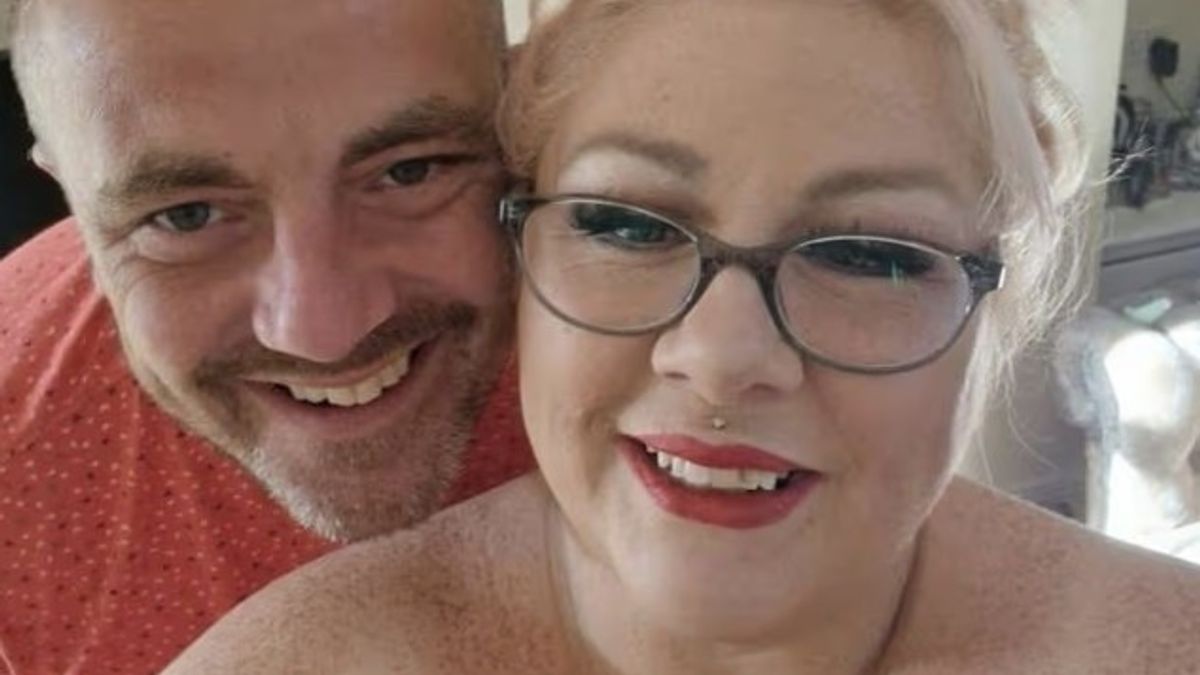
A woman who caught the flu while she was on holiday in Turkey has been told she only has a few weeks or months to live.
Clare Adams, 45 and from Widnes, Cheshire, was on holiday in Marmaris, a resort town on the Turkish Riviera, when she fell ill.
She never felt the same after the trip in the summer of 2023 and explained that, for several months, she suffered from poor breathing. But doctors were unsure what was causing her illness.
Clare told the Liverpool Echo: “I went on holiday to Turkey and caught influenza. After coming back, my breathing was really bad. I couldn’t breathe at all.
“I couldn’t take two steps without being really breathless. I was getting really bad heart palpitations and just feeling poorly.
“I ended up in hospital for a week, where they treated me then for influenza and sent me home. Then I went to the doctors afterwards, who thought I had long covid.”
Article continues below
 View 3 Images
Clare is now in a wheelchair and on oxygen 24/7(Image: Liverpool Echo)
Clare was then told she might have an issue in the right side of her heart but tests and scans came back normal and so her journey to find out what was wrong with her continued.
She was eventually diagnosed with an incurable disease called pulmonary arterial hypertension in November 2023.
According to the NHS, this condition refers to high blood pressure in the blood vessels that supply the lungs. It’s a serious and rare condition that can damage the right side of the heart.
Symptoms can include shortness of breath. Influenza does not directly cause pulmonary arterial hypertension, but it can trigger dangerous complications in the lungs.
Clare explained she felt relieved to finally have a diagnosis but suffered “the biggest shock” when she found out her condition means she can’t have children.
She said: “It was more of a relief that I knew what was wrong with me. But the biggest shock was when the doctor told me that I couldn’t have children. I don’t have any children myself. That was the hardest thing to deal with.”
Still, Clare’s breath “was getting worse” over the next year-and-a-half, with her heart rate and oxygen levels also “really low”.
By May 2025, Clare was told she had pulmonary veno-occlusive disease (PVOD), a rare, life-threatening cause of pulmonary hypertension.
Clare was given a life expectancy of a few weeks or months at best, but despite feeling devastated, she vowed to try and live longer.
She said: “It was obviously a big shock to the system but I just refused point blank [to accept it]. I thought, I’m not letting you decide when I die.”
After seeing another specialist, Clare was put on a treatment called epoprostenol, a medication that widens blood vessels.
She doesn’t know how long she has left to live, but is hoping to get a double lung transplant soon to further prolong her life.
Clare said: “We have had very slight improvements over the last 12 months and along with a massive one stone loss, I’m fighting my way to get a double lung transplant.
“I am in a wheelchair and on oxygen 24/7, having to wear a mask, as my body doesn’t hold oxygen at all. I didn’t think I was a strong person, but to get through this last year…
“I wouldn’t say it’s been like a massive fight, but it’s been a steady fight of continuously just laughing through everything, working on my mindset and watching what I eat.”
 View 3 Images
Clare pictured holding her book which she wrote based on her experiences(Image: Liverpool Echo)
Clare is now using her experiences to write a children’s book called My Auntie, explaining what it’s like to live with her condition and hoping to raise awareness about what it’s like having a disability.
Clare said: “One of my nephews broke his kneecap playing rugby. To keep him occupied, because he couldn’t go to school, I said to him, ‘come on, we’ll write a book together about little things that we used to do’.
“So the first book we wrote was called Auntie Cra Cra and Frankie Go to the Park. And then he said, ‘why don’t we talk about the way that you look?’
“So that’s where my auntie book comes from. It’s really just a book to tell people that even though I look different, I can still do the same things as what a normal auntie can do.
Article continues below
“It hits children really hard when people are sick. My nieces and nephews have never once treated me any differently.
“They’ve just got on with everything that has been thrown our way. I think the children can teach the adults sometimes.”