


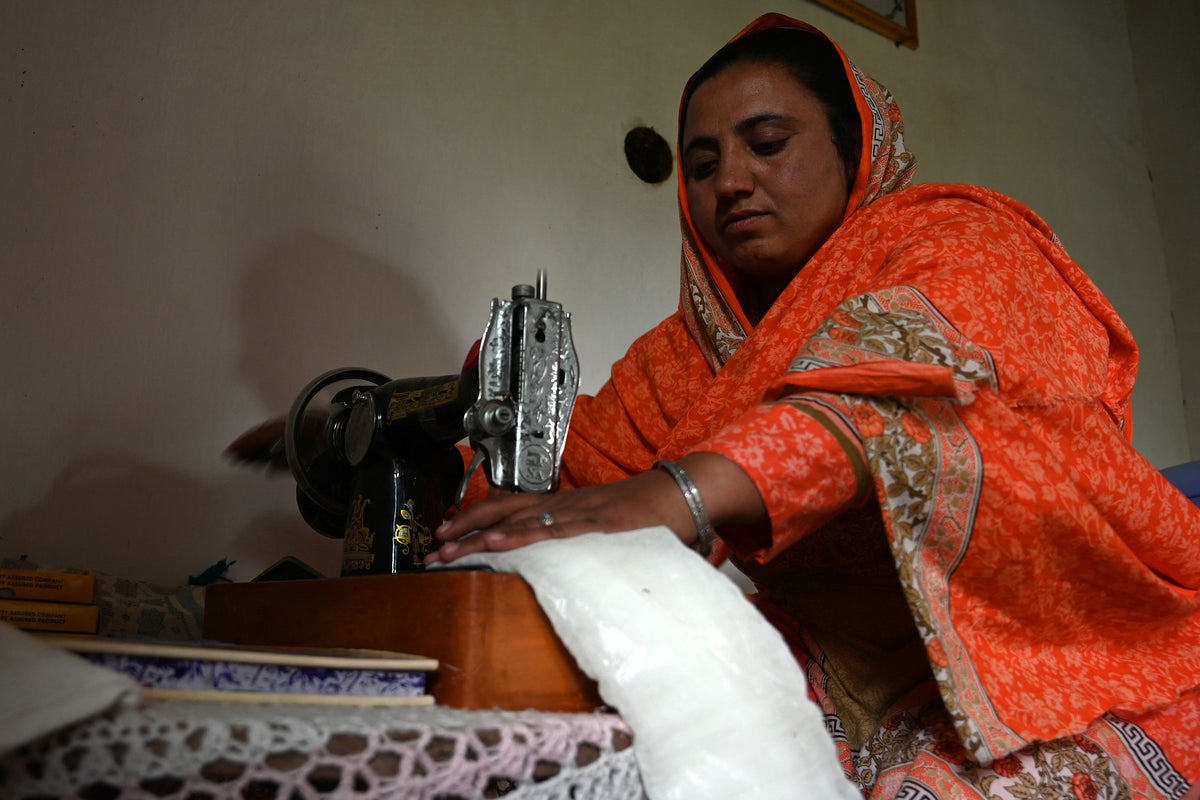
Pakistan is set to remove sales tax on menstrual products in what women’s rights advocates say is a breakthrough moment for a subject that has stayed taboo for generations in the country.
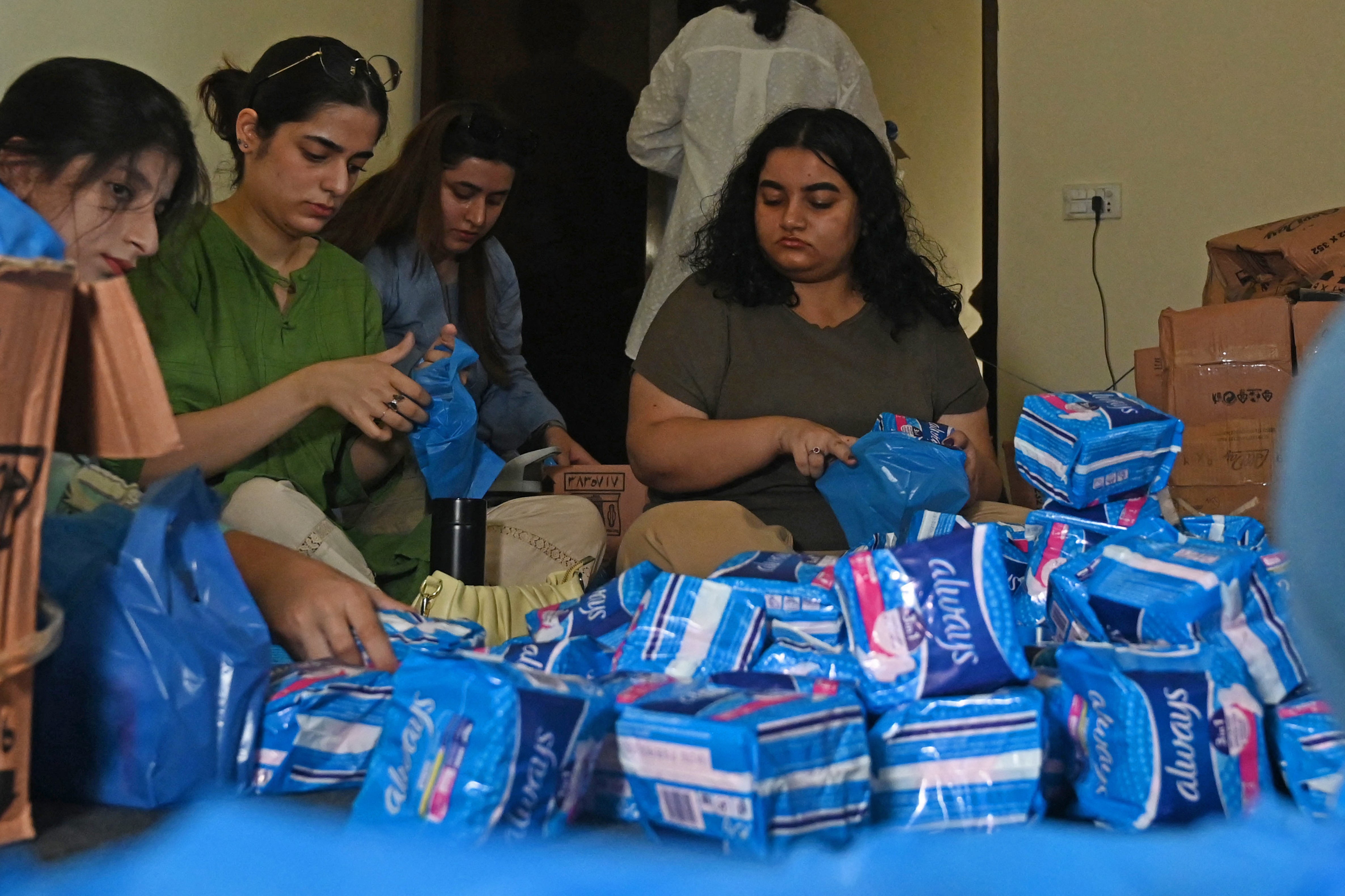
The government proposed to remove 18 per cent sales tax on menstrual hygiene products and contraceptives – the levy that is part of a broader so-called “period tax” which categorises such items as luxury goods instead of essentials.
It is a victory for a landmark campaign by two young Pakistani lawyers who took the government to court over the “period tax”.
Women’s rights activist and lawyer Manoor Omer, 25, and tax lawyer Ahsan Jahangir Khan, 29, filed a constitutional petition last year seeking to abolish the tax, which they argue has made sanitary products unaffordable for millions of women.
Pakistan’s finance minister Muhammad Aurangzeb said the 18 per cent tax will be removed as part of the federal budget for FY 2026-27.
 open image in gallery
“Essential items for women’s health, such as sanitary towels and related products, are daily necessities that are indispensable for women’s health, dignity, and full participation in social activities,” the finance minister said in his budget speech.
“Therefore, it is proposed to abolish the tax on sanitary towels and related items,” he added.
Women’s rights advocates say the decision marks a rare instance of women’s reproductive and sexual health, highly stigmatised subjects in Pakistan, where sex and reproductive health education are mostly absent from the school curriculum, becoming the focus of national political discourse.
.jpeg) open image in gallery
open image in galleryWith Pakistan’s courts on summer recess, the petition remains pending. But its authors say the budget measure, while welcome, is only a fraction of what they are fighting for.
“Removing sales tax is just one small part of the issue,” Khan tells The Independent. “It is a drop in the ocean compared with what we are seeking through the petition. Our goal is to make sanitary products effectively tax-free and help reduce the period poverty crisis.”
For decades, Pakistan’s Sales Tax Act of 1990 granted exemptions to a range of goods. What struck Khan was that many of the exempted products – including flavoured milk, flavoured yoghurt and cottage cheese – were largely consumed by the elite, while menstrual products remained taxed.
Khan says the exclusion reflected a longstanding failure to recognise menstruation as a basic health issue rather than a personal choice.
“The importance of this petition is that it helps end the silence around menstruation. In many South Asian countries, sanitary products are still handed over in brown paper bags because people are uncomfortable discussing them. Menstruation remains a taboo subject,” he says.
“Because no one talks about it, we have ended up with a serious period poverty crisis. The decision is historic, but perhaps even more important is the conversation it has generated. That conversation itself can go a long way.”
The petition before the Lahore High Court goes beyond the removal of the 18 per cent sales tax on sanitary products. It seeks to dismantle the wider taxation regime on menstrual products, including import duties, customs duties and taxes on raw materials – levies that campaigners say add up to around 40 per cent of the retail price of sanitary pads.
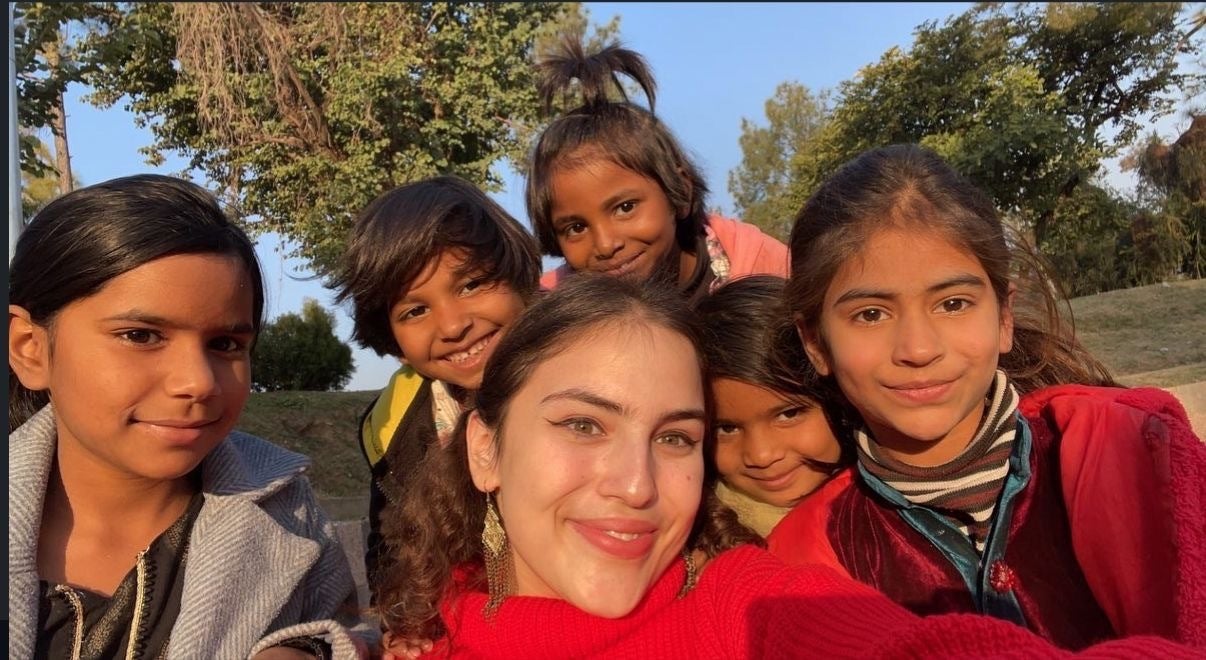
Omer, who is pursuing a master’s in gender studies in London, says: “The decision is a cause for celebration that a legal petition started in 2025 gained such attention and that the government has taken action so quickly.
 open image in gallery
“It’s finally showing us that reproductive health and women’s health in general is no longer a backburner priority.”
The decision holds special significance in Pakistan, where a majority of women, especially in rural areas, do not have access to menstrual hygiene products and resort to using rags, cloth and other cheaper alternatives.
Women make up over 48 per cent of the total population in Pakistan, according to the Pakistan Bureau of Statistics’ 2023 census. And yet only 12 per cent of the population uses commercially manufactured menstrual products, according to a 2024 Unicef report, highlighting the scale of period poverty in the country.
“That is a massive policy failure. It is a period poverty crisis unlike any other,” Khan says. “We hope the court rules in favour of the millions of women who still rely on rags or leaves to manage their menstrual cycles.”
The shift in the government’s stance has been striking for the campaigners.
Omar says when the petition was first filed, the Federal Board of Revenue (FBR) vigorously defended the tax, arguing before the court that it was not discriminatory and that the constitutional challenge had no basis. Less than a year later, the same institution moved to abolish it.
.jpeg) open image in gallery
open image in gallery“It’s actually quite funny now to see the government being so pro-women because their current stance is so different. But I think the government’s position has shifted after the media attention and public awareness around the issue since we launched the petition,” she says.
Although the removal of the 18 per cent tax does not immediately translate to financial relief for women, the discussion and a government minister speaking about it openly on parliament’s floor is indeed a big win.
“In a conservative society, when we talk about menstruation and we talk about breast cancer and we talk about sexual health, it changes lives. It saves lives. Conversations can save lives,” Omer says.
“This is the first step of a very long and steep staircase,” she adds.
The proposal also includes the removal of sales taxes from contraceptives to control the country’s growing population at an “alarming rate”, the minister says. “Pakistan is the fifth-largest country in the world in terms of population. The rate of population growth is alarming, and family planning is a top priority of the government,” Aurangzeb says.
“Therefore, we are completely abolishing the tax levied on contraceptives.”
Omer says most women in Pakistan do not even know what their birth control options are.
“The move should be accompanied by better education and awareness, particularly in a country where sex and reproductive health education is largely absent from schools.”