


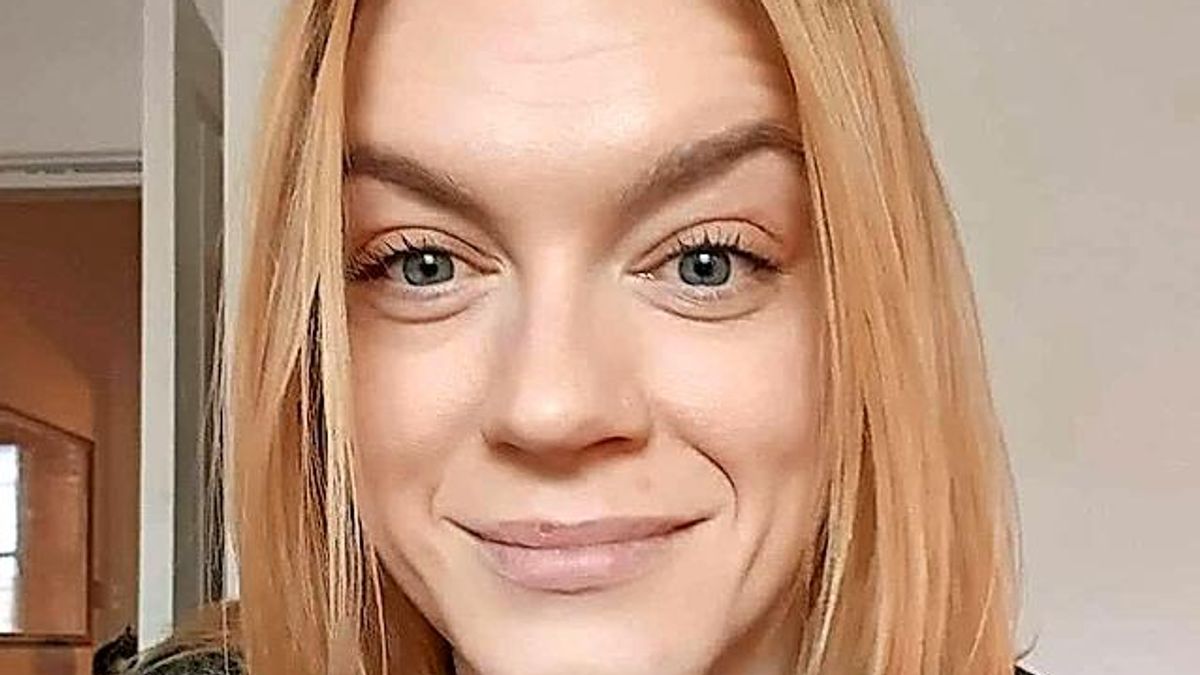
Jo Sinclair had symptoms including headaches, visual problems, back pain, tremor, muscle spasms and insomnia from her teenage years but said she struggled for NHS diagnosis or treatment.
It was not until 2021 that she was diagnosed privately in London with hypermobile Ehlers-Danlos syndrome (hEDS), atlantoaxial instability, dystonia and mast cell activation syndrome.
Jo, 40, from Glasgow, has at times been largely bedbound due to pain, fatigue and instability, and she said a lack of NHS treatment options has caused ongoing trauma.
She has called for a “pathway of care” to be created to give better support to patients.
Jo, a medical secretary at the Queen Elizabeth University Hospital in Glasgow, said: “This is a multisystemic condition which requires service users to see several specialists in a timely manner to avoid significant deterioration and debilitating symptoms leading to loss of independence, unemployment and lack of social life, extreme emotional distress and poor quality of life.
 View 3 Images
Some people with hypermobility conditions are waiting up to 21 years for diagnosis(Image: Getty)
“In Scotland there is a lack of trained specialists, and it is a postcode lottery on whether you can receive the care and treatment required. Most patients are seen and discharged with no treatment for their conditions.
“It is beyond imperative that GPs and specialists are required to undertake mandatory training to recognise the complexities that come with the condition to recognise, diagnose and offer treatment modalities so that patients can lead a meaningful, fulfilling life and contribute to society.
“There should be a pathway of care created so that patients are not left to fall through the gaps in the system, with clear treatment guidelines to be seen by knowledgeable specialists.”
Scottish public health minister Maree Todd said: “We recognise the importance of timely diagnosis and the positive difference it can make for people living with Ehlers-Danlos syndromes and hypermobility spectrum disorders (hDS).
“Through Scotland’s rare disease action plan, we are taking forward actions to improve support for people with hEDS and HSD. This includes work to improve diagnosis, through education and increased awareness among healthcare professionals.
 View 3 Images
Scottish public health minister Maree Todd(Image: REACH PLC)
“This includes work to improve diagnosis, through education and increased awareness among healthcare professionals.”
Jo has spoken out after it was revealed yesterday that some people with hypermobility conditions are waiting up to 21 years for diagnosis. The study also found that people with hEDS and HSD face fragmented healthcare.
The conditions affect connective tissue throughout the body and are associated with joint hypermobility, chronic pain and fatigue, alongside neurological, gastrointestinal and psychological symptoms.
The University of Edinburgh-led study of more than 2000 people, found they waited an average of 19 to 21.7 years for diagnosis. In Scotland, it found that one in seven has to leave the country to get a diagnosis.
Kathryn Berg, trial and research manager at the university’s Institute of Genetics and Cancer, said: “This study highlights the profound impact hEDS and HSD can have across every aspect of life. Our findings show the urgent need for equitable, multidisciplinary care pathways that recognise the complex and multisystemic nature of these conditions.”
Get Daily Record Premium for just £1 per month in exclusive offer to celebrate the world cup. Click HERE.
Article continues below
Get more Daily Record exclusives by signing up for free to Google’s preferred sources. Click HERE.