


If you want to know whether summer has properly arrived, don’t bother looking at the weather forecast. Look at what’s on the shelves.
Suddenly, there are piles of Jersey Royals everywhere. Asparagus is still hanging on. Broad beans and peas are elbowing their way into every pasta dish going. Strawberries have stopped tasting vaguely of disappointment and started tasting like strawberries. Even gooseberries, that most unfairly neglected of British fruits, are having their annual moment in the sun.
June is arguably Britain’s best month for eating. Not because it’s the hottest, and certainly not because it’s the most reliable, but because it’s one of the few points in the year when our fruit and veg are both firing on all cylinders at the same time. Spring hasn’t quite packed its bags and summer is only just settling in.
The result is a month’s worth of ingredients that need remarkably little encouragement. A Jersey Royal wants little more than butter. A ripe tomato barely needs introducing to a pastry case before becoming dinner. Cherries belong in pie. Gooseberries belong in cake. These are not controversial positions.
The recipes below make the most of what’s best right now, from stuffed courgettes, broad bean pasta and barbecued trout with asparagus to cherry pie, raspberry Swiss roll and a gooseberry cake you’ll almost certainly find yourself making again. There’s even a Hugo spritz for those who feel that elderflower season should be treated with the seriousness it deserves.
The British growing season is frustratingly short. This is the month to make the most of it.
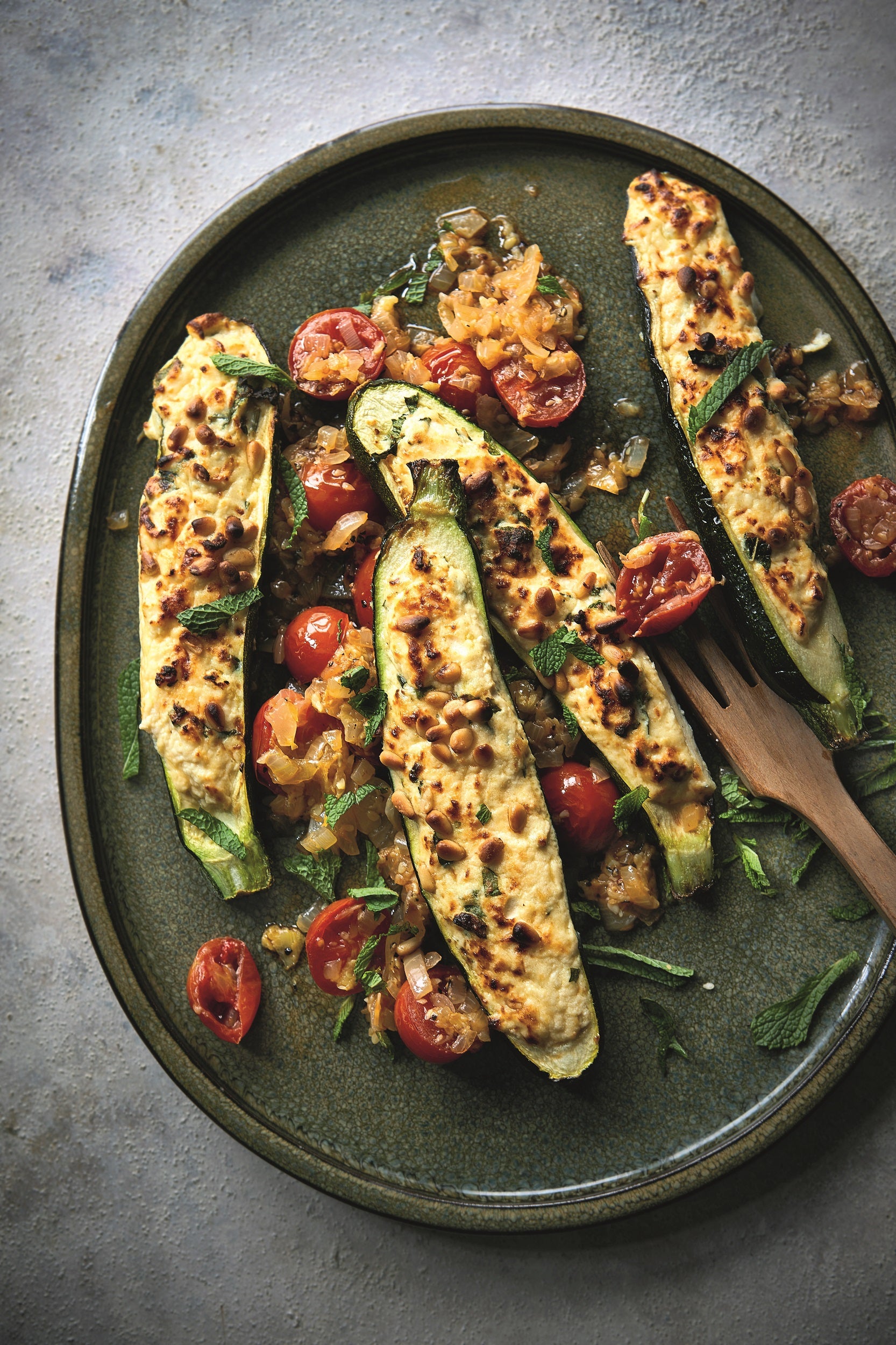
Stuffed courgettes with ricotta and mint
 open image in gallery
“This beautiful dish is perfect for a light lunch or would serve four as a starter,” says food writer and restaurateur Katie Caldesi. “To bump up the protein, serve this with low-carb bread rolls or finish your meal with some Greek yogurt and berries. These also make a summery and delightful meal with the Roast Tomato Sauce below.”
Serves: 2
Ingredients:
2 courgettes (approx 400g), halved lengthways
150g ricotta cheese
1 egg, beaten
20g Cheddar or other hard cheese, finely grated
15-20 mint leaves, chopped, or 1 heaped tsp dried mint, plus extra chopped leaves to garnish
25g pinenuts or other nuts, roughly chopped
1 tbsp extra-virgin olive oil, plus extra for drizzling
1 small onion, finely chopped
10 cherry tomatoes, halved
Salt and pepper
Method:
1. Use a spoon to carefully scoop out the insides of the courgettes (keep the insides for later) leaving a boat-shaped shell of just under one centimetre thick, being careful not to make any holes. Put the courgette halves on a crisper in the drawer and air fry at 200°C for 10 minutes.
2. Meanwhile, mix the ricotta, egg, cheese, mint and some seasoning together in a bowl. When the courgettes are just tender and starting to lightly brown, remove them from the drawer and divide the filling between them.
3. Put the crisper into the drawer and place the courgettes on top, packed together. Drop the pine nuts evenly on top. Brush with two teaspoons of oil. Air fry for eight to 10 minutes until lightly browned, then set the stuffed courgettes aside and keep warm.
4. Finely chop the courgette insides and mix these in a bowl with the remaining teaspoon of the oil, the onion, tomatoes and some seasoning. Remove the crisper from the air fryer, then tip the mixture into the drawer, or into an ovenproof dish, and air fry at 200°C for 10 minutes until soft. Toss twice during the cooking time.
5. Divide the chopped courgette mixture between two plates, or one large serving plate, and arrange the stuffed courgette halves on top. Garnish with mint leaves and a swirl of olive oil.
For the roast tomato sauce:
“When tomatoes are in season, ripe and bursting with flavour, it’s worth making your own sauce in around 30 minutes in small batches in the air fryer. At other times, canned Italian plum tomatoes are ideal. This sauce can be made with large, small or cherry tomatoes or a mix of them all. Serve the sauce with the stuffed courgettes with ricotta and mint above, just like a tomato passata (sieved tomatoes), with eggs or tofu for a protein-packed meal.”
Ingredients:
1kg ripe and very red tomatoes, quartered
4 basil sprigs (10 leaves)
1 small onion, quartered and separated into petals
4 tbsp extra-virgin olive oil
2 garlic cloves, peeled and lightly crushed using the flat of a knife
Salt and pepper
Method:
1. Put the tomatoes, two of the basil sprigs and the onion into the air fryer drawer (with no rack) or into a silicone dish with no holes. Air fry at 170C for 20 to 25 minutes, or until the tomatoes have released their juices and softened, shaking the drawer twice during the cooking time and making sure the onion and basil are under the tomatoes, so they don’t burn.
2. When the tomatoes are soft, remove the basil sprigs, then use a stick blender in the drawer, or transfer the mixture to a blender, and whizz up the tomatoes, skins and all, until you have a smooth sauce.
3. Put the olive oil and garlic cloves together in a clean drawer or silicone dish, then air fry at 200C for a couple of minutes until you smell garlic. Add the tomato mixture, the remaining basil and a splash of water to dilute the sauce to a thick pouring consistency. Cook for five minutes until the mixture is hot.
4. Taste and season accordingly. Now it is ready to use straight away or decant into a container, then cool and store in the refrigerator for up to five days or freeze for up to three months. Defrost before use.
‘The Diabetes Air Fryer Cookbook’ by Katie Caldesi (Hamlyn, £22).
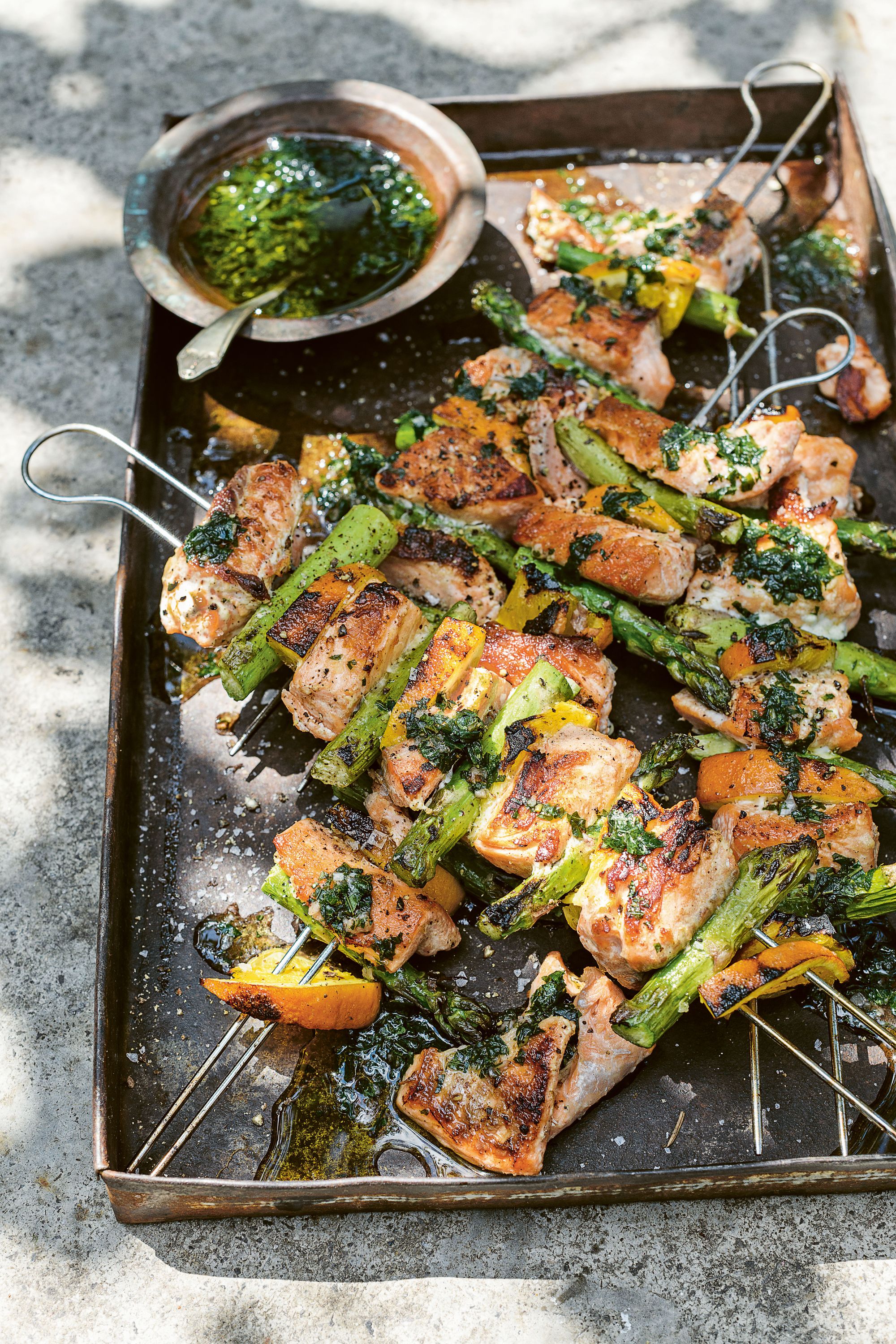
Trout, asparagus and orange with mint garlic oil
 open image in gallery
Cookbook writer and live fire expert Genevieve Taylor is a big fan of cooking fish on the BBQ – and this summer, she’s choosing trout over salmon.
She calls this dish “simple colourful little skewers using diced trout fillet”, served with asparagus, orange and a mint garlic oil.
“When asparagus is not in season, sub in Tenderstem or purple sprouting broccoli. As is often the case, a little fresh herby hint post-cooking, this time via a minty oil, really elevates the whole dish.”
Serves: 4
Ingredients:
500-600g chunky trout fillets, skinned
200g asparagus, washed and trimmed
1 orange
2 tbsp olive oil
Flaked sea salt and freshly ground black pepper
For the mint garlic oil:
A good handful of mint leaves, about 15g, finely chopped
100ml olive oil
1 garlic clove, crushed to a paste
1-2 tsp red wine vinegar, to taste
You also need 8 metal skewers
Method:
1. Dice the trout into three-centimetre chunks. If you have thinner sections on one side of the fillets you can stack them to make thicker pieces. Cut the asparagus into similar-sized lengths. Leaving the skin on, slice the orange in half, then into quarters and cut into little wedges.
2. Thread everything alternately onto metal skewers, double skewering if you can to make life easier for yourself. Drizzle generously with the olive oil and season all over with salt and pepper. At this point you can slide into the fridge for a few hours until you are ready to cook.
3. Fire up the barbecue ready for hot direct grilling, letting the coals fully burn, and set a grill tray over the fire to get hot. Scoop the mint leaves into a small bowl. Stir through the olive oil, garlic and red wine vinegar and season with salt and pepper to taste. Set aside.
4. Take the skewers to the grill and set on the hot grill tray. Cook for a couple of minutes each side until the trout is golden and crisp. Try to avoid turning the skewers until the crust has formed to minimise the chance of sticking.
5. Serve drizzled with the mint oil, and don’t forget to nibble the orange flesh off the skin as you eat.
‘Scorched: The Ultimate Guide To Barbecuing Fish’ by Genevieve Taylor (Quadrille, £25).
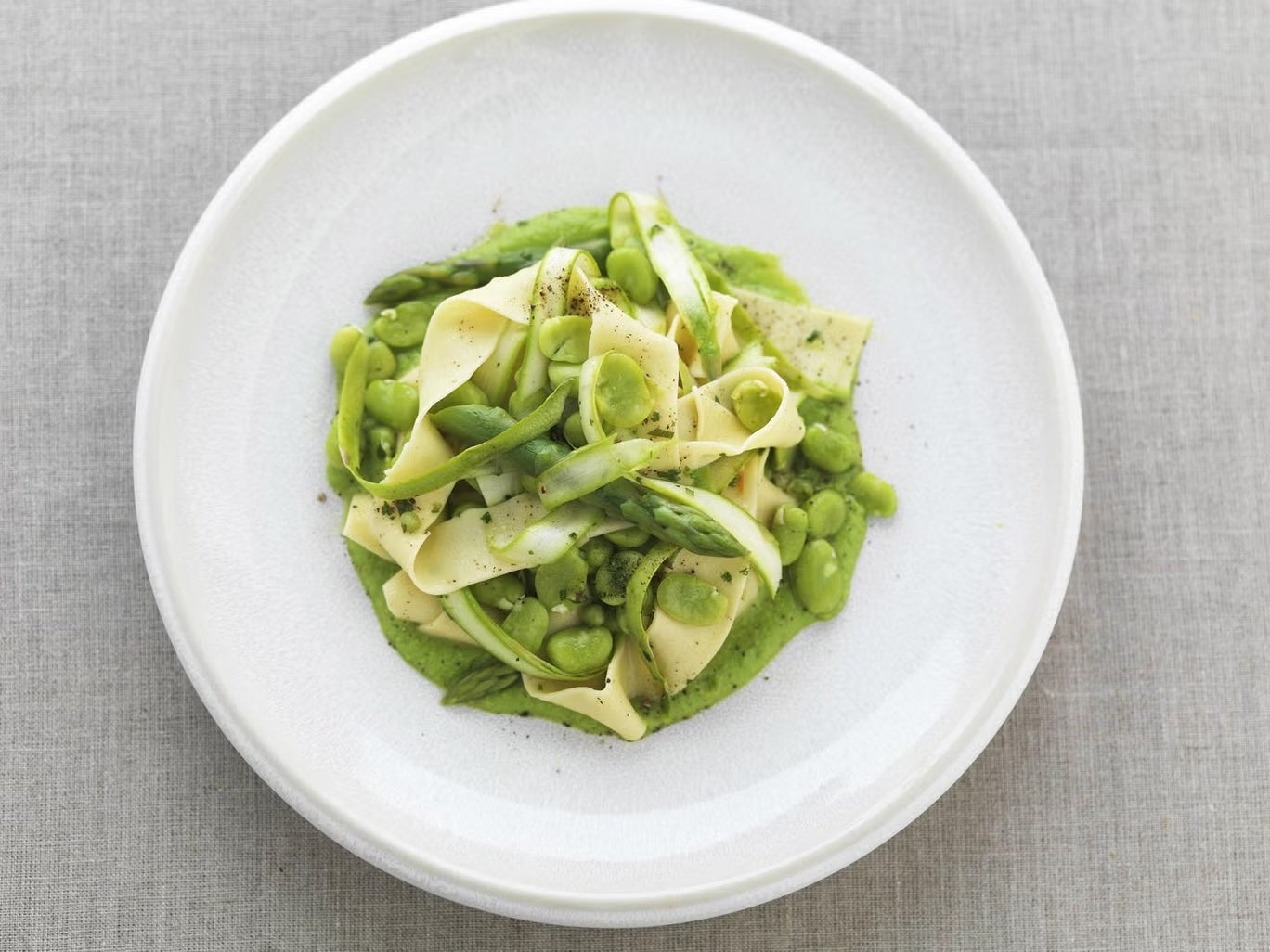
Pappardelle with shaved asparagus, broad beans, marjoram and pea purée
 open image in gallery
Asparagus and pappardelle are a winning combination, married perfectly together in this simple recipe from Geoffrey Smeddle. Together with earthy broad beans and fresh marjoram, this pasta dish is a perfect way to celebrate the days of spring and early summer. To serve, add some shaved cheese on top; Parmesan and Pecorino Romano make lovely options, as does British Old Winchester if you’d like to keep this recipe vegetarian.
Ingredients:
500g fresh peas in the pod
1 pinch sugar
150ml double cream
500g fresh broad beans, still in the large outer pod
2 bunches asparagus
320g pappardelle
10g fresh marjoramsalt
Black pepper, freshly ground
Olive oil
Method:
1. Make the pea purée in advance. Shell the peas and discard the pod. Bring a pan of salted water to the boil and cook the peas for three minutes. Drain, reserving one cup of the cooking water, and place into ice water.
2. Place the peas in a blender with some of the cooking water, add a pinch of salt and sugar then process to a purée. Add just enough double cream to help it process, then set aside. Shell the broad beans from the outer pod then cook in boiling salted water for one minute before draining and refreshing in ice-cold water. Once cold, drain and pop off the outer pod from each bean then set aside.
3. Set aside six spears of asparagus per person. Cut off the tips and keep them to use as a garnish. Add the remainder of those spears to the others, which will be used to make ribbons. Trim the woody base from the asparagus – this will be about an inch or so at the base of each spear, which can be reserved for soup.
4. Using a swivel-head peeler and working from the head of the spear to the base, shave ribbons of asparagus and place them in a bowl. Bring a large pan of water and a second smaller one to the boil and salt both well. Gently reheat the pea purée in a small pan, taste for seasoning and set aside in a warm place. Place the pasta in the large pan of boiling water and cook until al dente. Boil the reserved asparagus tips in the smaller pan for four minutes.
5. Drain the pasta when done, reserving a few tablespoons of the cooking water. Return the pasta to the pan, along with the cooking liquid, broad beans, a dash of olive oil, half the asparagus ribbons and half the fresh marjoram. Season with salt and add half the asparagus spear tips. Divide the pea purée between four plates, making a round bed in the centre of each.
6. Pile the pasta in the centre of each then finish with the rest of the shaved asparagus and the asparagus tips. Add one last dash of salt and pepper and then scatter the rest of the marjoram over the top.
Recipe by Geoffrey Smeddle from Great British Chefs
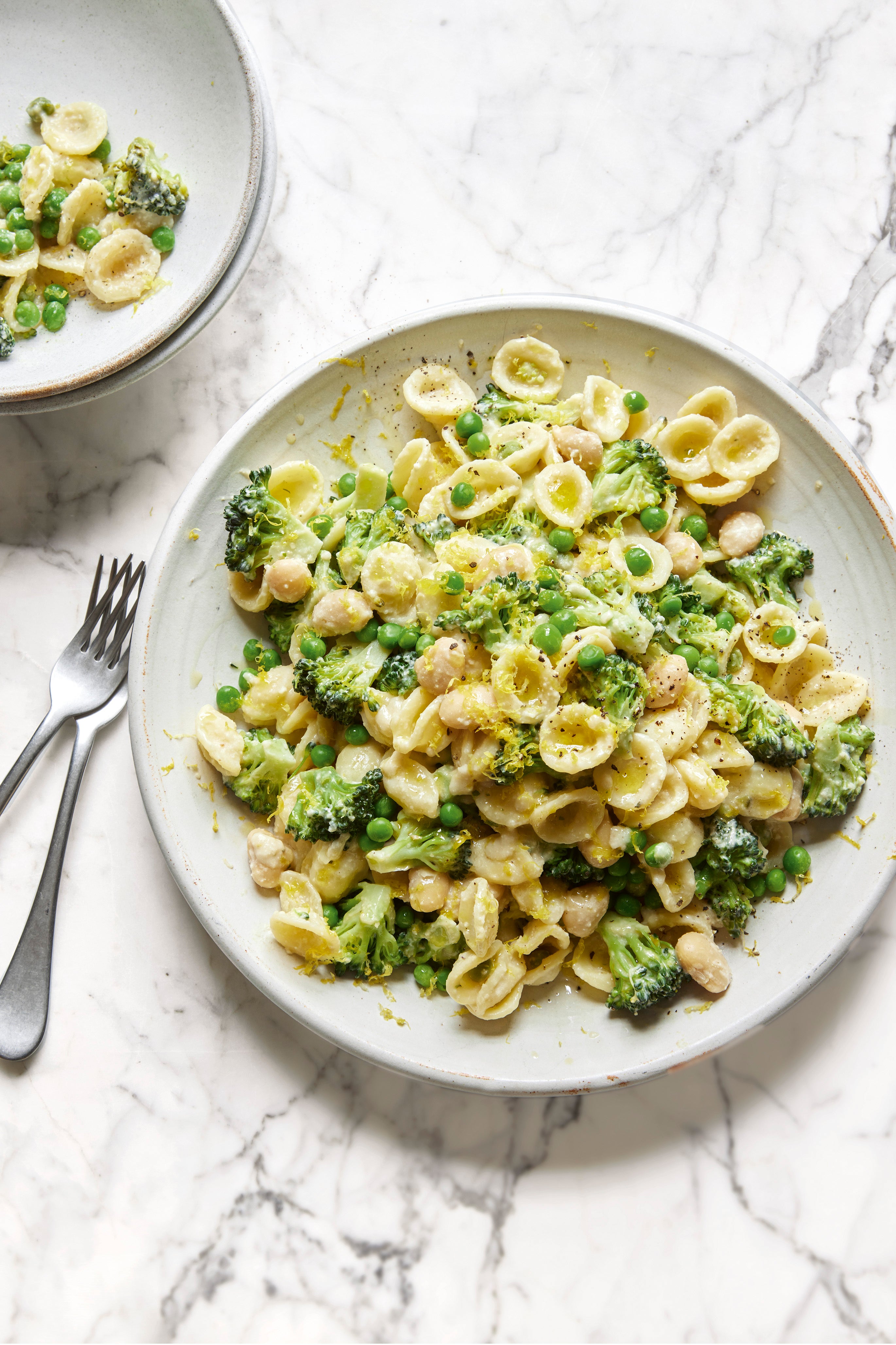
Lemony pea and broccoli pasta
 open image in gallery
“I make a variation of this for my kids a lot, using whatever greens I have in the fridge – green beans, asparagus, spinach etc. It’s exceptionally simple yet super-satisfying,” says Ella Mills, the brains behind Deliciously Ella.
Serves: 2
Ingredients:
2 servings of pasta; I like orecchiette in this dish (about 75g per person)
1 small head broccoli (about 300g) cut into small florets
100g frozen peas
Large handful of cashews (about 50g, see note below)
1 vegetable stock cube
1 tsp Dijon mustard
1 tbsp nutritional yeast
Grated zest and juice of 2 lemons
1 × 400g tin of butter beans, drained and rinsed
Sea salt and black pepper
Method:
1. Bring a large saucepan of salted water to the boil and add the pasta. Cook according to the instructions on the pack, adding the broccoli and frozen peas for the last three minutes of the cooking time. Cook until the pasta is al dente, the broccoli is tender, and the peas are defrosted, then drain and return to the pan.
2. Meanwhile, put the cashews and stock cube into a bowl with 100 millilitres boiling water, let the stock cube dissolve and the cashews soak for five minutes.
3. Put the mustard, nutritional yeast, the juice of both lemons and half the zest, and half the tin of butter beans into a high-speed blender along with the cashews and their soaking liquid. Blend until you have a smooth, creamy sauce. Season with salt and pepper to taste.
4. Pour the sauce over the drained pasta and veg, adding the last half of the butter beans. Stir to combine and top with a little extra lemon zest.
Note: To make this nut-free, swap the cashews for sunflower seeds.
‘Deliciously Ella: Healthy Made Simple’ by Ella Mills (Yellow Kite, £22).
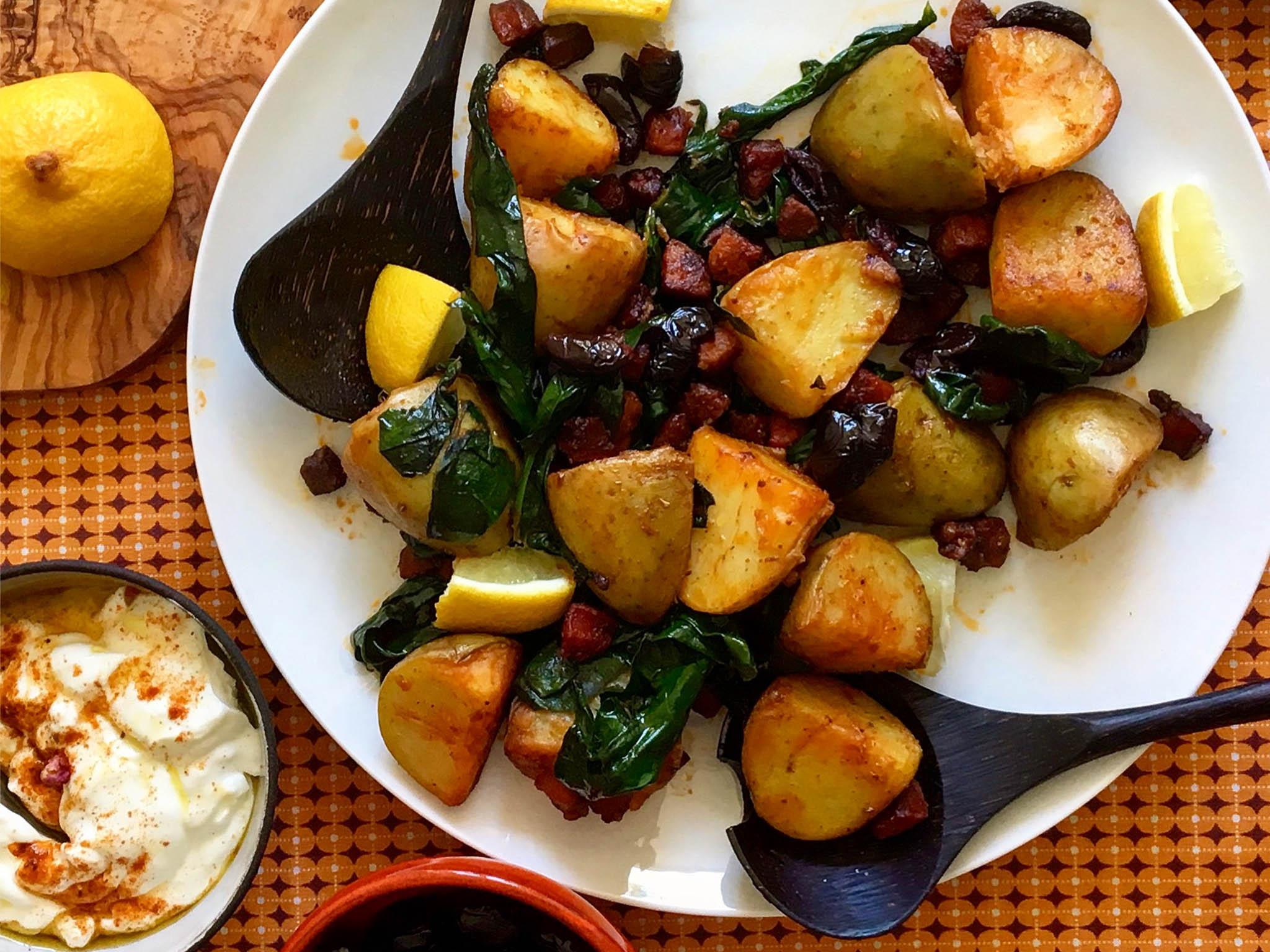
Jersey royals with chorizo and wilted spinach
 open image in gallery
“Ras-el-hanout is a North African spice mixture – that includes dried peppers, cardamom, nutmeg, allspice, cinnamon, cloves, fennel, rosebuds – which adds warmth to the potatoes but if you don’t have it, you can skip this ingredient.”
Serves: 4-5
Ingredients:
500g Jersey Royals 1 bunch spinach, about 200g 3 links cooking chorizo, about 140g-150g 50g black olives with pits 1 tsp ras-el-hanuut spice mixture Lemon juice and lemon wedges
Method:
1. Gently wash the potatoes but don’t peel them. If they’re small, leave them whole but if larger, slice into chunks. Place the potatoes in a large pan of salted water and bring to a boil. Reduce the heat and simmer until you can insert a knife into the potatoes.
2. While the potatoes are cooking, wash the spinach thoroughly and remove and discard the thick stems. Spin the leaves, leaving a bit of the water on the leaves. Pit the olives and discard the pits.
3. Dice the chorizo and cook in a frying pan over medium heat. Drain off the grease but reserve. When the potatoes are cooked, drain them in a colander. Add the ras-el-hanout spice mixture to the chorizo and add back a tablespoon of the chorizo fat.
4. If you don’t have enough, top up with olive oil. Stir the ras-el-hanout before adding the potatoes. Coat the potatoes in the spiced oil and turn up the heat to crisp the them.
5. At the last minute, add the spinach and stir to wilt the leaves. Stir in the olives. Add a generous squeeze of lemon juice. Taste and add more lemon juice, if needed. Both the chorizo and olives are salty so you probably won’t need to season with additional salt. Serve warm with extra lemon wedges.
Recpie by @juliapleonard
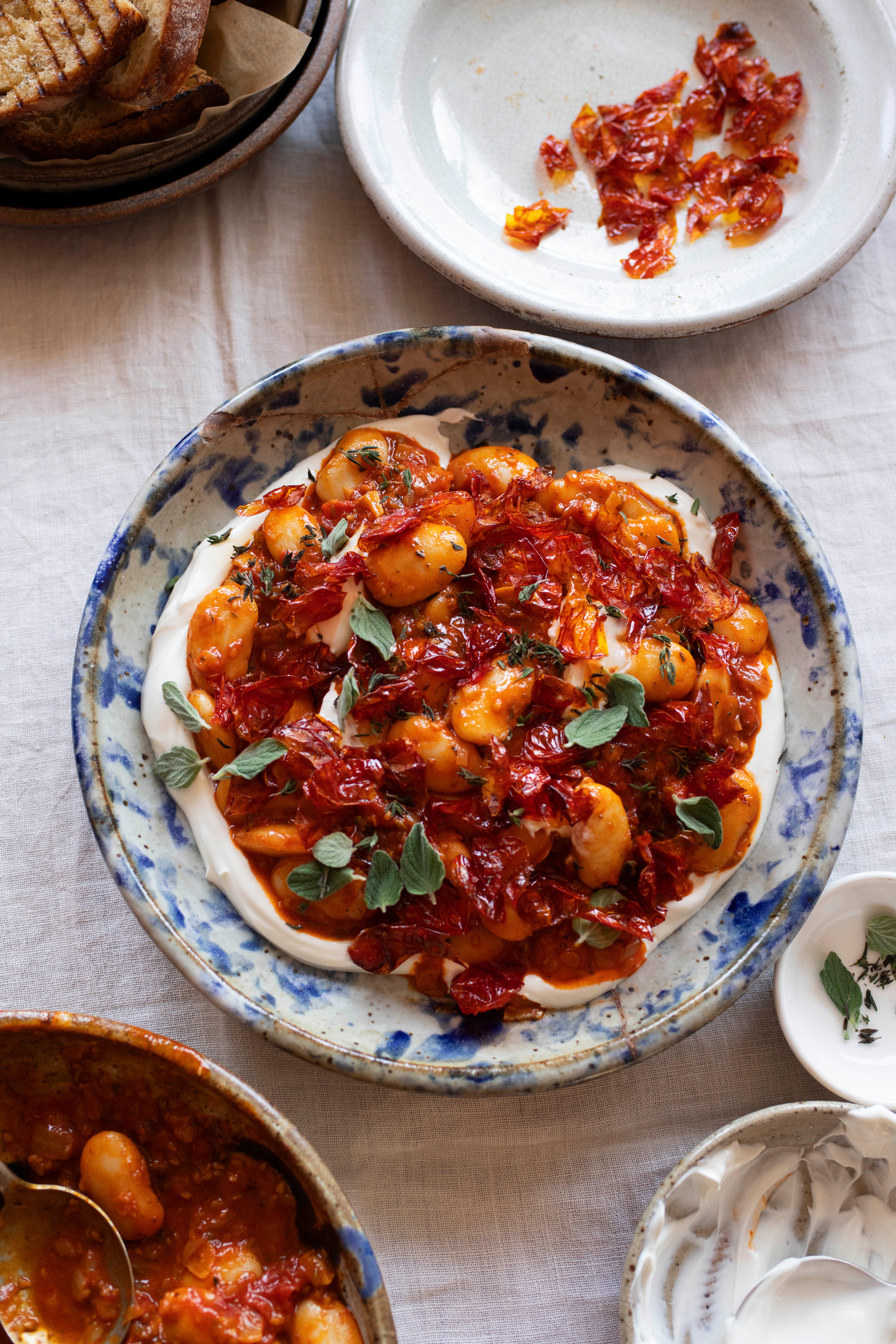
Butter beans with roasted cherry tomatoes
 open image in gallery
“Source the larger butter beans, or judiones, for this, if you can. They’re softer, more buttery and much creamier than the smaller ones (which come in a tin). This dish works well as part of a mezze spread, or can be eaten as it is, with something like crumbled feta or olives on top,” says Yotam Ottolenghi, Helen Goh, Verena Lochmuller and Tara Wigley, the team behind new cookbook Ottolenghi COMFORT.
“Keeping notes: Once made, the beans keep for up to three days in the fridge: just bring them back to room temperature before serving. The crispy tomato skins are a great thing to have around as well, to add to salads and pasta dishes. The recipe comes from a restaurant called Bar Rochford in Canberra, Australia, where they’re served with fresh green beans. They keep for a week in a sealed jar.”
Serves: 4
Ingredients:
500g cherry tomatoes
85ml olive oil
1 onion, finely diced
2 garlic cloves, thinly sliced
2 tsp dried oregano
2 tsp thyme leaves, roughly chopped, plus a few whole thyme leaves to garnish
1 tsp fennel seeds, toasted and lightly crushed
1 fresh bay leaf
80ml dry white wine
2 tsp smoked paprika
1 x 700g jar of good-quality butter bean, drained and rinsed
Salt and black pepper
To serve:
75g thick Greek-style yoghurt
Thick slices of sourdough (or any crusty) bread, toasted (optional)
Method:
1. Toss the tomatoes with two teaspoons of the oil and spread them on a parchment-lined baking tray. Roast for 20 minutes, until the skins have loosened and the tomatoes are soft and have shrunk a little. Remove from the oven and transfer the tomatoes, along with all their juices, to a shallow bowl to cool.
2. Re-line the baking tray with a fresh sheet of baking parchment and reduce the oven temperature to 120C/100C fan.
3. Once cool enough to handle, pinch the skins off the tomatoes and place the skins on the lined baking tray. Return the tray to the oven for about 45 minutes, until the skins are dry and crisp, giving them a good stir a couple of times during baking. Set the skinless tomatoes aside.
4. Put the remaining 75 millilitres of oil into a medium saucepan and place on a medium heat. Add the onion, garlic, oregano, thyme, fennel seeds and bay leaf and cook for 10-12 minutes, until the onion has softened, but has not taken on too much colour. Add the wine, simmer for two minutes to reduce, then add the paprika. Cook for another minute, then add the reserved tomato flesh, along with one teaspoon of salt. Simmer gently for about 15 minutes, stirring often so that the tomatoes break down. Add the beans and a good grind of pepper and stir to combine. Cook for a couple of minutes, just to warm through, then remove from the heat. Spread the yoghurt over a serving plate and then pile the beans on top. Crumble over the dried tomato skins, finish with a sprinkling of thyme leaves and serve.
‘Ottolenghi COMFORT’ by Yotam Ottolenghi, Helen Goh, Verena Lochmuller and Tara Wigley (Ebury Press, £30).
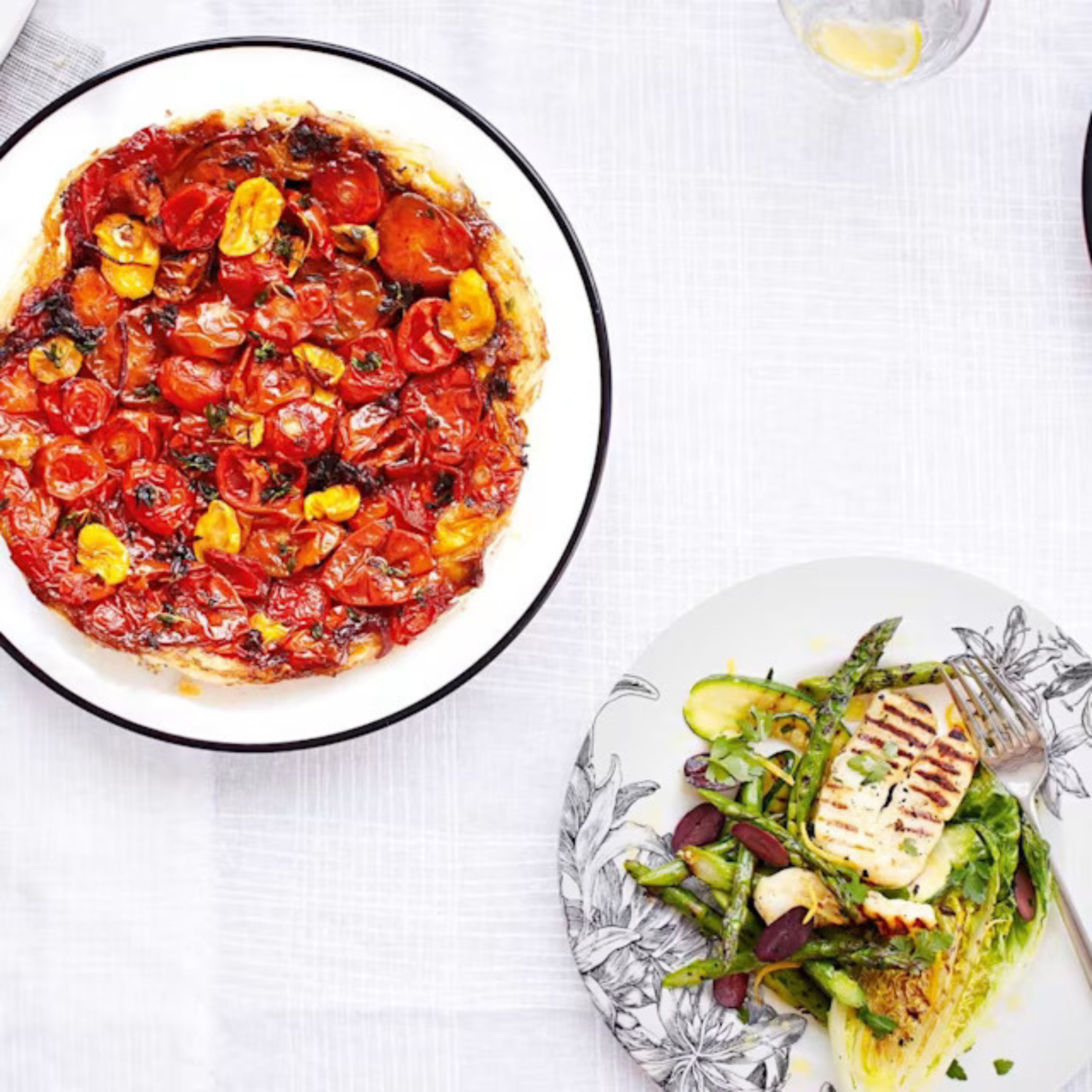
Tomato tarte tatin
 open image in gallery
The classic upside-down tart gets a summery, savoury makeover. These flavours work beautifully with a griddled salad – serve both at an al fresco picnic or barbecue. Using different types of tomatoes (we’ve gone for red and yellow cherry tomatoes) adds to the wow factor.
Serves: 4
Prep time: 15 minutes | Cook time: 1 hour
Ingredients:
2 cloves of garlic, crushed
2 tsp of light brown sugar
2 tsp of balsamic vinegar
2 tsp of thyme
375g of block puff pastry
1 handful of plain flour, for dusting
1 red onion, finely sliced
30g of butter
3 tsp of olive oil
600g of mixed tomatoes, cut in half and deseeded
Method:
1. Preheat oven to 200C/180C fan/gas 6. Make sure the tomato seeds are all removed – this will stop your pastry getting soggy.
2. Toss the onion and tomatoes in the olive oil and season with a little salt and pepper. Put out in a single layer on a baking sheet and roast for 20 minutes, until the tomatoes have dried out slightly, and the onions are golden.
3. Melt the butter in a 24cm non-stick, ovenproof frying pan. Add the garlic and fry for 1 min before adding the sugar and balsamic vinegar. Stir and allow to lightly caramelise.
4. Remove from the heat, sprinkle over the thyme and lay the tomato mixture in a single layer in the pan, tucking together tightly so as not to leave any spaces in between.
5. Increase the oven temperature to 220C/200C fan/gas 7. Roll the pastry on a lightly floured surface into a circle slightly larger than the pan – about 26cm wide.
6. Carefully lay the pastry over the tomatoes, tucking the excess down the sides. Prick the pastry all over with a fork. Transfer to the oven and bake for 20-30 minutes, until golden and crisp. Let it sit for 10 minutes, run a knife around the edge and carefully turn out onto a plate. Scatter with basil leaves and serve in slices.
Recipes originally appeared in OcadoLife
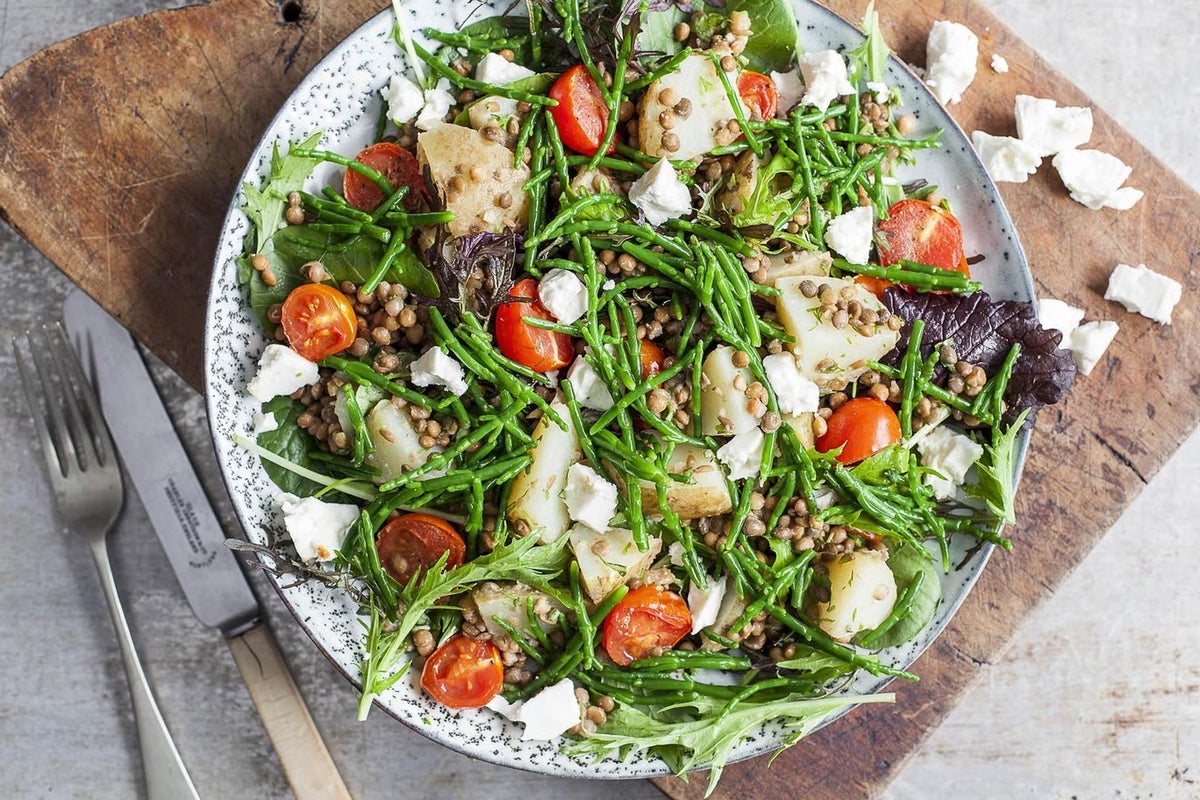
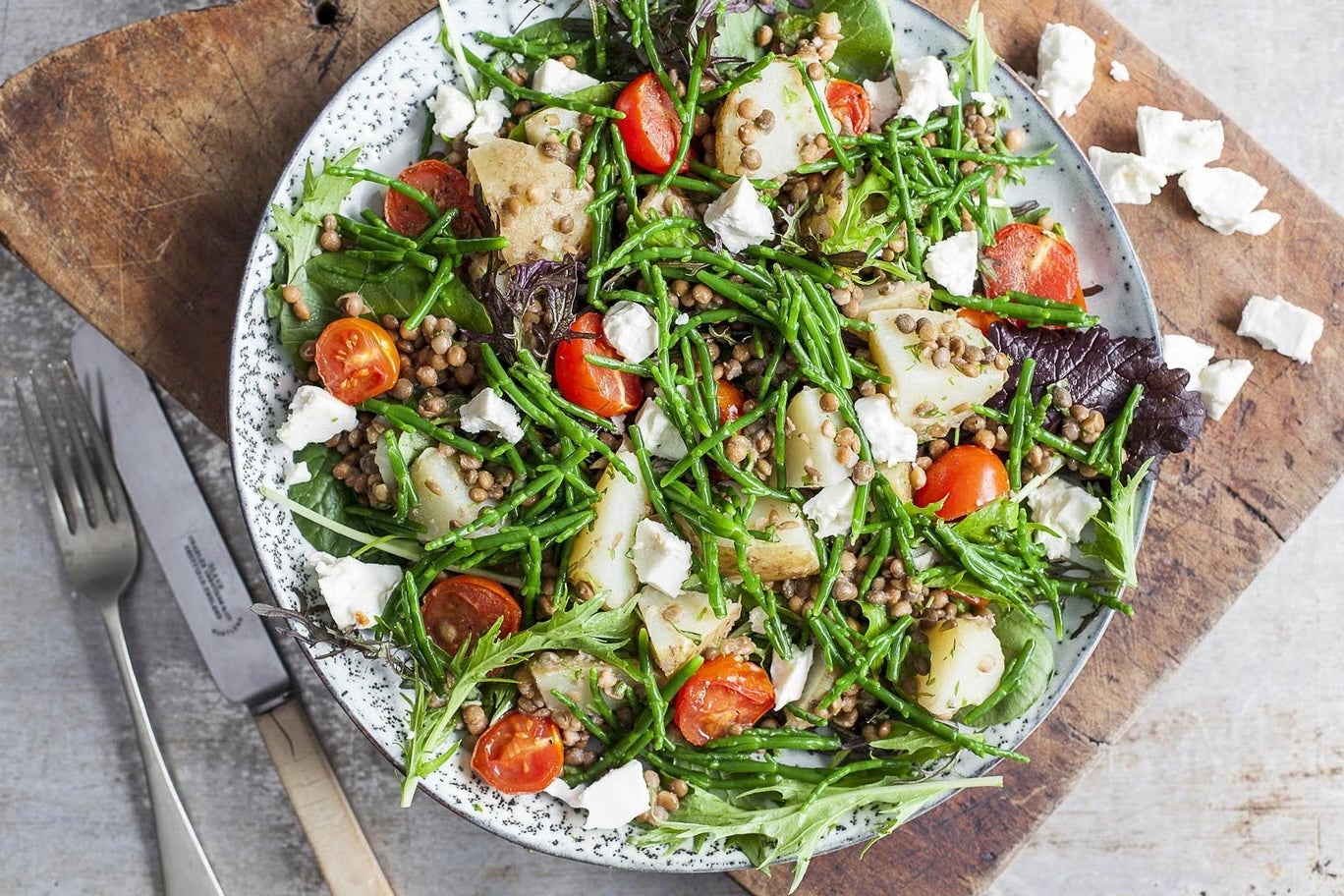
Samphire, new potatoes and lentils with roasted cherry tomatoes and feta
 open image in gallery
Living by the coast, samphire has always been a favourite. There are two varieties; sea (usually a pick your own affair) or marsh, both commonly used with fish. Its distinctive salty flavour lends itself to vegetarian dishes too; it’s brilliant with spuds. This salad uses tomatoes for softness and sweetness, with lentils for an earthy note and protein.
Samphire grows in sandy areas so let it sit in a bowl of cold water for a couple of minutes to allow any grit to sink to the bottom, then carefully lift it out and give it a quick extra rinse before use.
Serves: 2
Time: 25 mins
250g cherry tomatoes
400g new potatoes
100g samphire
1 tin dark green speckled lentils
10g basil
8g dill
1 garlic clove
1 tbsp Dijon mustard – add to taste
1 lemon
50g salad leaves
75g feta cheese
Method:
1. Put your oven on to 200C/gas 6. Halve the tomatoes. Lay them cut side up on a baking tray, season with salt and pepper and drizzle with a tablespoon of oil.
2. Roast the tomatoes in the hot oven for 10-15 mins, until softening and starting to blister, then remove and keep to one side. Meanwhile, boil a kettle. While it boils, scrub and chop the potatoes into halves or quarters, so they’re roughly evenly sized.
3. Transfer the potatoes to a saucepan. Add a pinch or two of salt. Bring the pan up to the boil on the hob. Cook until just tender to the point of a knife (approx 12-15 mins) then leave to drain in a colander. Once the potatoes are on, wash the samphire well (see cook’s note). Drain and rinse the lentils in a sieve. They can clump together and look a bit gloopy in the tin, but are fine once rinsed.
4. Chop half the basil and half the dill leaves. Peel and finely chop 1 garlic clove. In a small bowl, make a dressing by mixing just half of the mustard to start with, with 1 tablespoon of oil, and salt and pepper. Add garlic and a squeeze of lemon juice, both to taste.
5. Reboil the kettle. Add a little water to another saucepan and blanch (quickly boil) the samphire for 30 secs. Drain and keep to one side. Stir the lentils into the mustard dressing together with half the chopped herbs. Season to taste with salt and pepper. If you like, add a little more mustard, garlic or lemon juice, to taste.
6. On serving plates, layer the salad leaves, potatoes, lentils, roasted tomatoes and samphire. Top with crumbled feta and the remaining chopped herbs.
Recipe from Riverford Organic Farm
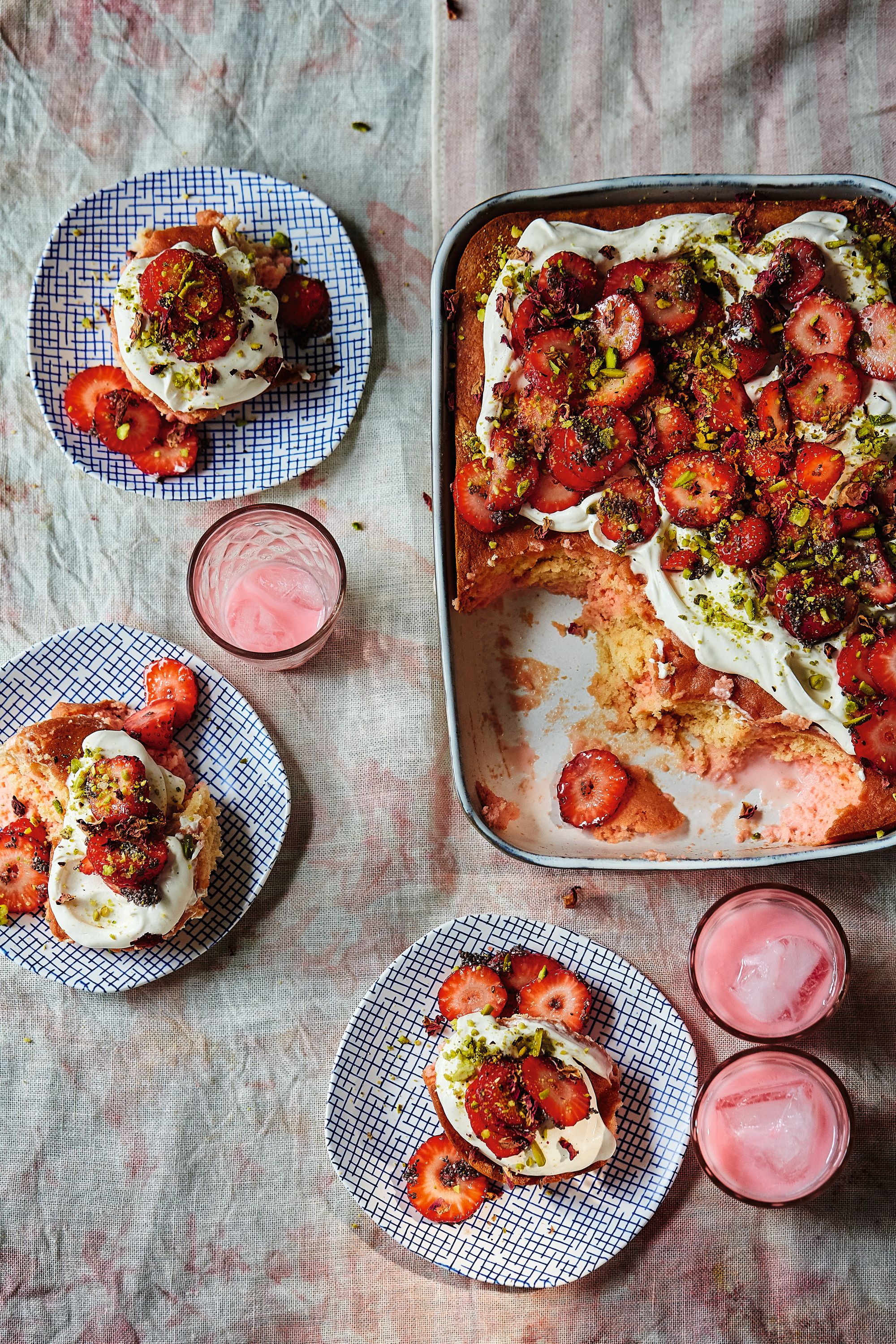
Strawberry falooda milk cake
 open image in gallery
“British colonial rule may have divided up India, Pakistan and Bangladesh, but we are all united in our love of falooda – a rose-tinted milkshake textured with bubbly basil seeds and noodles,” says Ravinder Bhogal.
Faloodas come in many flavours, but her favourite is “the original and the best – rooh afza, make a thick concentrated floral syrup that turns milk Barbie pink”. The syrup can be easily found in Indian and Pakistani supermarkets.
“Here, inspired by my friend Ravneet Gill’s excellent Rasmalai Cake, I have used rooh afza-flavoured milk to make a sort of tres leches cake. If you can’t find basil seeds, use chia seeds, which have a similar tapioca-like texture when hydrated.”
Ingredients:
225g plain flour
1 tsp baking powder
½ tsp salt
5 eggs
175g caster sugar
1 tsp rosewater
115g unsalted butter, melted, plus extra for greasing
For the falooda milk:
50ml rooh afza
200g condensed milk
250ml whole milk
300ml double cream
For the topping:
300g strawberries, sliced
2 tbsp basil seeds
1 tbsp rosewater
1 tsp caster sugar
300ml double cream
Dried rose petals, for sprinkling
Crushed pistachios, for sprinkling
Method:
1. Preheat the oven to 180C/fan 160C/gas mark 4 and lightly grease a three-litre (33 × 23cm) baking dish with butter.
2. In a jug or bowl, whisk together all the ingredients for the falooda milk and leave in the fridge to chill till required.
3. Sift the flour, baking powder and salt into a bowl. Put the eggs and sugar in the bowl of a stand mixer fitted with the whisk attachment and whisk on high speed for about seven minutes until thick and pale (or whisk in a bowl with a hand-held electric whisk). Fold in the flour mixture and rosewater, then fold in the melted butter. Spoon into the baking dish, smooth the top and bake for 30-35 minutes until golden brown, and a skewer inserted into the cake comes out clean.
4. When you remove the cake from the oven, prick it all over with a skewer and keep warm. Pour over the falooda milk and leave to cool to room temperature. Cover and refrigerate overnight.
5. To serve, mix together the strawberries, basil seeds, rosewater and sugar and set aside. Before serving, gently whisk the double cream in a bowl until it has a soft, rumpled bedsheet texture. Spread the cream over the surface of the cake and then spoon the strawberries over the cake. Top with rose petals and crushed pistachios.
‘Comfort & Joy: Irresistible Pleasures From A Vegetarian Kitchen’ by Ravinder Bhogal (Bloomsbury, £26).
Raspberry and cream Swiss roll
 open image in gallery
“Obviously, in a Swiss roll, you always want to have a beautiful swirl. It is not difficult to get it right, just remember a few key things as you do it,” says Rahul Mandal.
“You need to roll the Swiss roll when it’s still warm, and cover it with a tea towel, to make sure the sponge doesn’t dry out as it cools to room temperature. When it is cooled completely, carefully unroll and fill it with your filling.
“It is important to leave about 1-1.5cm from the edge, as you spread the filling on the sponge. As you roll, the filling will reach the sides and cover the whole area of the sponge.”
Serves: 8-10
Ingredients:
For the vanilla sponge:
Butter, for greasing
3 large free-range eggs
1 tsp vanilla bean paste
90g caster sugar, plus extra for dusting
80g plain flour
For the raspberry jam:
250g frozen raspberries
180g jam sugar
Zest of 1 lemon
For the cream filling:
100g clotted cream
200ml double cream
1½ tsp vanilla bean paste
For decoration:
400g fresh raspberries
Method:
1. Preheat the oven to 190C/170C fan/375F/gas mark 5. Grease a Swiss roll tin and line with baking paper.
2. Make the vanilla sponge. In a mixing bowl, whisk together the eggs, vanilla and sugar using an electric whisk for five to seven minutes, until tripled in volume and reached ribbon stage.
3. Sift the flour on top, then fold it in using a spatula or metal spoon, working gently but swiftly, to avoid knocking too much air out of the batter.
4. Spoon the batter into the prepared tin and spread out using a spatula. Bake for nine to 10 minutes until lightly golden.
5. Remove from the oven and let the cake cool slightly in the tin for five minutes. Lightly dampen a clean tea towel by spraying it with water. Place the tea towel on the work surface, and position a piece of baking paper slightly larger than the tin on top of the towel. Dust the baking paper with some caster sugar.
6. Carefully flip the Swiss roll tin on top of the baking paper, then remove the tin and carefully peel the lining baking paper from the bottom of the sponge.
7. With the help of the dampened tea towel, slowly start to roll the sponge inside the fresh sheet of baking paper, starting at the short end. Once rolled completely, let it cool.
8. Make the jam. Place 200g of the raspberries in a large saucepan over a medium heat. Add the sugar and cover, then bring to the boil. Once the mixture starts to boil, remove the lid.
9. Once the temperature of the jam reaches about 105C, boil for a further two to three minutes, stirring occasionally to make sure the jam does not stick to the bottom of the pan.
10. Take the pan off the heat and add the remaining raspberries, along with the lemon zest. Mix well.
11. Make the cream filling. In a large bowl, whisk the clotted cream with the double cream and vanilla, using a balloon whisk until you have stiff peaks. Don’t over-whisk.
12. Transfer half the cream to a second bowl and fold in two to three tablespoons of the cooled raspberry jam to create a rippled cream. Place both bowls of cream in the fridge until needed.
13. Assemble and decorate. Unroll the sponge and then spread all the rippled cream over the surface. Drizzle the rest of the jam on top.
14. With the help of the baking paper on the outside of the sponge, roll up the sponge tightly. Cover the Swiss roll with the tea towel and place in the fridge for 30 minutes to one hour to set.
15. Once set, remove from the fridge and remove the tea towel and baking paper. Cut both ends of the Swiss roll to reveal the spiral. Use the non-rippled cream to coat the outside of the sponge.
16. Arrange the raspberries on the Swiss roll as shown in the photo. The roll can be kept in the fridge for about a day.
‘Showstopping Cakes’ by Rahul Mandal (Kyle Books, £26).
“This is one of my favourite pies to make,” says former Bake Off finalist Ruby Bhogal.
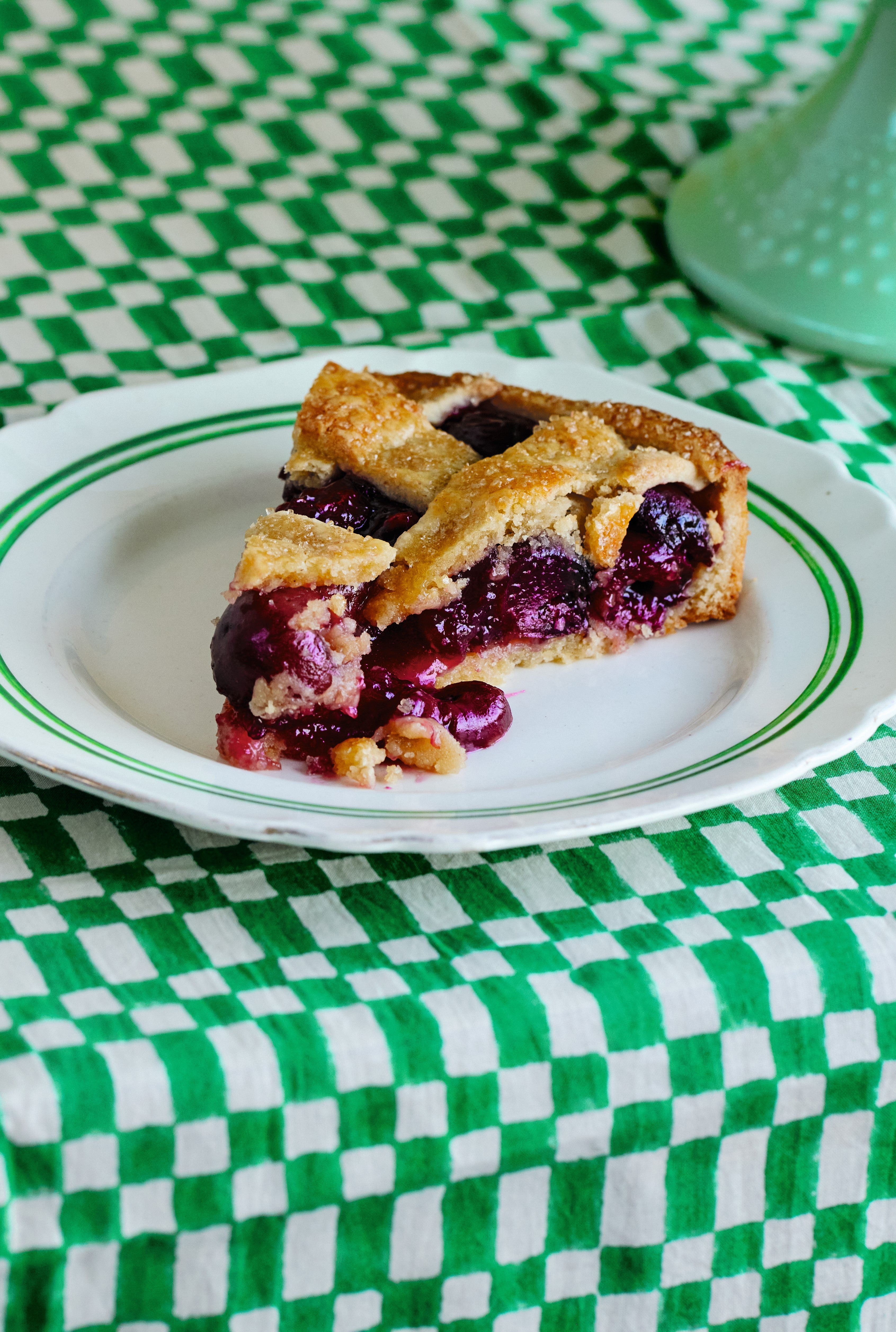
Cherry and almond pie
 open image in gallery
“Not just because it’s stupidly delicious hot or cold, but because it is also pretty simple. There’s plenty of steps in this recipe where you can make bits ahead and keep chilled until the big bake day. I have doubled the quantities for the dough because, a) it’s so simple, and b) it freezes well.”
If cherries aren’t your thing, she says you can “swap them out for another firm stone fruit. Plums would be delicious, or even unripe nectarines.
“In fact, peaches would work a dream in this, turning a slightly autumnal bake into a lovely summery number. Change the recipe seasonally. Work with what is best right now. The more you bake, the more confident you will get at changing things up.”
Serves: 6
Ingredients:
For the almond sweet shortcrust pastry:
250g unsalted butter, room temperature
1 tsp vanilla bean paste
1 tsp almond extract
100g caster sugar
2 medium eggs
200g ‘00’ or plain flour, sifted, plus extra for dusting
200g ground almonds
1 egg, beaten, for brushing
For the cherry filling:
1kg fresh cherries, stoned (you can also use tinned or frozen)
150g caster sugar
30ml freshly squeezed lemon juice
½ tsp almond extract
120ml water
35g cornflour, sifted
23-cm/9-in tart tin, buttered
Method:
1. Let’s start with the pastry so this baby can get in the fridge to chill before we do anything else. In a stand mixer or large bowl, add the butter, vanilla bean paste, almond extract and sugar. Mix well until light and fluffy. Add the eggs and mix until fully incorporated. This may take a minute or two to emulsify completely. Next, in goes the flour and ground almonds. Mix until just combined.
2. Flatten out the dough with your hands on a piece of clingfilm to about one centimetre thickness. Lightly sprinkle with flour and then wrap it tightly and place the covered dough onto a baking tray.
3. Pop the tray into the fridge to chill for about one hour – this will make it miles easier for you to roll out and handle once the butter has firmed up a notch.
4. Sprinkle a little flour onto the worktop and use a rolling pin to roll the chilled dough to three millimetres thick. You may find it easier to roll your pastry directly onto some baking paper to prevent any sticking.
5. Carefully line the base of the prepared tin, gently pressing in the pastry at the base edges before cutting off the excess dough. Keep the surplus dough to one side to use for your top decoration.
6. Use a fork to gently prick the base of the lined tart tin and place it into the freezer for at least 45 minutes to freeze through completely.
7. While the tart is in the freezer, make your decorations to top your tart. Whether you choose to lattice, use a stencil, or use cutters, set the decorations aside and place in the freezer to set firm.
8. Preheat the oven to 170C fan/190C/gas mark 5.
9. Now that everything is chilling, let’s move on to make the cherry filling. In a saucepan, add the cherries, sugar, lemon juice and almond extract. In a bowl, add the water and cornflour and mix to make a slurry. Pour into the saucepan. Place the saucepan over a medium heat and bring to the boil. Reduce the heat and cook the cherries low and slow, stirring often, for about 20 minutes until thickened. Once the liquid has reduced and coats the back of a spoon, remove from the heat and leave to cool. I pour this into a large, shallow baking tray for a speedier cool down.
10. When the pastry shell is frozen through, scrumple up some greaseproof paper, unfold it and place on top of the base. Pour in some baking beans or dried rice to blind bake for 15 minutes.
11. Remove from the oven and take out the baking beans (be careful, these will be super-hot!) and greaseproof paper. Use a pastry brush to brush beaten egg liberally over the bottom and sides to seal the pastry and ensure zero soggy bottom. Place back in the oven for a further five minutes to cook the egg wash.
12. Now spoon the cooled cherry filling into the pie case. Once filled, place your frozen pastry decoration on top and brush with egg wash. Place back into the oven for a further 20 minutes to bake.
13. Once the pie is out of the oven, allow to cool for 15 minutes in the tin, then carefully remove from the tin before slicing and serving warm. This is also killer when cold and sets nicely for a clean, sharp slice. Either way, fill your plates, fill your bellies. Happy chappy.
‘One Bake, Two Ways: 50 Crowd-Pleasing Bakes With An All-Plant Option Every Time’ by Ruby Bhogal (Pavilion Books, £26).
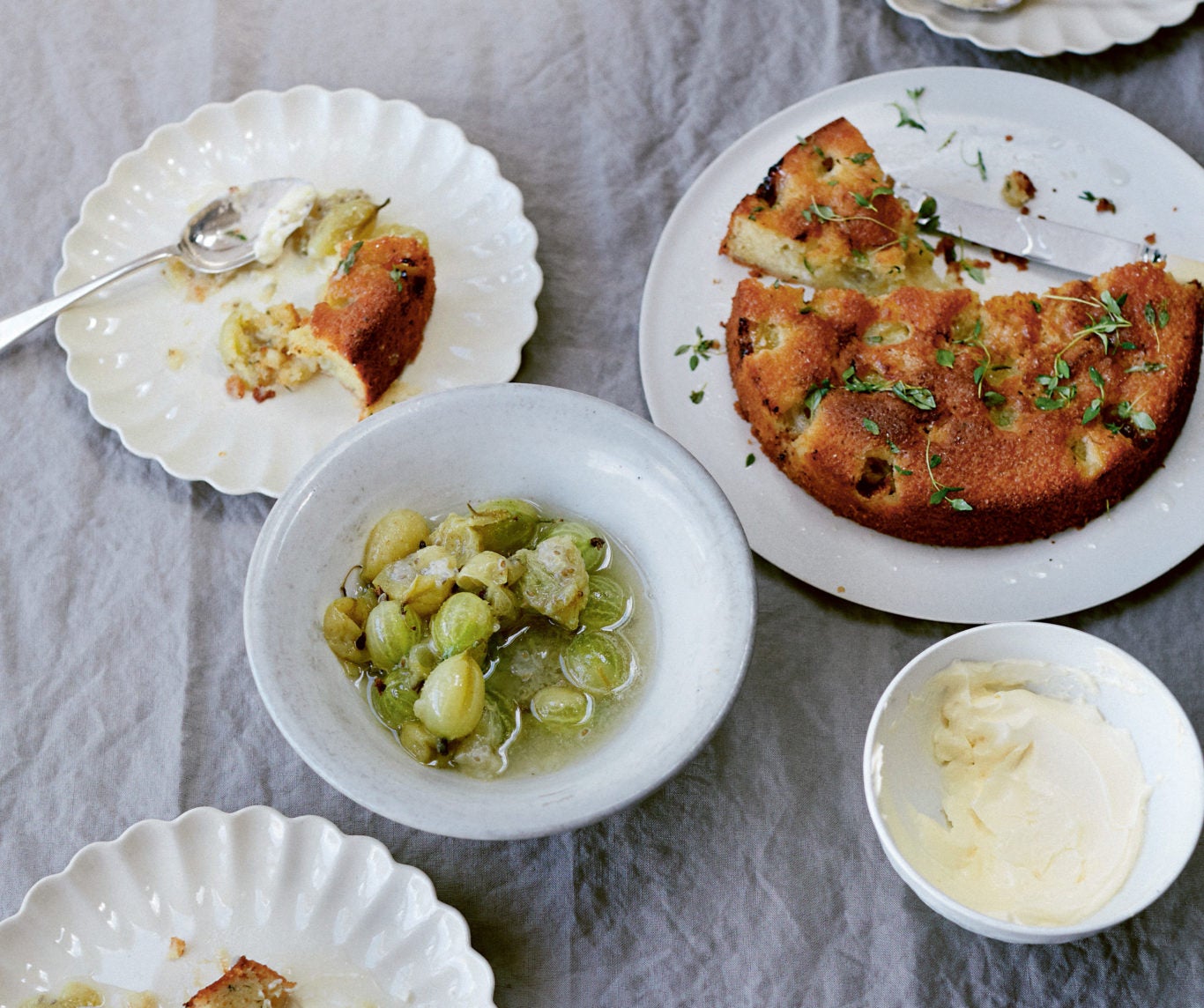
Gooseberry and almond cake with lemon thyme syrup
 open image in gallery
“This is a pale pudding – soft green and cream – which seems just right for early summer,” says food writer Diana Henry. “I serve it with extra gooseberries, poached, but you don’t have to.”
Serves: 6-8
Ingredients:
For the cake:
125g unsalted butter, softened, plus more for the tin
125g caster sugar, plus 5 tbsp extra
3 large eggs, at room temperature, lightly beaten
75g plain flour, sifted
2 tsp chopped lemon thyme leaves
Finely grated zest of 1 unwaxed lemon
75g ground almonds (preferably freshly ground)
¾ tsp baking powder
350g gooseberries, topped and tailed
For the syrup:
4 tbsp granulated sugar
Juice of 2 large lemons
2 tsp lemon thyme leaves
For the poached gooseberries (optional):
75g granulated sugar
2 lemon thyme sprigs
500g gooseberries, topped and tailed
To serve:
Thyme flowers, if you can find anyIcing sugar, to dust (optional)
Sweetened crème fraîche, or whipped cream
Method:
1. Preheat the oven to 190C/375F/gas mark 5. Butter a 20cm springform cake tin and line the base with baking parchment.
2. Beat the butter and the 125g of caster sugar until pale and fluffy. Add the eggs a little at a time, beating well after each addition. If the mixture starts to curdle, add one tablespoon of the flour. Put the lemon thyme leaves in a mortar with the lemon zest and pound together to release the fragrance. Add to the batter and briefly mix.
3. Fold in the rest of the flour, the almonds and the baking powder, using a large metal spoon. Scrape into the tin. Toss the gooseberries with the remaining five tablespoons of caster sugar and spread over the top. Bake for 30 minutes. The cake is ready when a skewer inserted into the centre comes out clean.
4. To make the syrup, quickly heat the granulated sugar, lemon juice and lemon thyme leaves in a saucepan, stirring to help the sugar dissolve. Pierce the cake all over with a skewer while it is still warm and slowly pour the syrup into it. Leave to cool a little, then carefully remove from the tin and put on a serving plate.
5. Meanwhile, make the poached gooseberries. Heat 175ml of water, the granulated sugar and lemon thyme together in a saucepan, stirring until the sugar has dissolved. Add the gooseberries and cook over a medium heat for four minutes, or until the fruit is soft but not collapsing (most of the berries should still hold their shape). Leave to cool.
6. Any thyme flowers you have will look lovely on top of the cake. You can leave it as it is, or dust lightly with icing sugar just before serving, with sweetened crème fraîche or whipped cream and the poached gooseberries on the side.
‘How To Eat A Peach’ by Diana Henry (Mitchell Beazley, £25).
The Hugo
 open image in gallery
This youngster in the spritz canon is ideal for those who crave the flavour of juicy lime, with mint and elderflower adding sweet and breezy refreshment.
A lime-juice-enhanced riff on the original created in 2005 by bartender Roland “AK” Gruber in the South Tyrol region of Italy, it took off like wildfire, and with good reason.
Ingredients:
60ml St Germain Elderflower Liqueur
7ml fresh lime juice
90ml prosecco, chilled
30ml elderflower tonic water
2 mint sprigs
2 lime wheels for garnish
Method:
1. Muddle the leaves from 1 mint sprig in a sturdy wineglass.
2. Fill the glass three-quarters full with ice and pour the St Germain, lime juice, and prosecco over the ice. Top with the elderflower tonic. Gently stir to combine.
3. Garnish with the remaining mint sprig and tuck the lime wheels between the ice and the side of the glass.
‘Just a Spritz: 57 Simple Sparkling Sips with Low to No Alcohol’ by Danielle Centoni (Artisan Books, £12.99).