


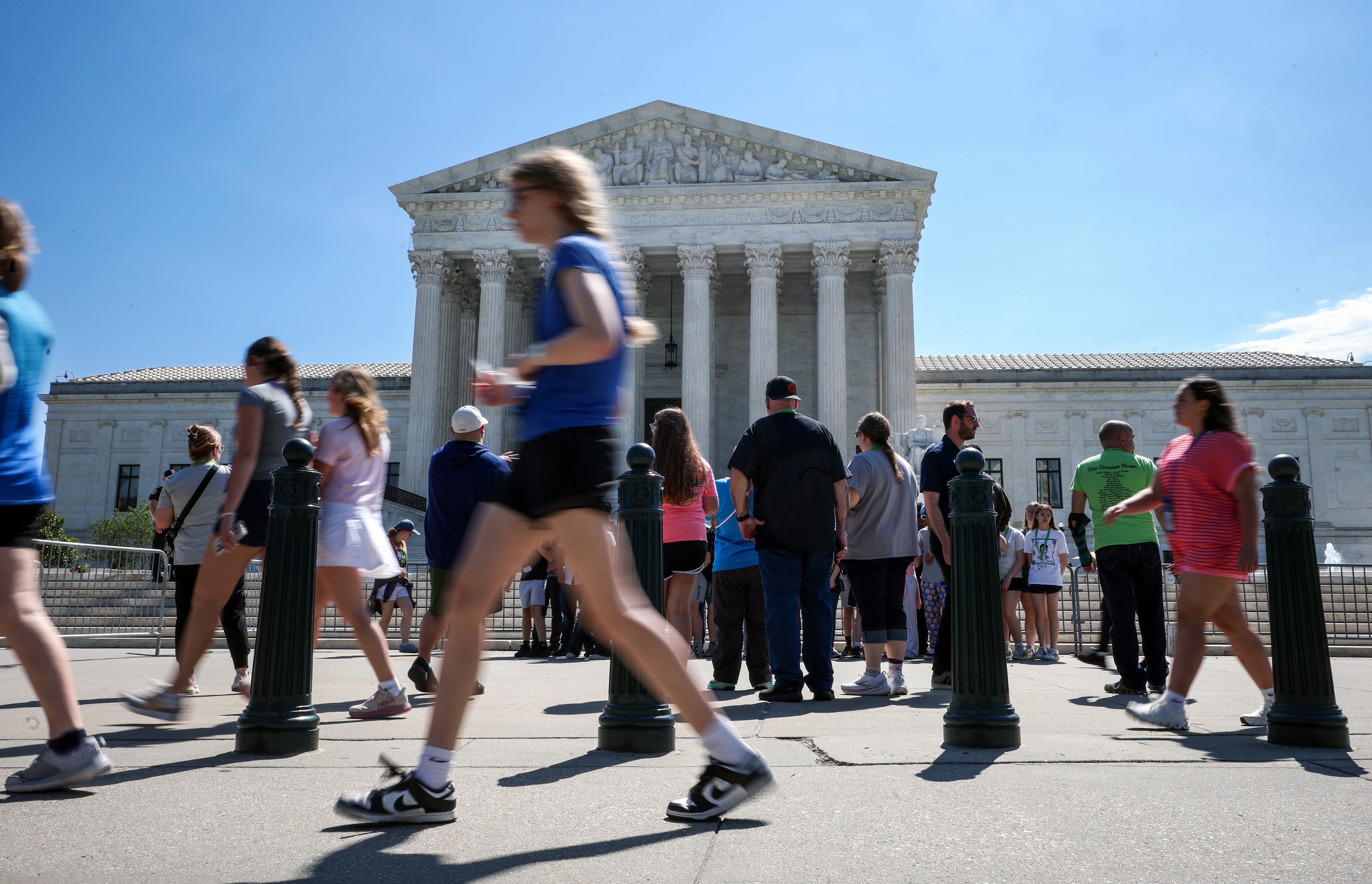
The Supreme Court has cleared the way for Alabama to implement a congressional map that favors Republicans in this year’s elections, overturning a lower court’s finding that the redistricting plan intentionally discriminates against Black voters.
The justices granted the state’s emergency appeal, allowing the use of a map adopted three years ago that features a majority-Black population in only one of its seven congressional districts. The three liberal justices on the bench dissented from the decision.
This high-court order marks the latest turn in a nationwide redistricting battle, reflecting a broader Republican push to safeguard their slim House majority in upcoming elections.
 open image in gallery
The ruling arrives just ahead of a critical deadline, which Republican Governor Kay Ivey had already extended, for the state to utilize the map in special primary elections scheduled for August.
Alabama’s Republican leadership had sought the Supreme Court’s intervention last week, following a three-judge court’s refusal to permit the state’s preferred map.
That lower court had previously mandated that Alabama use the same court-drawn map used in the 2024 elections, which resulted in the election of two Black Democrats to Congress. Under that plan, Black residents constituted a majority or near-majority in two of the state’s seven congressional districts.
 open image in gallery
Deuel Ross, director of litigation for the NAACP Legal Defense Fund, sharply criticized the Supreme Court’s decision, stating on Tuesday night: “The Supreme Court’s decision gives cover to Alabama and others to deliberately and openly discriminate against Black voters without fear of any consequence. The Court’s shameless decision to reinstate an intentionally racially discriminatory map defies any thoughtful or consistent application of the law.”
He affirmed the fund’s commitment to ensuring “fair representation” for Alabama voters.
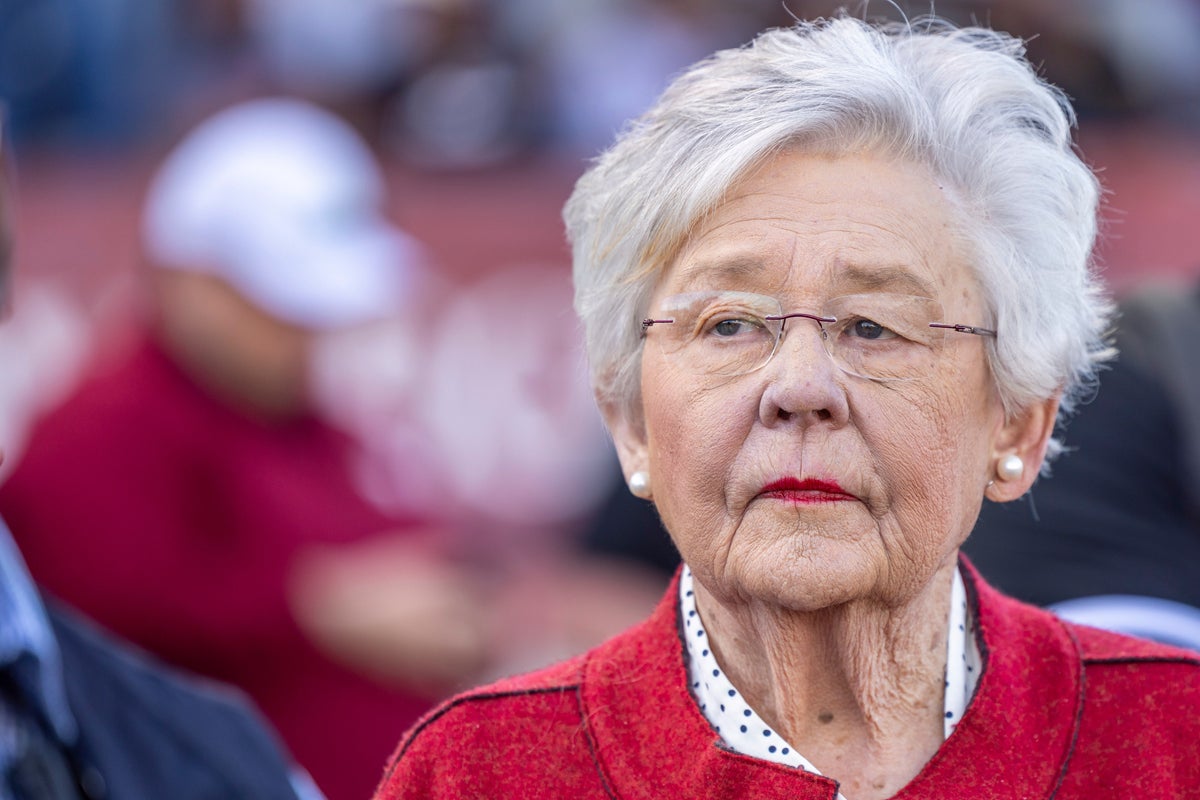
Conversely, Governor Kay Ivey swiftly confirmed the state would proceed with the map for special congressional primaries in four districts on August 11.
 open image in gallery
She declared: “The U.S. Supreme Court confirmed what I have said all along and that is that Alabama knows our state, our people and our districts best. Today’s decision is a win for the people of Alabama and our elections. Alabama is doing our part to keep America strong, and I am proud our state continues to fight the fight to ensure activists do not get the final say.”
She concluded with an enthusiastic “I will see y’all at the polls August 11!”
This order is the latest repercussion from last month’s Supreme Court ruling that invalidated a Black-majority district in Louisiana and significantly weakened the federal Voting Rights Act.
 open image in gallery
That precedent has since emboldened Republicans in several Southern states, including Alabama, to redraw voting districts with substantial minority populations that have historically elected Democrats.
The Alabama case has a history spanning several years. In 2023, the three-judge panel initially found that a map crafted by Republican state lawmakers intentionally diluted the voting power of Black citizens.
The court had then recommended that the state, where approximately 27% of the population is Black, should feature two districts where Black voters hold a majority or near-majority.
 open image in gallery
Following the Supreme Court’s recent Louisiana decision, Alabama officials moved to implement the 2023 state-drawn map. The Supreme Court’s conservative majority subsequently agreed to lift the injunction that had blocked the map’s use, returning the case to the three-judge panel for reconsideration in light of the Louisiana ruling.
In the interim, voters cast ballots in Alabama’s May 19 primaries, and Governor Ivey established the new special August primaries in the districts affected by the map change.
Upon further review, the judicial panel reiterated its initial finding, asserting “undisputed evidence” of intentional racial discrimination. It maintained that the special congressional primaries should instead proceed under the previously court-approved districts.
However, the high court’s conservative majority, in an unsigned opinion, countered that the lower court “did not heed the presumption of legislative good faith.”
In a dissenting opinion, Justice Sonia Sotomayor sharply rebuked her colleagues, warning that their decision enables what she termed “a chaotic election, held under a never-before-used congressional map that intentionally discriminates against Black Alabamians.”
The previously court-ordered map had led to the 2024 election of U.S. Representative Shomari Figures, a Black Democrat. The map now sanctioned by Tuesday’s Supreme Court order provides the Republican Party with an opportunity to reclaim that South Alabama seat.