


The article below is an excerpt from my newsletter: Well Enough with Harry Bullmore. To get my latest thoughts on fitness and wellbeing pop your email address into the box above to get the newsletter direct to your inbox.
You only get one body, and it’s with you for life. I want to help you build a body that you enjoy living in, and I don’t want you to have to spend all that much money in the process. From my experience, kettlebell training ticks both boxes.
A kettlebell is a relatively inexpensive lump of iron (with a handle) that lasts a lifetime. Better yet, it’s versatile enough to help you improve every facet of fitness – strength, mobility, muscle, cardiovascular fitness and more. All you need is to know is how to use it.
That’s where coach Dan John comes in. John has been making people fitter since 1979, shaping the way we train with kettlebells and inventing many exercises now seen as commonplace.
Over the last couple of years, I’ve enjoyed a series of interviews with him in which he revealed his five-step method for starting kettlebell training – whatever your fitness level.
Now, this method is ready to share. Each step below links to an article containing more detailed instructions and a video of a sample workout you can try.
- Part one: learning the three fundamental kettlebell exercises
- Part two: introducing loaded carries, which offer ‘the most bang for your buck of any exercise’
- Part three: the many benefits of training with two kettlebells, and how to do it effectively
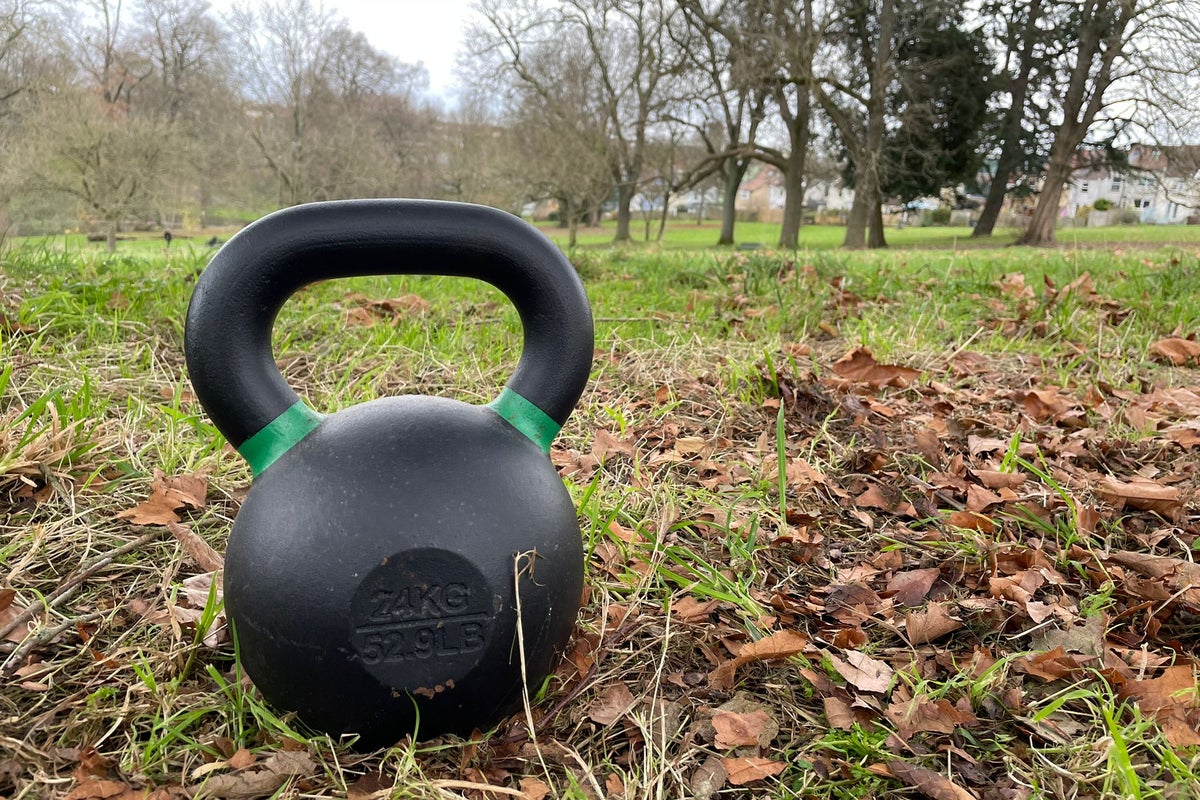
- Part four: take your workouts outside and enjoy plenty of unexpected perks
- Part five: everything you need to know to transform your health, fitness and body with just a kettlebell or two
John’s first lesson is that everyday fitness is a simple three-part formula: “Strength training, walking and caloric correctness.” Your priority should be establishing strength training sessions as a regular part of your routine, he says. Next, establish a decent dose of daily movement through walking, then consume an appropriate number of calories for your activity levels. Brownie points are on offer if you can include some form of protein, fibre, and fruit or vegetables with each meal. Now you are ready to train.
John sees the body as a series of interconnected systems rather than isolated parts, so he prefers to target movement patterns instead of specific muscles with his workouts.
There are five basic human movements, according to John: push, pull, hinge at the hips, squat and loaded carry. If you can touch on each of these on a regular basis, you will feel the benefits.
The good news is that you can hit all five with just three fundamental exercises: the kettlebell swing, goblet squat and press-up. (There are descriptions of each exercise and video demonstrations in this week’s kettlebell training feature.)
Learning these movements is step one of training with kettlebells. (Although, if you do not feel ready for a dynamic exercise like the kettlebell swing, you can swap it out for a kettlebell glute bridge.) You can then combine these moves in any number of ways to create fun, effective and efficient workouts.
Step two in your introduction to kettlebell training is adding loaded carries into your workouts. This simply means picking up a weight and carrying it, whether you’re holding it at your side, at your shoulder or overhead.
“Loaded carries offer the most bang for your buck of any exercise,” says John. “The weird thing about the whole loaded carry family is, I don’t care what you do, you will benefit just by doing them. If you’ve never done a loaded carry, try it, then ask me more questions.”
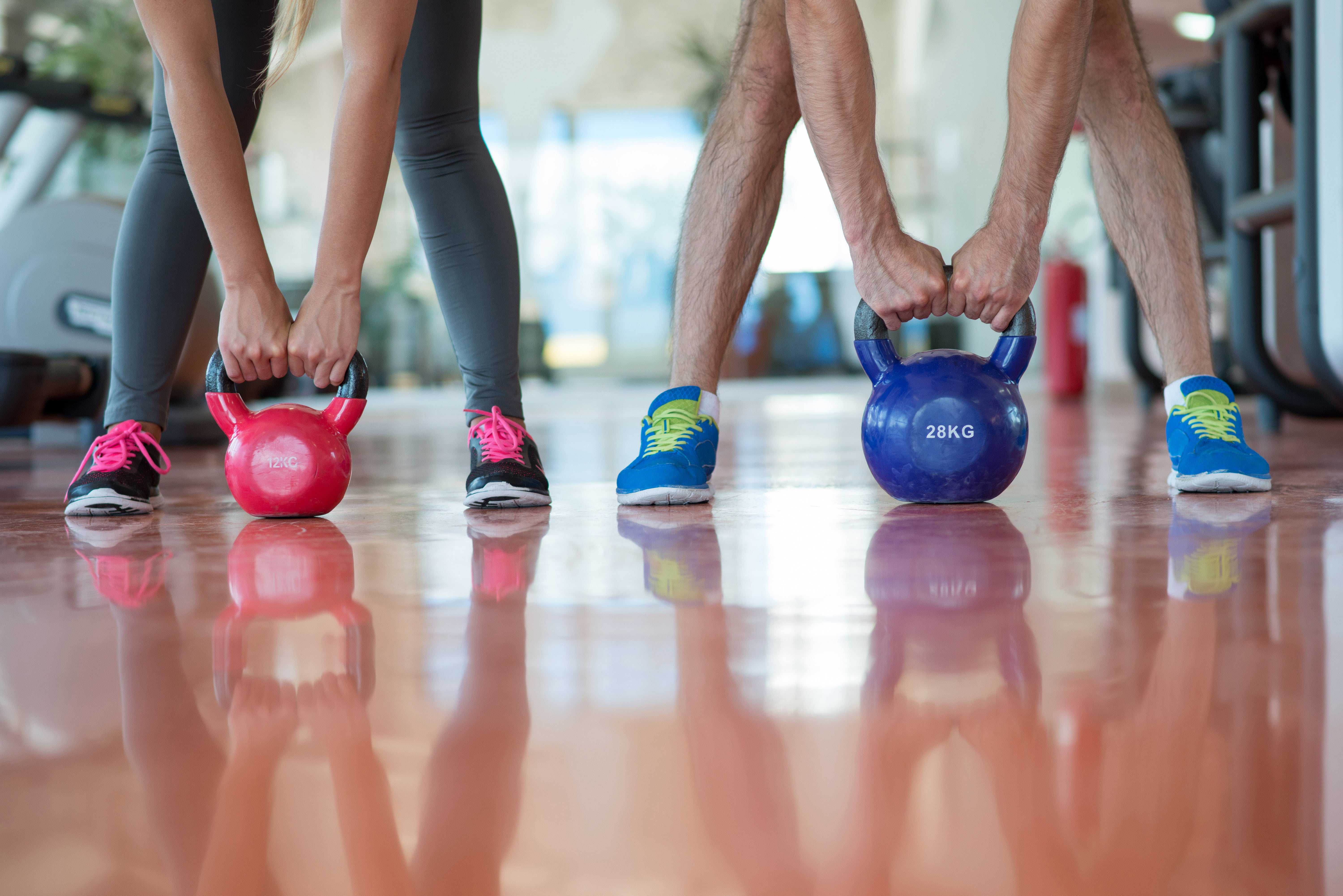
Step three is incorporating a second kettlebell into your training, broadening your exercise horizons even further. There are three key exercises to learn here: the double kettlebell clean, double kettlebell front squat and double kettlebell press – “the best thing you can do with kettlebells,” according to John.
 open image in gallery
“You can call the area from your neck to your knees whatever you want,” John says. “Lots of people call it the core, but saying ‘the core’ is like saying ‘doing cardio’ – it’s an overused term. The three words I use for this area are armour, anaconda and arrow.”
Armour means packing on muscle, anaconda is the harnessing of internal pressure (bracing) for stability, and arrow refers to the ability to move powerfully. Training with two kettlebells is largely unrivalled in its ability to develop all three areas, building a fit, functional and robust body.
Step four is to take your training outside. You don’t need me to tell you that spending time in nature is good for your health, so why not combine this with your regular workouts for bonus perks? There are some unexpected extra benefits on offer too.
For one, your workout starts early. Lugging a kettlebell to your chosen spot in a park is a decent warm-up in and of itself, and it covers your loaded carry work for the day.
Training outside also makes you more adaptable, John says. And adaptation is the reason we exercise, whether that’s wanting to look better, perform better or feel better mentally or physically.
“Training outside makes you more like a jazz performer,” John says. “Maybe the ground is soggy so you can’t do a lot of ground work; maybe it’s unseasonably hot; maybe your usual spot has been taken by a family picnic. You have to adapt.”
Finally, we reach step five. You have the constituent parts of a successful exercise plan, and now you just need to put them all together. John gives an example of how to do so in this sample kettlebell training plan.
However, he also encourages intuitiveness among his clients. No one knows your body and what it is capable of better than you do. It is down to you to use the raw ingredients above appropriately and create a suitable exercise plan.
“As you learn more moves, you can figure out that one day a week is a mobility day, one or two days a week are ‘get sweaty’ days, one or two days a week are ‘get strong’ days,” John adds. “The piece of equipment remains the same – the kettlebell.”
“You also always have to leave something in the tank,” he continues. “If you work out so hard today that it impacts your workout tomorrow, you’ll actually end up regressing. It’s far better to have 365 days of training consistently than one incredibly hard session followed by nothing for the next few days.”
Therein lies the quiet beauty of the kettlebell. It sits in the corner of a room for most of the day like a glorified doorstop, then transforms into an entire gym when it comes time to exercise.
Having a whole gym on hand at any hour of the day allows for accessible, time-savvy workouts, and these in turn lead to consistency – the common denominator behind any successful fitness transformation story. To start transforming your fitness, simply grab a kettlebell and get into the swing of things.
Get the Well Enough newsletter
 open image in gallery
To receive Well Enough with Harry Bullmore, simply enter your email address in the box at the top of this page.
You can also head to our newsletter preference centre to sign up for the email.
Once there, all you need to do is press the ‘+’ button and enter your email address to sign up.