


It is now three months since Donald Trump, in concert with Benjamin Netanyahu, launched his illegal war of choice against Iran.
It did not, as the president may well have expected, end quickly – or even at all. Just as the president was warned it would be, Iran proved to be a rather different challenge to his audacious move to take over Venezuela. Despite some notable tactical successes, including the removal of the supreme leader, it has proved a strategic disaster.
In the portentous words of the International Energy Agency, it has caused the “largest supply disruption in the history of the global oil market”. The cost to the world economy runs into hundreds of billions of dollars’ worth of lost output.
Some of the poorest nations in Africa and Asia have suffered the most, but even in the richer advanced economies, the cost of living crisis has intensified. In parts of America, the price of a gallon of gasoline has breached the $5 mark, and even Mr Trump cannot dismiss the lived experience of Maga pick-up drivers as “fake news”.
For the British, it has extinguished the few encouraging signs for the economy that had begun to show in the earlier part of the year. Inflation, which was projected to fall to within touching distance of the Bank of England target of 2 per cent, is now certain to rise in the coming months.
Employment is down, with changes to employers’ national insurance contributions, minimum-wage rates and employment laws exacerbating youth inactivity. Hopes for a few interest rate cuts this year have evaporated, and with them, a much hoped-for easing in mortgage costs.
Government debt is more expensive to service, drawing resources away from public services and defence. Ministers are keen to point out that UK growth in the first quarter of 2026 was the highest in the G7, but they know that if the war in Iran is not settled soon, the risk of recession will become critical. The domestic political impact of the war that Britain didn’t want on the Labour government has been obvious and painful. No wonder, then, that the chancellor, Rachel Reeves, is reported to have recently exchanged sharp words on the subject with Scott Bessent, her US counterpart.
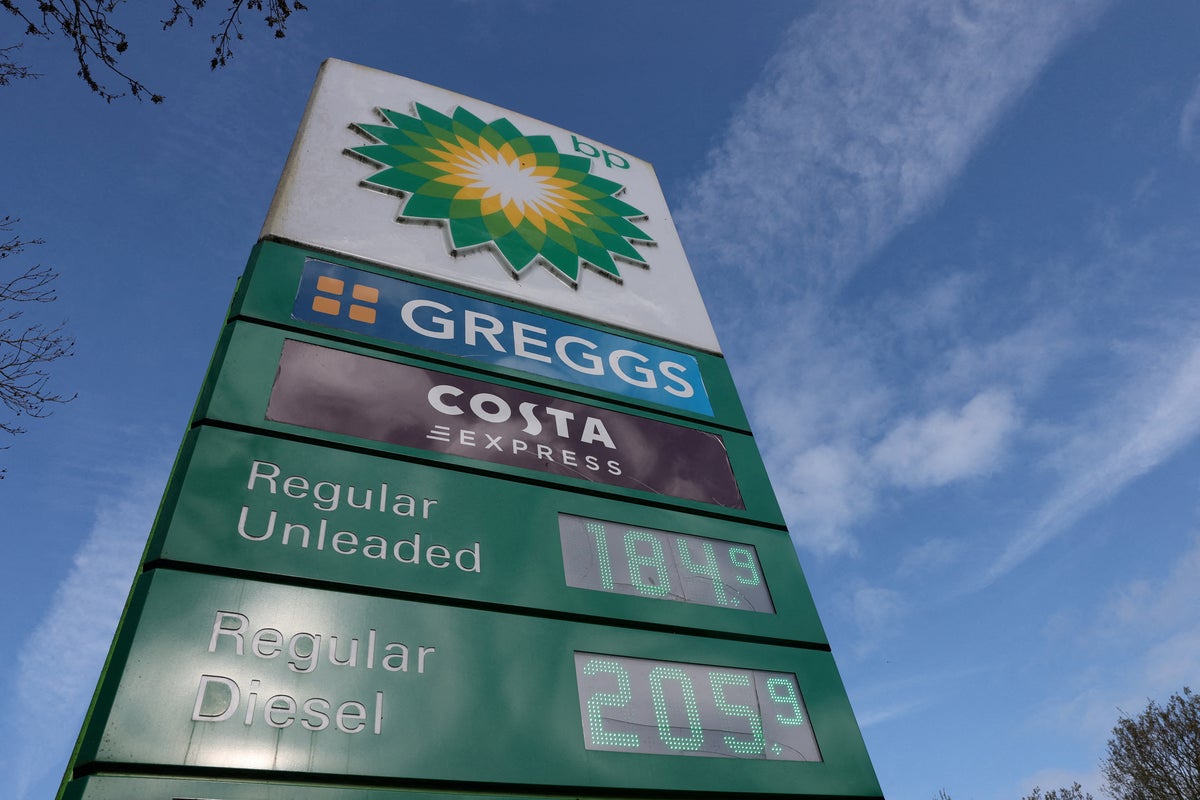
Although this latest energy shock has had a pervasive effect, nowhere has it been more direct and damaging than on energy prices. Given that there are signals about an agreement between the US, Iran, Israel and other regional powers to end the war, the latest 13 per cent increase in the energy price will not be the last, nor, more terrifyingly, perhaps the largest on the horizon.
The great majority of homeowners will now begin to experience the kind of squeeze that has been felt by those rural communities dependent on heating oil for some months. The same goes for most businesses. In each case, only the most vulnerable receive government support – households that rely on benefits and the most energy-intensive industries, such as steel, ceramics and cement.
Can more be done? In reality, the parlous state of the public finances and the uniquely exposed position of the UK to fossil fuel prices make it all but impossible for the Treasury to be more generous. Help has to be targeted and accommodated in the context of rising debt servicing costs.
The kind of blanket support schemes that were launched during the (much more serious) Covid pandemic, or after the Russian invasion of Ukraine, caused an even bigger spike in hydrocarbon costs and cannot be contemplated. Nonetheless, there is an uncomfortable dissonance between the kind of patchy measures the government is offering and the jolly hype attached to them. While welcome, a few pounds off the cost of a day out at Thorpe Park, saving pennies on a litre of fuel and reducing tariffs on olives doesn’t feel like a government “meeting the moment” when many people feel they can’t manage. Another £200 on the annual gas and electric bill, with more to come, rather dwarfs Ms Reeves’s “summer of fun” theme park concessions.
Sir Tony Blair has this week written about the government lacking a “coherent plan”, and advocated more exploration in the North Sea to help ameliorate the energy crisis. Yet while this might well help, the fact remains that the wholesale price of gas, and through that, of electricity, is and always will be determined in global markets, and Britain is nowadays a minor supplier. If putting policy before politics, as Sir Tony advises, means anything, then when applied to the energy crisis, it points to a greater national effort in solar, wind and nuclear power, to gain energy independence and, after admittedly costly investment, relatively cheap and free electricity.
Such an outcome would be of as much value to the steel furnaces in Scunthorpe as the new AI data centres that could help the UK become a serious player in the next industrial revolution, driving productivity and economic growth higher, and living standards too. It would also help Britain become more resilient in a world where energy shocks are beginning to feel routine. It would be a bitter irony if green energy were to become another casualty of the Iran war.