


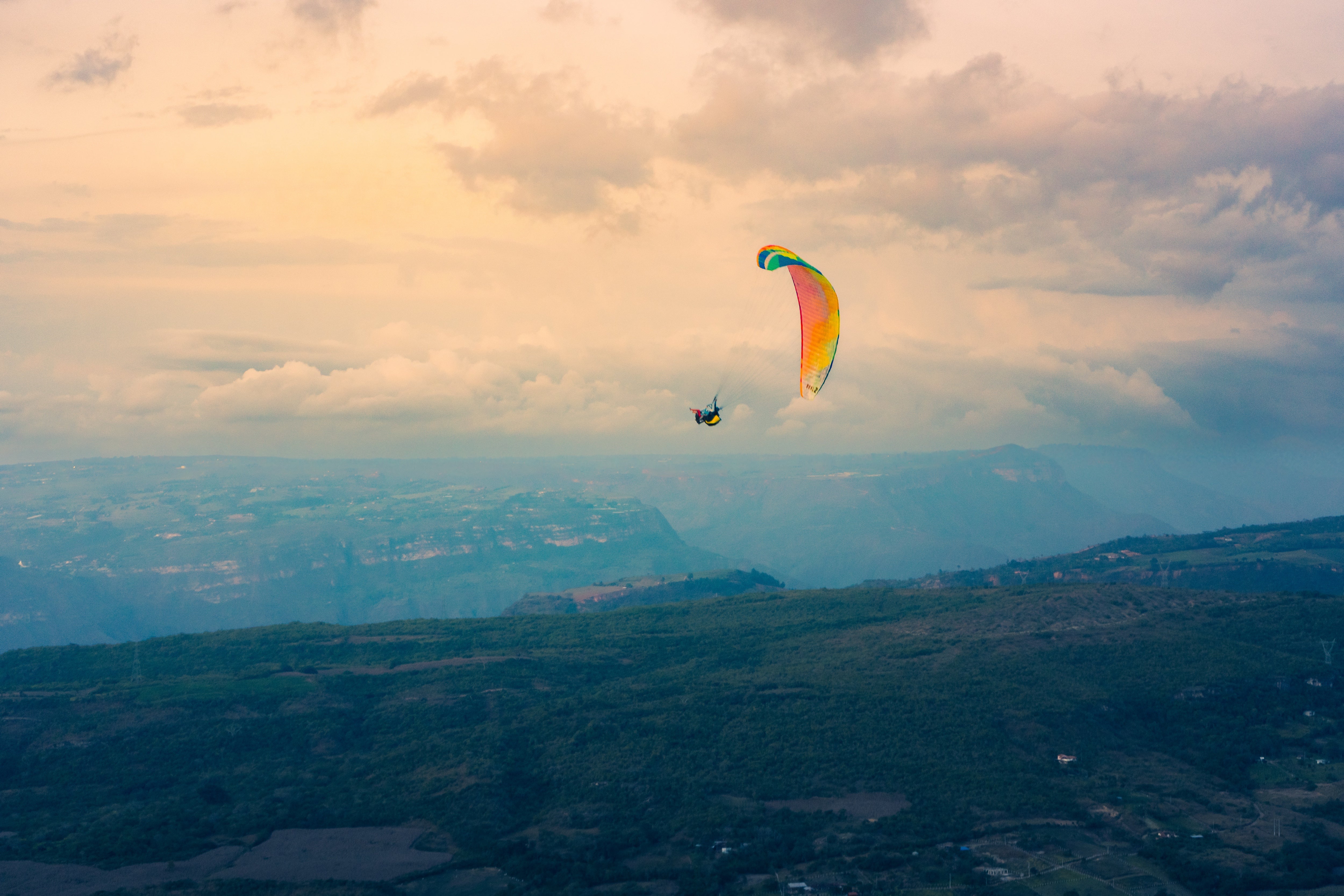
Strapped tightly into a harness with my pilot, Ernesto, behind me, we ran off the edge of the canyon. It was only when I was floating high in the air over the sublime Chicamocha Canyon did I think: “What the hell am I doing?”
Everyone else who signed up for paragliding in northeast Colombia were loudly vocalising their nerves beforehand. I breezed through the preparations as if they were a part of my everyday routine. Once I was in the air, though, it took a couple of minutes until my nerves calmed and I watched the beauty of the landscape unfold below – at least 1500 metres away – for the next 30 minutes.
I decline any sort of tricks during the flight, not even asking what this might involved. I’m pleased, as by the end of the flight, I’m feeling surprisingly queasy. When we land, I make a beeline for the toilet – and throw up. I quickly find out that this is a common occurrence as all three of my group – including a firefighter from the UK – had the same reaction.
 open image in gallery
Afterwards, a new paragliding friend and I wanted to continue making the most of the outdoors, so we were dropped off at Pescaderito, a stretch of seven connecting river pools, or “pozos”, in the countryside of Curití. We walked along a rugged, elevated trail to the right of the river before finding a quieter pool to swim in after the sweaty hike.
The adventurous side of me has emerged because I was in San Gil, a small, wild town that has established itself as Colombia’s adrenaline hub. Flagged up in guidebooks as the place for thrillseekers, it’s popular with travellers who come for extreme sports such as bungee jumping, bouldering, ziplining and canyoning. My three-month trip to Colombia was generally much more laidback, with days spent visiting museums, botanical gardens and drinking cocktails in Medellin, but after clocking pictures of whitewater rafting before my trip, I made a mental note to visit.
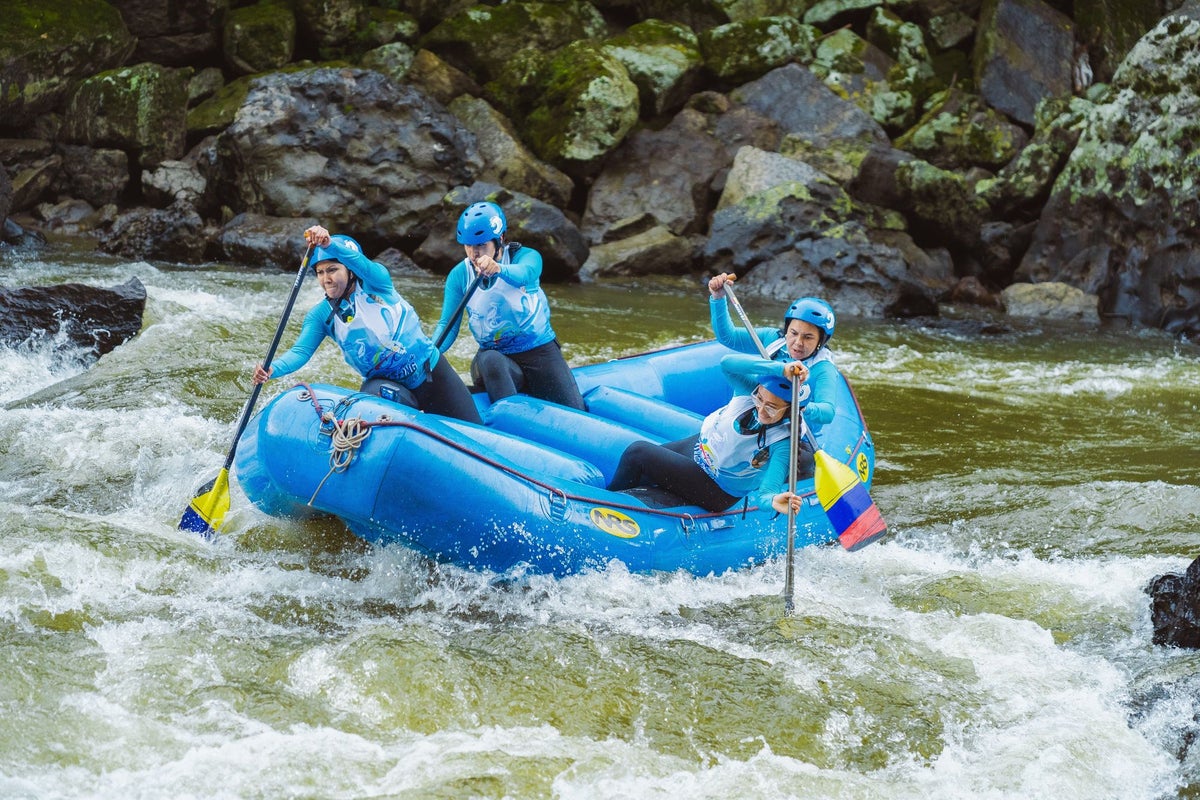
It had been about 15 years since I last tackled a rapid, so on a sweltering day, I donned a red lifejacket by the tea-coloured River Suarez, considered one of the best rivers worldwide for white water. While blue butterflies dance in the background, leader Eduardo briefed us on how to tackle the grade one to five rapids along the tree-lined river.
The next 90 minutes were pure exhilaration – we screamed and laugh as we follow our guide’s commands to synchronise our paddles, steer the raft around rocks and navigate challenging rapids. The boat in front of us capsized, but we managed to stay upright, hitting the tops of our oars together after successfully tackling an intense part of the river.
On another scorching day, I hiked the stone-paved Camino Real trail from the colonial town of Barichara to the quiet village of Guane (it’s worth noting that there’s limited places to buy water en route – after quickly consuming mine, I had to stop two sets of tourists to ask for water).
Looking to escape the heat, I donned a hard hat to visit the Cow Cave, known in Spanish as Cueva de Vaca (named after a farmer discovered the cave after looking for his lost livestock). With a guide, we entered a pitch-black natural cave system and waded through a labyrinth of underground tunnels, with streams of cold water reaching up to my thighs, and caverns of shimmering stalactites and stalagmites clinging to the ceiling. This activity isn’t ideal for the claustrophobic.
 open image in gallery
Read more: I took my family on a Galapagos Islands cruise and it changed how I feel about wildlife
One evening, I joined Macondo Hostel’s weekly game ofTejo, a traditional Colombian game which involves throwing a heavy metal disc at a small gunpowder target on a clay board. It’s surprisingly hard, but it’s a fun night out getting to know the other backpackers.
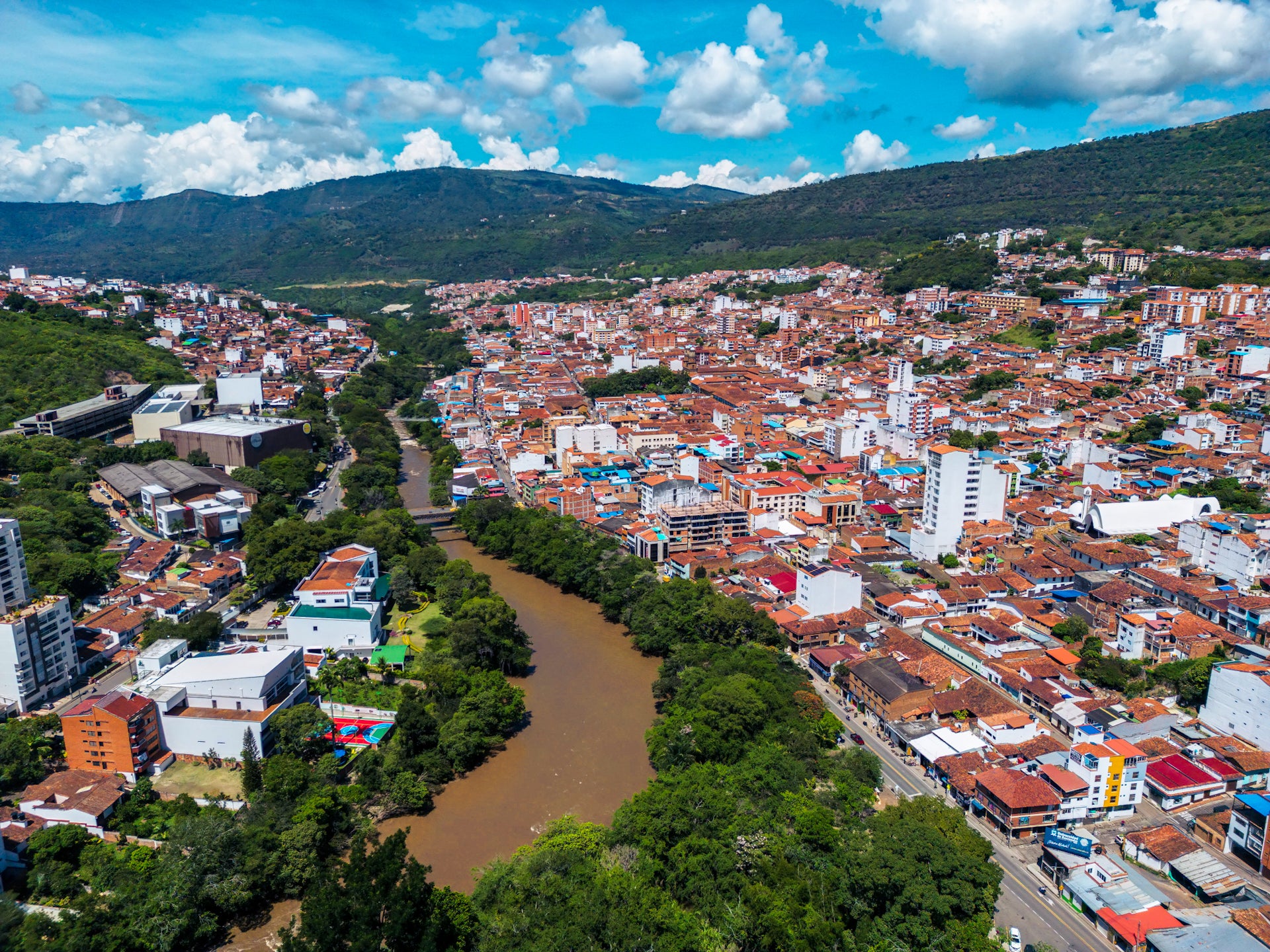
While there’s a long list of heart-racing activities to do in and around San Gil, which sits in a rugged mountain valley and has sharp steep hills, there’s also ways to relax. While not as attractive as nearby Barichari, the town feels more authentic and has a charming tree-lined main square, Parque La Libertad.
There’s a local mercado to sample regional fruits such as guanábana or soursop, and just next to a busy road, there’s also Parque Natural El Gallineral – a sprawling urban forest with moss-draped trees, winding paths and small bridges. Otherwise, the nearby terracotta-topped town of Barichara is worth a stop. Do visit Taller de Papel, a women-led cooperative space which uses natural fibres such as agave and pineapple to make striking handmade paper.
When I think back on my time in Colombia, it’s my action-packed five days in San Gil that most took me out of my comfort zone – and gave me the most thrills. I thoroughly recommend a visit – just remember to take a motion sickness tablet before paragliding.
How to do it
Avianca has direct flights from London Heathrow to Bogota, starting at £630. Flight time is around 11 hours. A direct bus from Bogota to San Gil takes around six to eight hours, and can be booked through Busbud for £14.
Tour company Aventura Total offers activities such as whitewater rafting (three hours; £83); Chicamocha Canyon paragliding (25-minute flight; £60), and caving (two hours; £15).
Where to stay
A bed in eight-person dorm at Macondo Hostel starts at £7 per person, per night. A private room with bathroom costs £28 per night.
Suzanne Bearne was a guest of Aventura Total, Macondo Hostel and Busbud