


The Independent Home Channel is powered by Octopus Energy.
Solar panels can promise sizeable savings on paper, but deciding whether the upfront investment will actually pay off for your own home is another matter. System size, battery storage, electricity tariffs and even when you use energy can all influence the numbers.
Lewis and Veronica Rogers spent months weighing up those questions before installing solar panels and a home battery with Octopus at their three-bedroom bungalow in South Devon. During the first 16 months after installing solar panels and battery storage, however, they saw a dramatic reduction in how much they were spending on energy.
“We are actually making money, not just saving it,” they explain. “Once the initial investment is recouped, then the potential is huge.”
Their experience combines several different benefits, including using more of the electricity they generate themselves and receiving payments for surplus power exported to the grid. From unexpectedly strong generation on dull days to charging their battery overnight in winter, here’s what they learned from living with solar and battery storage.
Powered by the sons
When they moved to South Devon, energy was not the first thing on their minds. “We retired to Kingsbridge as the rest of the family were down here,” they say. “We found a bungalow at the top of a hill backing onto countryside, which suited us and the dog rather well.”
Solar panels then entered the conversation. “Our two sons (one with a climate science degree and the other with a civil engineering degree) have been encouraging us to get on with it and install solar panels,” they say. “But as ever, the careful people that we are, it took quite some time to consider all the aspects of solar energy.”
Their sons’ persistence paid off when a change in personal circumstances spurred the Rogers into action. “We had a cash windfall which meant that we could make the investment without using our savings,” they explain.
Energy bills before and after
Before installing solar panels and a home battery, the Rogers’ energy costs were predictable but substantial. “We were paying about £145 per month throughout the year for gas and electric to run our three-bed bungalow.”

Save on your electricity bills with Octopus solar and battery
Advertisement
Save on your electricity bills with Octopus solar and battery
Advertisement
They switched to Octopus Energy in October 2024, installing solar and battery storage shortly afterwards. From that point through to the end of January 2026 (16 months), the couple paid a total of £849.75, working out at an average of just £53.11 per month.
The couple had also accumulated £875 in referral credits on their Octopus account after recommending the supplier to others. Those credits are separate from their solar savings, but have helped build up their account balance and allowed them to reduce their monthly energy payment to £5.
That’s right: for long stretches of the year, their energy bills have been close to disappearing. For the Rogers, the combination of generating their own electricity, storing energy for later and exporting surplus power has substantially reduced their reliance on electricity bought from the grid.
While Lewis and Veronica’s savings are real for their home, it’s worth remembering that solar and battery savings aren’t one-size-fits-all. Their experience won’t necessarily be replicated by every household. Solar and battery savings depend on factors including your roof size, angle and location, how much electricity you use and when you use it, the system you choose and your energy tariff. After a consultation, Octopus can provide a tailored estimate based on your home and energy use.
Choosing the system
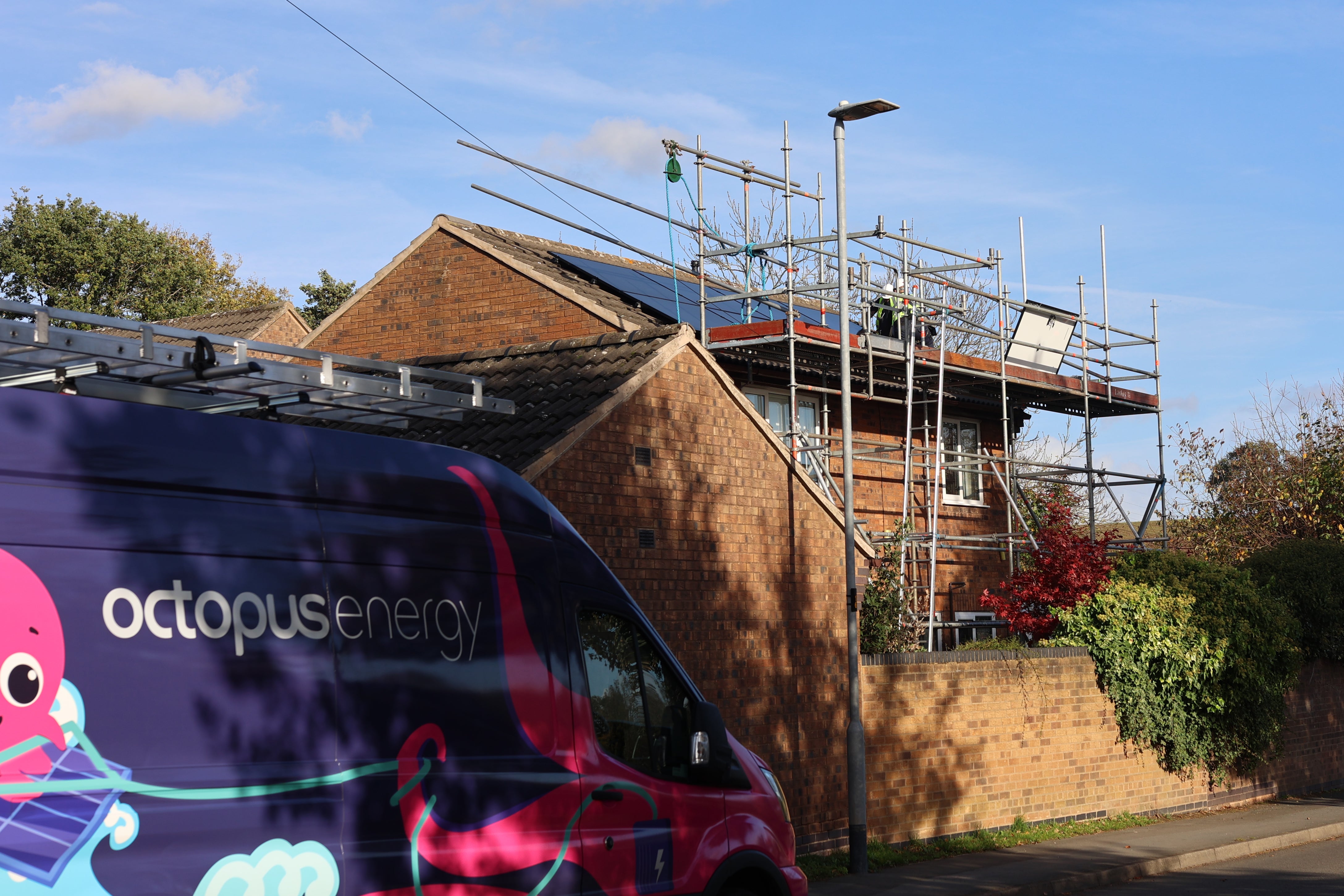
Rather than attempting to design a system themselves, the couple relied on external expertise to assess what would work best for their home and future plans. “We went with the recommendations from the Octopus team and installed 19 solar panels filling the roof, all facing south-west, a 5kWh battery from Enphase and a Zappi car charger.”
The overall package, including scaffolding, came to £13,709. From the first conversation to the system being fully operational, the process took around two months.
Prices will vary according to the size and specification of the system. Octopus says its solar-only installations currently start from £6,663, while an eight-panel installation with a 5kWh battery starts from £8,623, based on June 2026 prices. You can use the Octopus Solar Calculator to see how much you could save on your bills and even earn by selling your excess energy back to the grid.
Unexpected positives
That installation period could have been stressful, but the experience instead left a very positive impression on the couple. “The smooth running of the Octopus team was very efficient. If they said something would be done, it was done. The whole company works on joined-up thinking and all procedures were in place from start to finish. It was very refreshing to be a part of it, as it so often does not happen these days.”
On top of that surprise, the performance of the system also challenged some of the Rogers’ assumptions about how dependent solar is on perfect weather.
“It has surprised us both that the panels produce power even on dull days. Most days there is enough sunlight to support the general running of our home.”
Day-to-day life with solar
Living with solar panels and a battery has introduced a more deliberate approach to energy use, particularly across different seasons. “In winter, we tend to recharge the battery overnight when the tariff is at its lowest,” they explain. “In the long sunny days of summer, when the panels really come to the fore, our grid dependency is as low as 4 per cent – we have had days where our production is regularly over 55kWh.”
Valuable exports
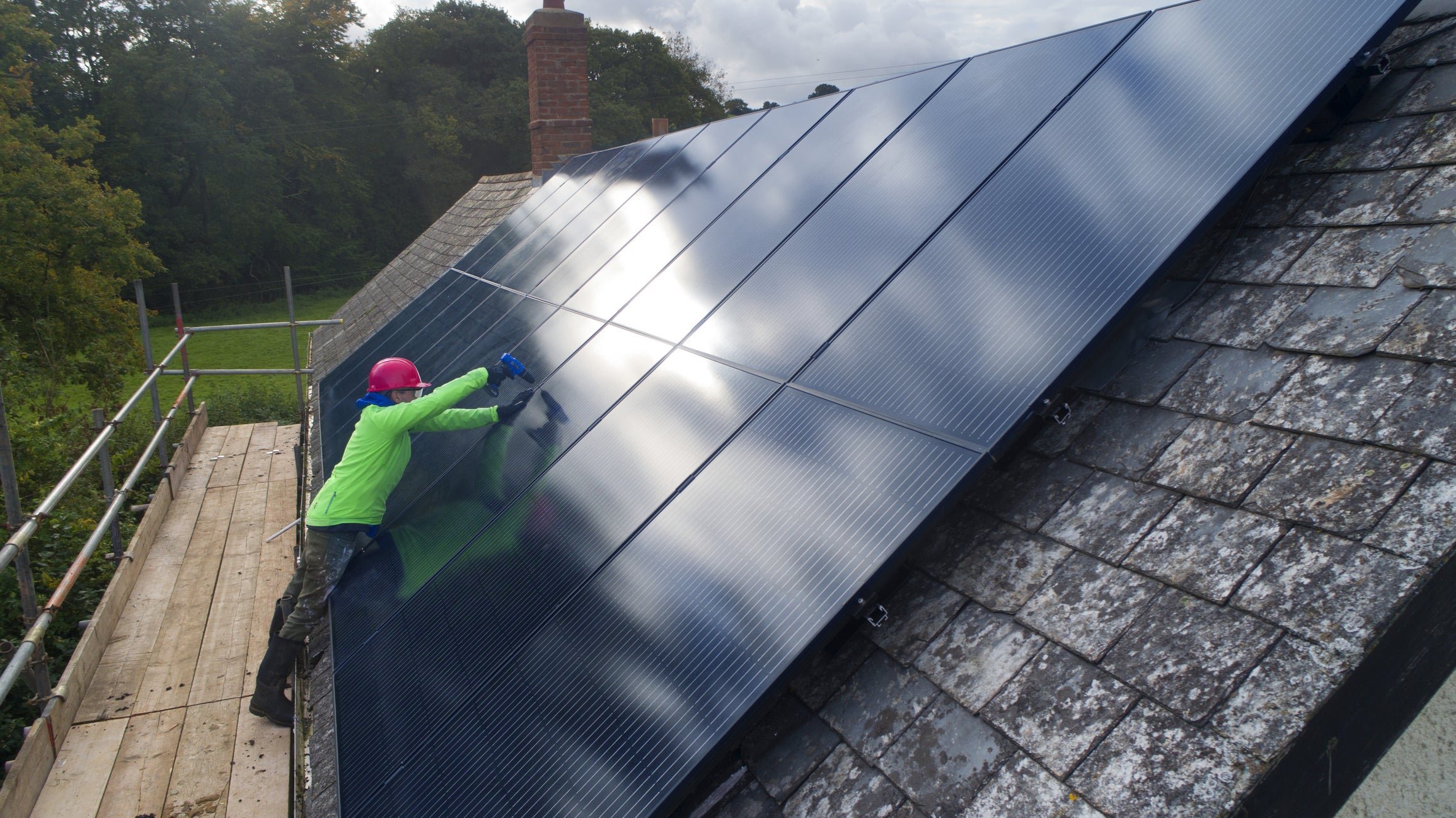
Once household demand and battery storage are covered, any remaining electricity is exported back to the grid – a key part of the system’s long-term value.
“Any power produced by the panels is first consumed by the house,” they say. “The surplus is sent to the battery, and once the battery is full, any excess power automatically goes to the grid, for which we get remunerated. This is why we are seeing such a high balance on our Octopus account.”
Looking back
If they were to change anything, it would be adding capacity. “I would probably go with an extra battery if I had my time again.”
Perhaps because of their own caution, the Rogers’ advice to others considering solar is blunt: “We should’ve done it sooner. Talk to Octopus and be brave – make the decision and go with it.
“Support and service from Octopus has been absolutely amazing. Second to none. You can see why they’ve got all these awards.”
Explore Octopus solar panels or verify our claims on the Octopus Energy website