


Federal assistance for short-term career training programs is expanding across the United States, offering financial support to students seeking vocational skills. A new federal initiative, Workforce Pell, extends grant aid to brief job training courses that previously fell outside standard funding criteria.
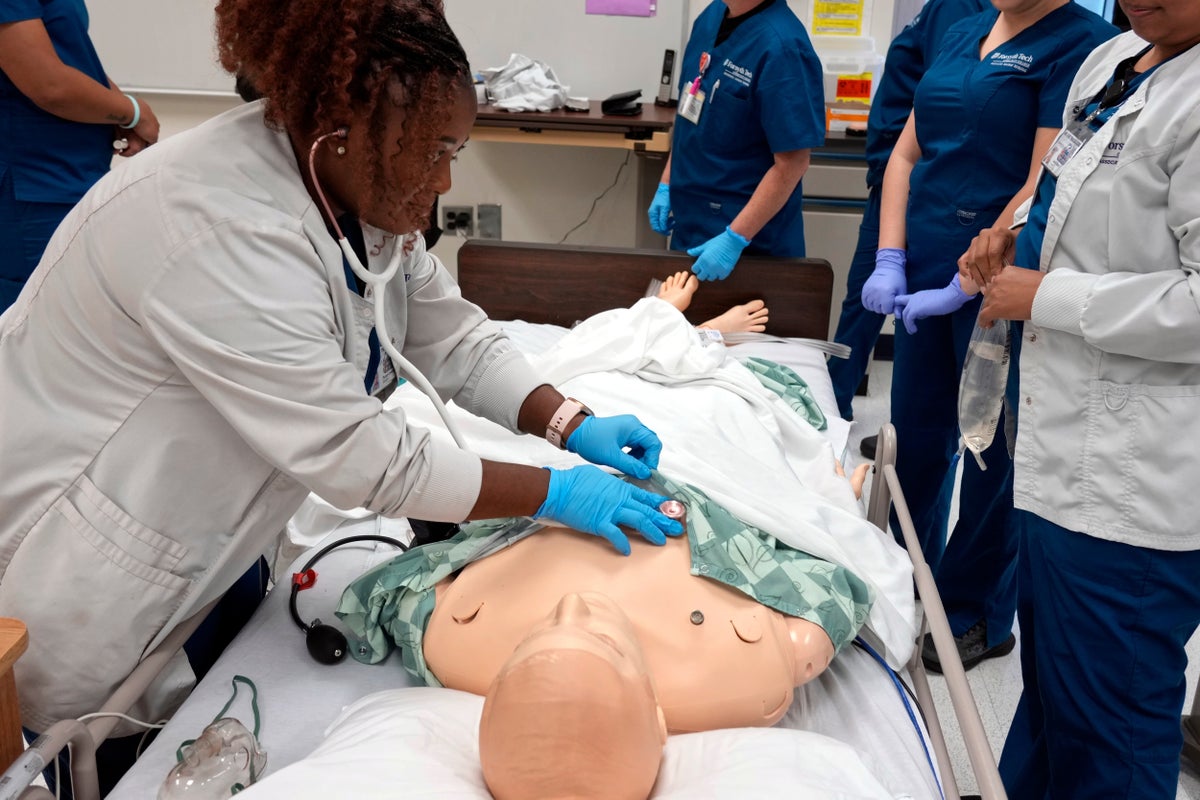
For students like Sydney Webb, who saved to afford an eight-week certified nursing assistant course at a North Carolina community college, upfront costs add up quickly. On top of a $255 registration fee, the 26-year-old bartender paid for a background check, scrubs, a stethoscope, special shoes and a state certification exam, all while cutting her work schedule in half to accommodate classes.
“It shocked me a little bit how expensive it was,” said Webb, an aspiring ultrasound operator.
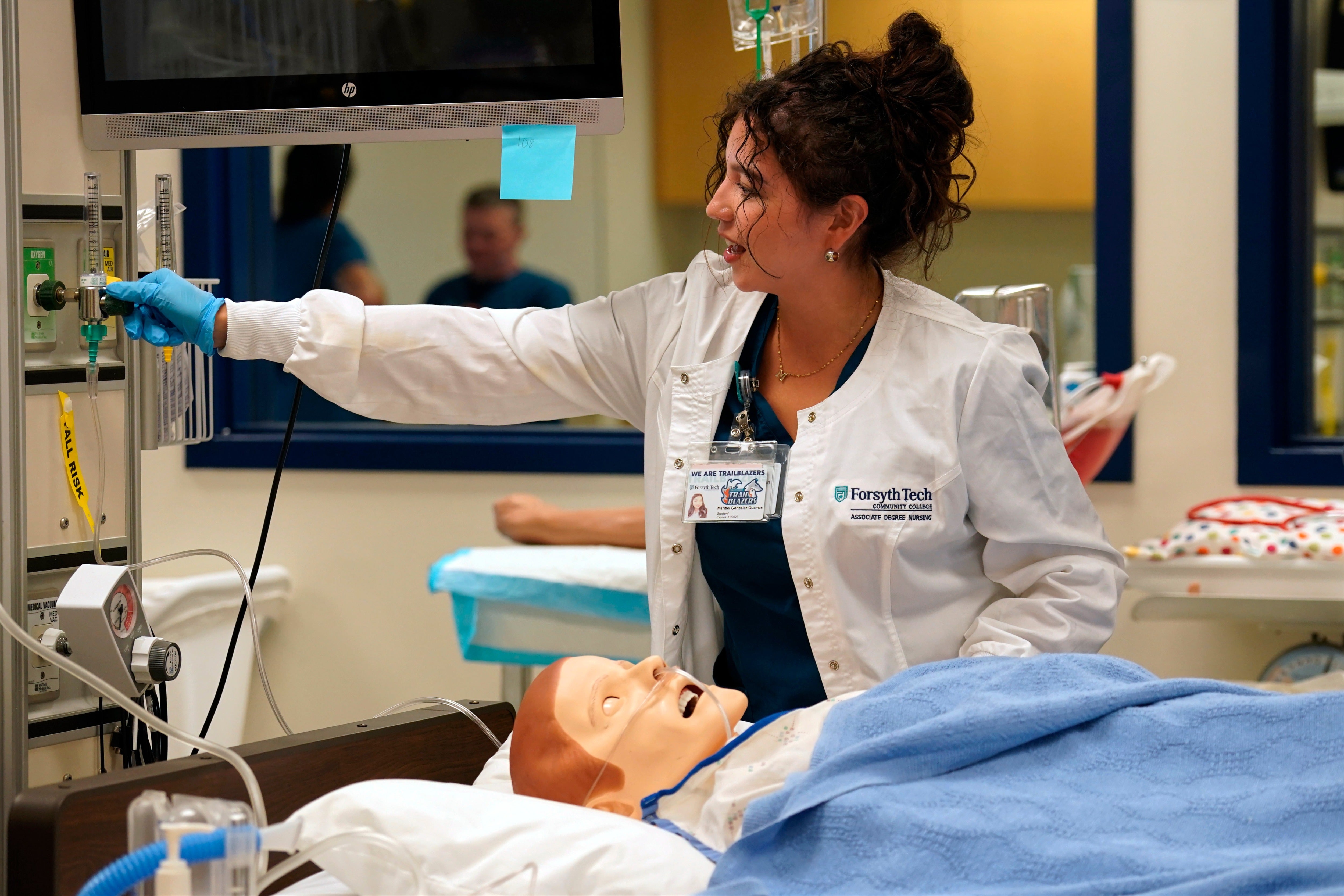
Her school, Forsyth Technical Community College in Winston-Salem, is among institutions nationwide seeking federal approval for Workforce Pell. Historically, Pell grants assisted low- and moderate-income students, but covered only programs lasting at least 15 weeks and a minimum of 600 hours. The expansion widens eligibility to shorter training tracks.
 open image in gallery
The federal government began accepting applications in July, approving an emergency medical technician program in Iowa and a medical assistant program in Indiana. Dozens of additional programs across states including North Carolina, Pennsylvania, Michigan, Louisiana, and Nebraska await approval to prepare students for work as truck drivers, electrical line workers, phlebotomists, IT support technicians, firefighters, welders and more.
Short-term class costs often present an obstacle for cash-strapped students needing a job or higher wages, explained Chandler LeBoeuf, executive vice president of the Louisiana Community and Technical College System.
“That’s what excites me about Workforce Pell,” he said. “Is it every program? No. Are there limitations? Yes. But ultimately, over time, we will be able to work on those aspects where barriers exist.”
A lifeline for lower-income students expands to short-term programs
Pell grants, which generally do not have to be repaid, are a key to affording higher education for many lower-income students. Nationwide, around a third of undergraduate college students qualify, according to data from the National Center for Education Statistics, with the amount awarded based on factors like family size and income.
For full-time students, the largest grant possible this year is $7,395. For the shorter Workforce Pell programs, the maximum award will be $4,310 for a 14-week program and $1,260 for an eight-week program, according to an analysis from New America, a Washington think tank.
The expansion of the Pell grants to short-term programs has been a decade in the making, said Jim Hermes, associate vice president of government relations at the American Association of Community Colleges. Concerns about ensuring the quality of the programs were a roadblock, but Workforce Pell had bipartisan support and the backing of the Trump administration, Hermes said.
The full rollout of Workforce Pell grants could take years, experts say.
To qualify for Pell funding, programs must reach a 70% threshold for student completion and job placement, which many states struggle to track, said Dominique Baker, an associate professor at the University of Delaware who studies education policy. The programs must also lead to higher earnings and provide credentials that are “stackable” — meaning they are immediately useful and can be built upon.
The programs must last at least eight weeks but fewer than 15 weeks, and they must have been in operation for a full year, meeting all the requirements, before they can qualify.
“I think it’s going to take off pretty slowly, which I would say is more a feature than a bug,” said Robert Kelchen, a University of Tennessee professor who studies higher education. “That way we can make sure these are quality programs, they are in need, and they’re not just a pathway for programs to fly by night, take taxpayer dollars and not generate a return to students.”
Some schools are waiting to see how it develops
Skeptics worry some students will use up their lifetime 12-semester Pell benefits in short-term programs, rather than pursuing a bachelor’s degree, with potentially higher earnings prospects.
“There’s been a lot of rhetoric of, ‘Students get their eight-week program and end up making middle-class wages,’” said Wesley Whistle, project director for student success and affordability at New America. “I don’t think that’s actually going to be true generally speaking.”
A study from the Association of Community College Trustees found most students boosted their wages after completing short-term programs. But even with the gain, overall annual earnings below $25,000 were common among graduates.
Some schools are sitting on the sidelines for now. Around two-thirds of states have a process for colleges to apply for approval, said Carrie Warick-Smith, vice president for public policy for the Association of Community College Trustees.
“We would love to be able to utilize it. It’s just, it’s been difficult to implement at this point,” said Grant Carlson, a program coordinator at Johnson County Community College in suburban Kansas City.
Not so at Forsyth Tech, where Webb took her nursing class.
Devin Purgason, the executive director of marketing, is so excited that he has webpages prepared, touting Workforce Pell funding. If the federal government says yes, he plans to click “publish” as quickly as a Taylor Swift fan trying to nab concert tickets.
“Like I’m in the Ticketmaster line right now,” he said.