


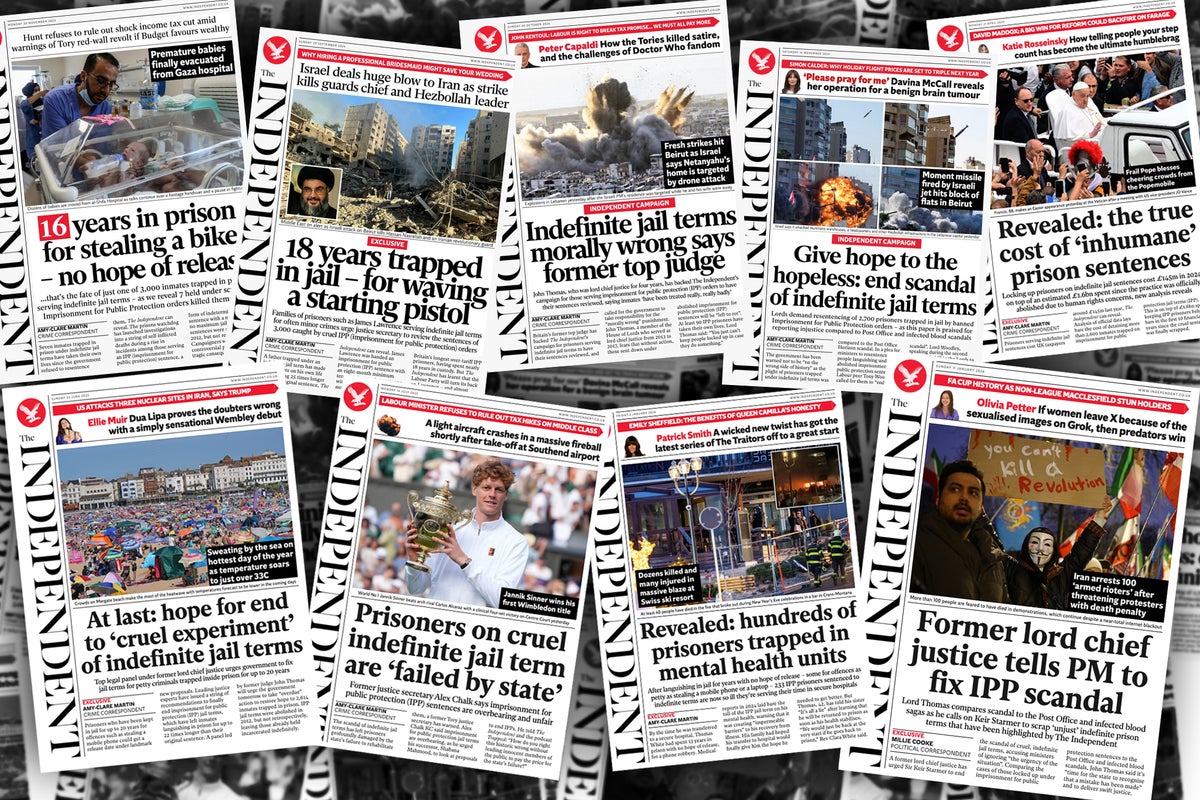
When I first started investigating indefinite sentences in November 2023, there had been horrifying spike in suicides among prisoners.
I discovered seven men serving Imprisonment for Public Protection (IPP) jail terms had taken their own lives in a few short months since their hopes of release were dashed by the then-Conservative government.
Many had dared to start believing the end to their “throw away the key” sentence may finally be in sight after the cross-party justice committee had led an inquiry into the toxic legacy of the abolished jail term, concluding the punishment was “irredeemably flawed”.
The committee had handed the incumbent justice secretary, Dominic Raab, a string of recommendations, including – crucially – one calling for a panel to be established to oversee the resentencing of all remaining IPP prisoners. But Raab refused.
We will never know what went through the minds of prisoners who took their own lives that year, including one just two weeks after Mr Raab’s refusal was made public, but campaigners fear the flurry of deaths was linked to the devastating news.
That is why it is so important that Andy Burnham follows through on what he has now promised, with meaningful, carefully planned action to finally draw a line under this failed sentencing experiment.
To date, a total 96 IPP prisoners have taken their own lives in custody. That number must not get any bigger.
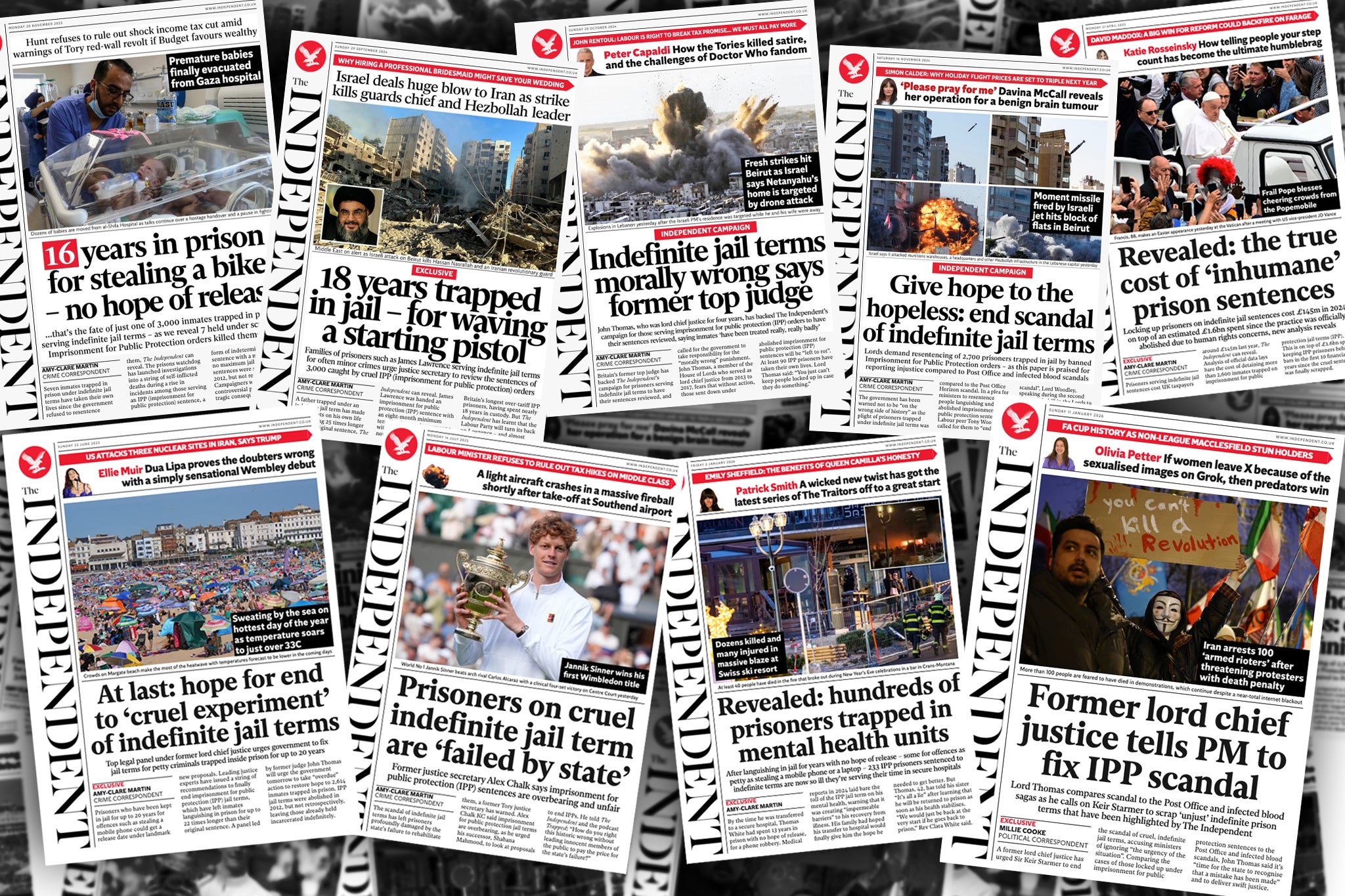
Over the years of The Independent’s campaign, I met family after family whose lives have been devastated by this hopeless sentence, with shocking examples of prisoners whose punishment has stretched on for so long it no longer matches their crime.
Some have now been inside for the best part of two decades for relatively low-level offences, like Leroy Douglas, who we reported on Sunday is finally going home after 20 years in prison for a mobile phone robbery. Others committed crimes which are undeniably much more serious, but eight in ten of those who have never been released have served at least ten years longer than their minimum tariff.
With each new story I encountered a family which acknowledged that their loved one committed a crime and deserved to be punished. But what they did not expect was for them to be tortured by a sentence with no end date and constantly moving goal posts, consigning them – and their innocent loved ones – to years of limbo.
Many such prisoners only learned what an IPP sentence was then their tariff expired and they were refused parole for the first time. For thousands, this rejection happened again and again – with each knock back condemning them to another two years in prison before they were granted another shot at release. All too often they were told to complete courses which they could not access or had to wait years for a space to become available, only to be asked to complete another course at their next hearing.
Prisoners felt wrongfooted by a system which appeared to change the rules at every turn, leaving them to rot even after the sentence was outlawed in 2012. And when this process took an inevitable toll on their mental health, that too was used against them as means to justify detaining them even longer.
In the face of widespread condemnation – including from the United Nations which has found some IPP prisoners are being arbitrarily detained, resulting in a major legal challenge – the prime minister has today rightly acknowledged that he must correct this injustice.
From everything I have learned over the past few years, I believe it is possible to find a way to balance the vital need to protect the public with what is fair and just.
A clear starting point is those IPP prisoners who have been recalled to prison indefinitely for no further offence. Unlike most other offenders, who typically serve a fixed term recall period of 56 days, they are returned to prison indefinitely for something as simple as missing a probation appointment. They serve more than two years on average each time they slip up, which, under the early release scheme, is akin to serving the custodial portion of a four to six year prison sentence.
But the government must not avoid the complex cases, including more than 800 who have never been released and 200 in secure hospitals, whose circumstances must each be carefully and meticulously reviewed to find them a clear path towards release. Many will need mental health support from the damage this sentence has inflicted on them.
At a time when the prison overcrowding crisis demands that other prisoners are released early, continuing to ignore these over-tariff prisoners would be unacceptably cruel.
The details of the government’s plans have not been revealed, but a cross party oversight group is expected to lead the project.
Mr Burnham has admitted it will take time to put this right and promised to end the injustice before the end of parliament. For the sake of IPP prisoners and their families, justice secretary Alex Norris and the Ministry of Justice must start this important work as soon as possible.