


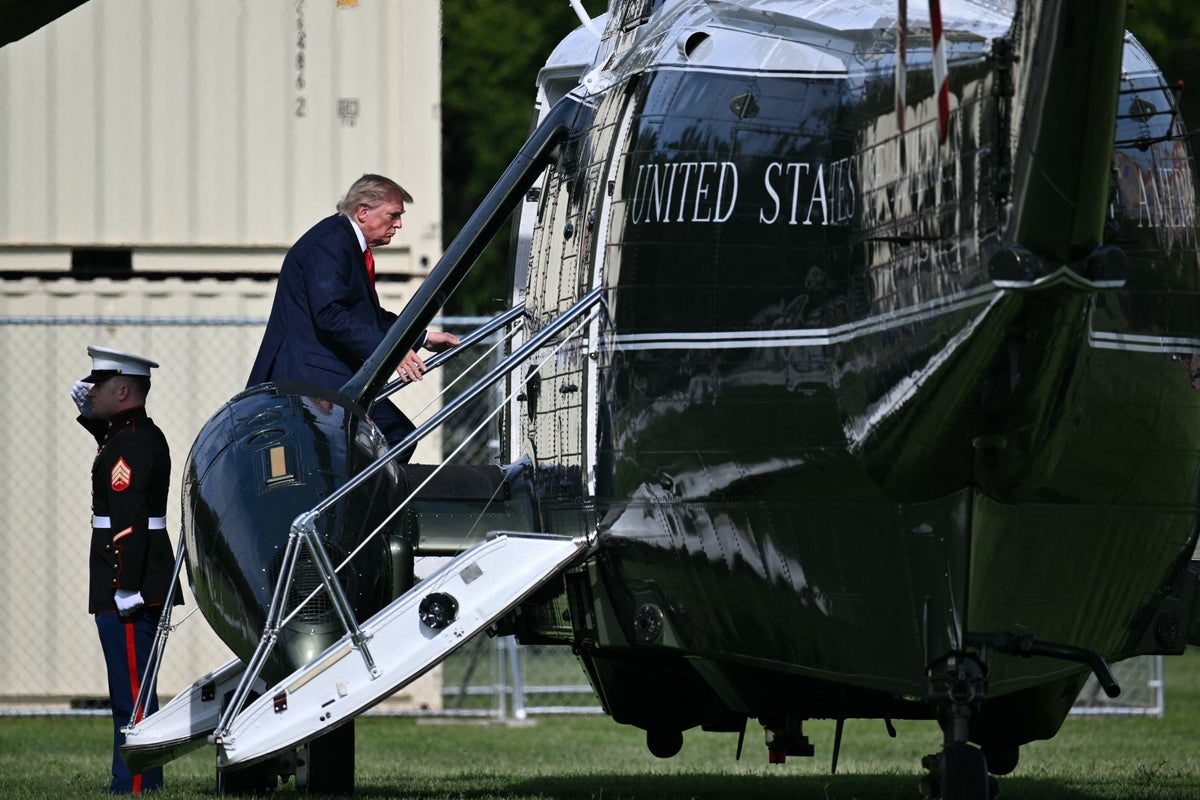
Air traffic controllers and the pilots of President Donald Trump’s helicopter met to discuss communication problems one week before a passenger jet took off just as Marine One departed the White House, federal investigators said Thursday.
Controllers reported not receiving the standard three-minute warning call prior to Marine One departures, and both sides agreed to an alternative plan to relay the message through a third party.
However, that relay arrangement also failed during the Aug. 4 incident near Ronald Reagan Washington National Airport, according to the preliminary report from the National Transportation Safety Board.
Operating both the jet and helicopter simultaneously appeared to violate safety procedures established following last year’s midair collision near the busy airport that killed 67 people, though officials emphasized that the president was never in danger. The Pentagon also maintains a longstanding agreement with the Federal Aviation Administration requiring controllers to receive a three-minute warning before the president’s helicopter takes off, a protocol that predates last year’s crash.
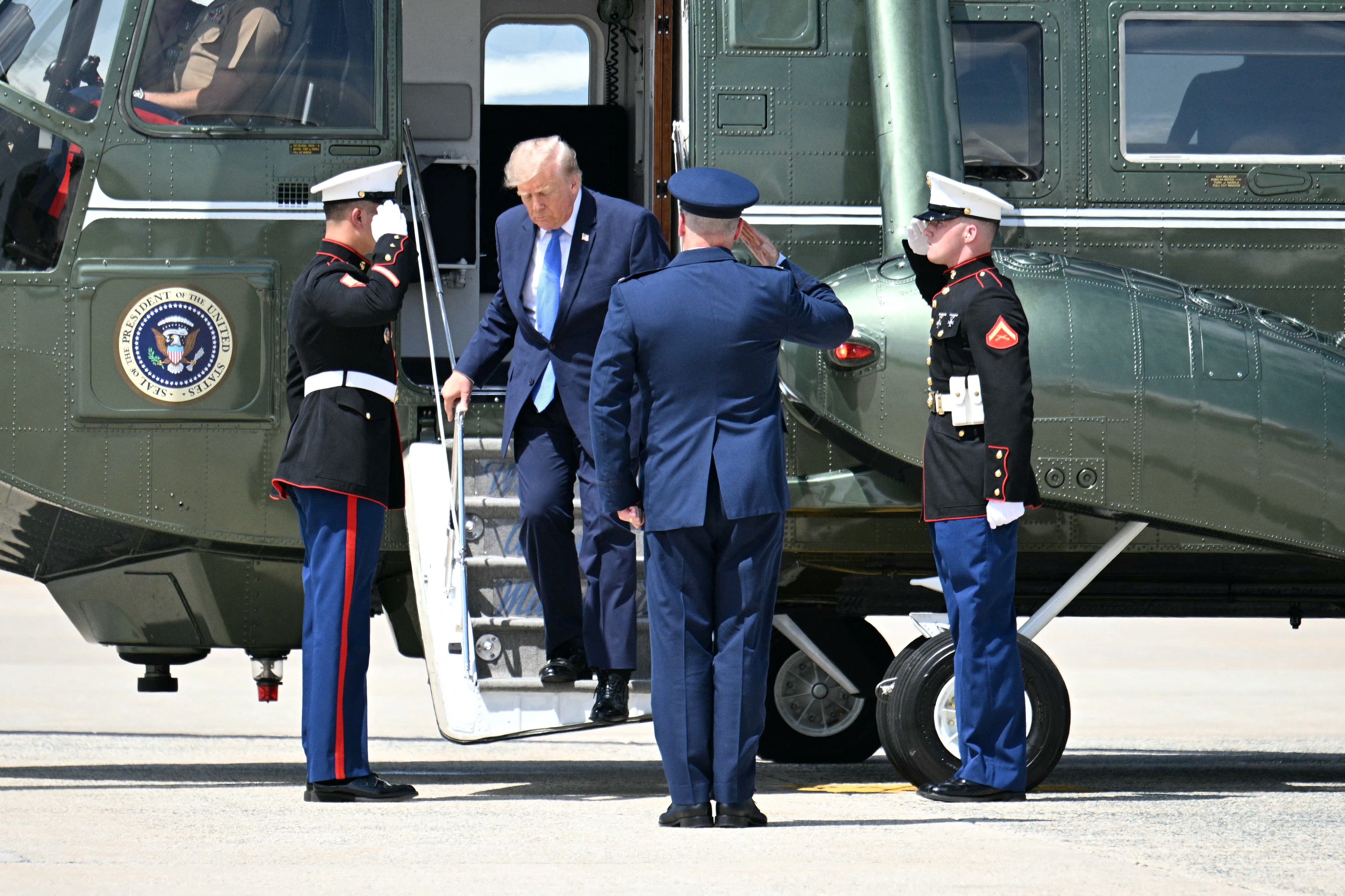
The NTSB noted tower recordings showed controllers never heard the calls from Marine One’s pilot warning that the helicopter was preparing to take off, even though separate recordings published by ATC.com indicate the helicopter did make those transmissions.
The helicopter crew attempted to pass their three-minute warning call through the flight facility at Joint Base Anacostia-Bolling, but that effort was likewise unsuccessful.
Following a Jan. 29, 2025 midair collision between an airliner and an Army Black Hawk helicopter, the FAA ruled that all takeoffs and landings at the airport must be halted whenever a helicopter passes on a conflicting route. Airspace near the White House and Reagan remains heavily congested with military and civilian aircraft.
The FAA acknowledged that the airliner and helicopter briefly came too close before moving away from one another. The airplane rapidly climbed above the helicopter after Marine One’s pilots spotted the jet and paused until it safely exited the area.
Preliminary NTSB estimates indicate the aircraft were just over 0.8 mile (1.3 kilometers) apart horizontally and about 700 feet (215 meters) apart vertically at their closest point. The Envoy Air crew told investigators their collision avoidance system issued a traffic warning shortly after takeoff, though they never visually sighted the helicopter.
Official FAA tower recordings at Reagan did not capture the warnings that Marine One was preparing to transport the president to Andrews Air Force Base that day.
A recording posted by ATC.com showed the Marine One pilot informing the tower that the helicopter was “three minutes to life”, matching the 2013 agreement between the FAA and the military. But the controller appeared surprised moments later when the helicopter lifted off.
“Uh, Marine One, you said, uh, you’re proceeding as briefed?” the controller asked, before providing flight directions and adding, “OK, no three minutes, roger, proceed as briefed.”
After the controller alerted the helicopter crew to the departing plane, the Marine One pilot reported seeing the traffic and stated, “We’ll be doing a momentary delay.”
Last year’s midair collision underscored longstanding communication difficulties between air traffic controllers and military pilots. During a congressional hearing, officials revealed that a dedicated hotline connecting the Pentagon to the Reagan tower had been out of service for over three years without the FAA realizing it.
Following the incident involving Marine One, NTSB officials said FAA technicians discovered inadequate line-of-sight between the airport radio receiver and the White House departure site. The radios were subsequently moved from a nearby neighborhood to the top of the Reagan tower, and follow-up tests confirmed they functioned properly.