


India has rejected a UN watchdog’s report highlighting ethnic and caste discrimination in the country and asking the government to protect its tribals and disadvantaged groups from extrajudicial killings.
The UN Committee on the Elimination of Racial Discrimination (CERD), following a periodic review, expressed “grave concern” over reports of law enforcement agencies targeting ethno-religious groups, indigenous and tribal people, including those from the lower rungs of the archaic Hindu caste system, and non-citizens.
The report said that India urgently needed to tackle hate crimes and targeted operations against Rohingya refugees, Bengali-speaking Muslims from the state of West Bengal and asylum seekers.
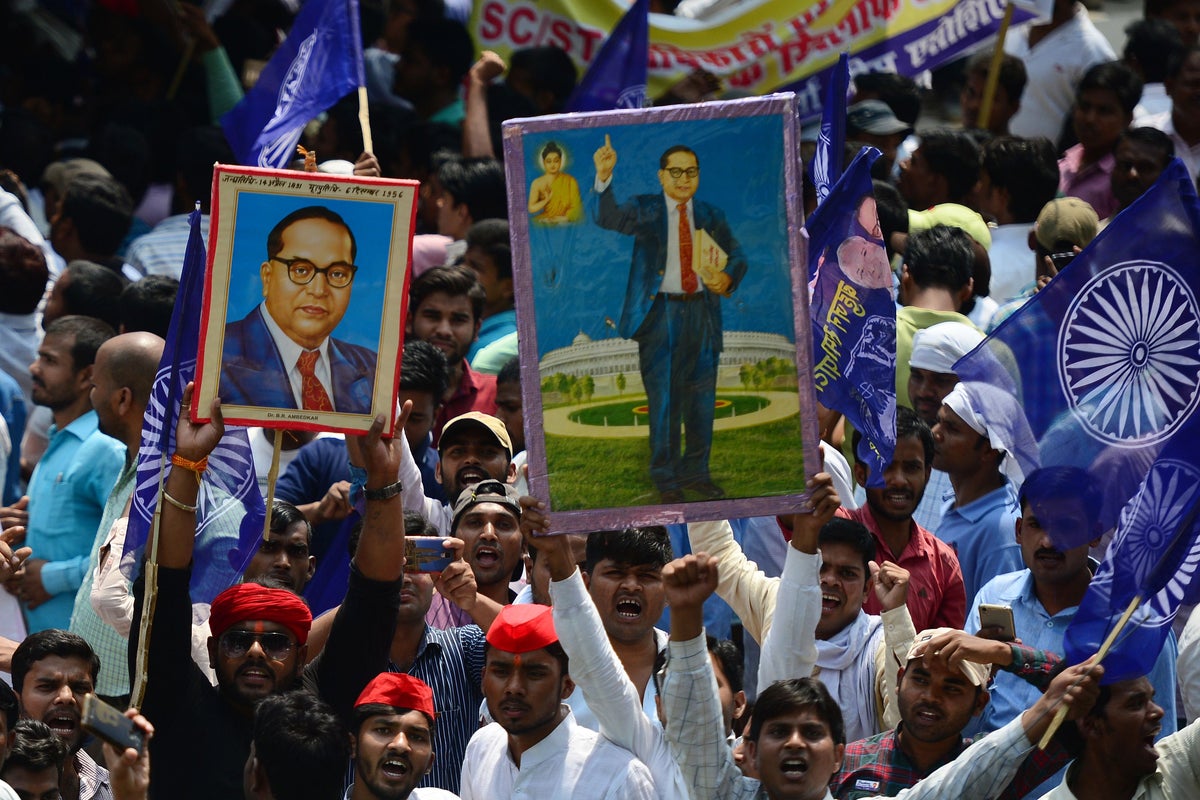
The caste system is a rigid social stratification structure that goes back thousands of years and is still critical in Indian life and politics. It divides Hindus into a hierarchal system by birth, with those on the bottom rung, the 200 million Dalits formerly known as the “untouchables”, facing social, religious and economic discrimination.
The watchdog said on Tuesday that large-scale violations perpetrated by law enforcement officials in India included “racially motivated violence, excessive use of force, extrajudicial killings, arbitrary and prolonged detention without due process, torture, ill-treatment and sexual violence”.
It urged Narendra Modi’s government to investigate the claims and bring those responsible to justice.
The Indian foreign ministry on Wednesday rejected the report, calling it “politically motivated and highly malicious”.
An Indian delegation led by solicitor general Tushar Mehta appeared before CERD earlier this month for the first time in almost 20 years. Foreign ministry spokesperson Randhir Jaiswal said it was a routine treaty-body review in which Delhi participated in the spirit of constructive engagement.
He said India underscored its constitutional safeguards, comprehensive legal framework, pluralistic ethos, and continuous efforts directed at safeguarding disadvantaged communities.
While Delhi would respond to the watchdog’s observations “through the established procedure”, the spokesperson said, its “delegation had already rejected the sweeping generalisations, unsubstantiated allegations, or tendency to exceed the convention’s mandate during the review meeting”.
The report alleged that police stops and identity checks involving racial profiling had led to arbitrary arrest and detention without due process. A Human Rights Watch report from July 2025 found that Indian authorities had forcibly pushed hundreds of Bengali-speaking Muslims into Bangladesh without due process.
The watchdog also flagged deportation and forced return of individuals, such as the Rohingya refugees, requiring international protection. Human rights groups and the UN raised alarm in May last year after Indian authorities allegedly forced dozens of Rohingya refugees off a naval vessel into the sea near the coast of Myanmar after providing them with life jackets.
India has routinely rejected reports critical of its treatment of minorities and disadvantaged people. Last year, it dismissed a report from a US panel on religious freedom highlighting the “deteriorating” treatment of religious minorities in the South Asian country.