



The days of privately messaging a coworker on Slack to ask a question, share information or vent about a pesky colleague may be numbered as employers increasingly want AI to learn from workplace chats.
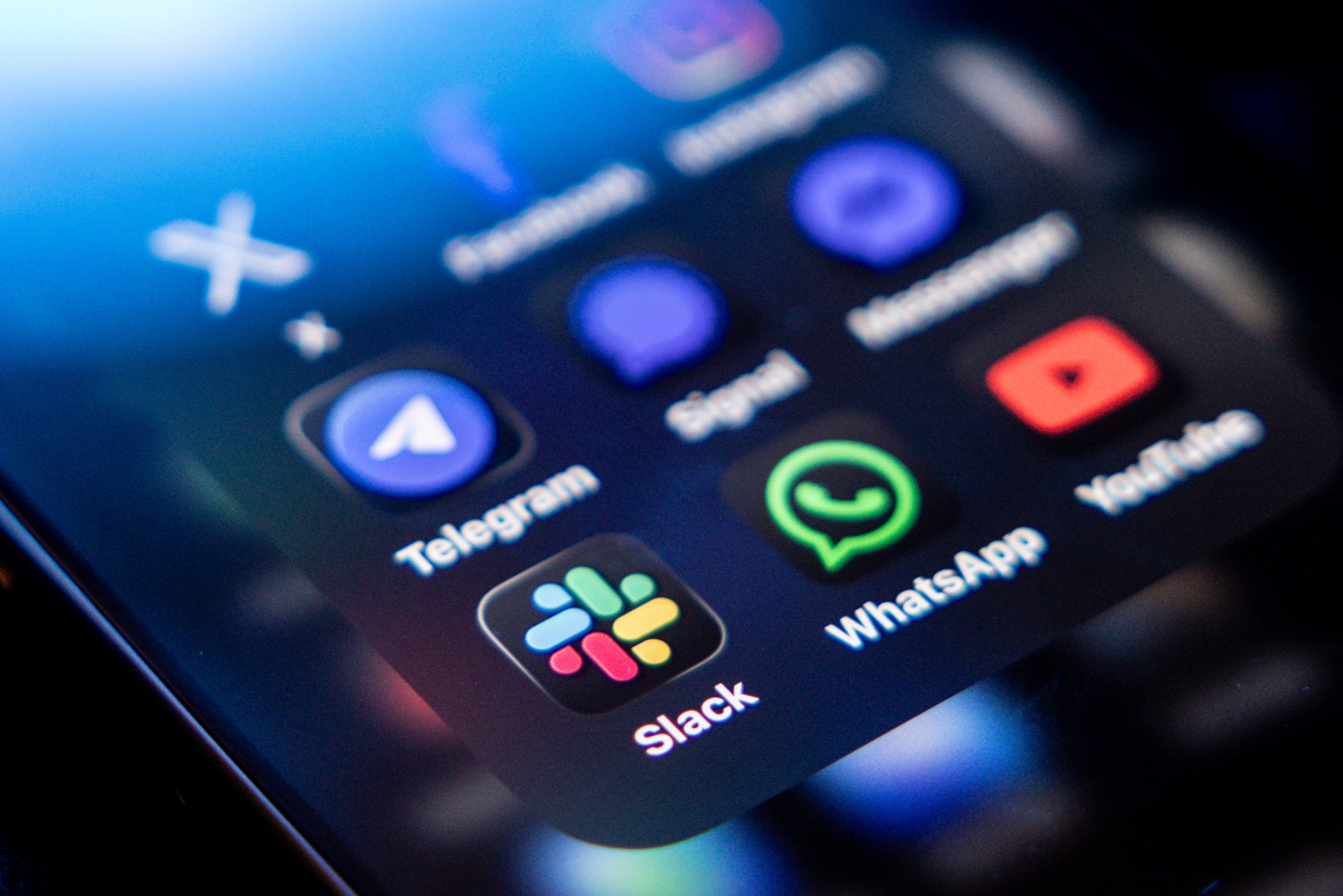
Companies are encouraging employees to use public Slack channels instead of private messages so AI agents can access updates on products, earnings and strategy, the Wall Street Journal reports. The thinking is that AI works better with more up-to-date context, allowing it to analyze information, answer questions, make recommendations, create presentations and write code.
“A big part of getting these agents to work really, really well is to make sure they have as much context as you can feed it,” Wade Foster, CEO and co-founder of Zapier, which automates corporate workflows, told the WSJ.
Foster said he encourages employees to default to public messaging when possible. Zapier has promoted public Slack channels for years to help new hires learn from past discussions, but AI has made that institutional knowledge even more valuable.
The company tracks how often employees post publicly, and Foster has turned it into a friendly competition among executives. He recently posted 79 percent of his messages publicly, while the chief marketing officer reached 98 percent. Foster told the WSJ that about 80 percent – not a perfect 100 percent – could be a reasonable target for many leaders.
 open image in gallery
Zapier is also recording many virtual meetings and uploading notes about key discussions and decisions to Slack, giving AI even more workplace information to search and analyze. Foster said employees are not expected to read everything that appears in public chats, and that doing so “would not be a smart use of your time,” especially when AI can summarize.
But the push to make workplace chats accessible to AI comes with privacy concerns. UC Berkeley professor Mathijs De Vaan warns that employees’ messages could potentially be used to train AI models, while knowing conversations are accessible could make workers less comfortable brainstorming or speaking freely in private chats.
Some working MBA students told De Vaan that their employers are encouraging public messaging because private chats can contain valuable information that helps AI systems work more effectively.
“The argument that there’s important information exchanged in these DMs is correct,” he told the WSJ.
Salesforce, which owns Slack, is also embracing the trend. Joe Inzerillo, Salesforce’s president of enterprise and AI technology, said having more information stored in one place gives AI more fuel to drive innovation.
The company says channel use has grown as companies increasingly work with AI agents. It has also introduced group chats where employees and AI agents can collaborate on coding.
 open image in gallery
“Having more things in a system of record, having more things accessible, is the fuel that powers the innovation,” Inzerillo told the WSJ.
The approach is also gaining traction at newer AI companies. At Aurelian, which develops software to coach 911 dispatchers and automate nonemergency calls, founder Max Keenan said he has recently “gone to war” against private workplace direct messages. He argues that keeping “information isolation” is too costly because both employees and AI agents need access to what’s happening across the company.
Meanwhile, ElevenLabs, which develops AI-voice agents, has taken a similar approach as it grew to about 800 employees. An AI agent now pulls updates from the 100 most relevant public Slack channels and turns them into a podcast, head of operations Victoria Weller told the outlet.
That way, Weller said, “you don’t need to find a person that was in the room for that conversation to get a readout of it.”