


Lenovo confirms Legion Go issues after gamers report bricked devices
I installed Lenovo’s forbidden BIOS and my Legion Go lived. You might be less lucky.
I installed Lenovo’s forbidden BIOS and my Legion Go lived. You might be less lucky.
by Aug 24, 2026, 11:38 PM UTC
 Sean Hollister is a senior editor and founding member of The Verge who covers gadgets, games, and toys. He spent 15 years editing the likes of CNET, Gizmodo, and Engadget.
When a company’s software update turns your computer into a useless brick, should fixes be free? Framework, the modular computer startup, apparently thinks so. But it’s not clear that computing giant Lenovo will go that far.
Three weeks after a Redditor presented a nearly $300 repair bill for their handheld gaming PC — among other reports of damage and high repair bills — the company is breaking its silence. It says, in short: try holding down the power button longer, and if that fails, contact customer support.
Here’s the statement Lenovo provided to The Verge, via communications director Jeff Witt:
Lenovo is aware that some Legion Go devices may experience a blank screen during installation of BIOS version V42. BIOS V42 was not distributed through Windows Update or Legion Space, and Lenovo has removed the update from its support website while we continue our validation work. Users who have successfully completed the V42 update should not need to take further action at this time.
If a device encounters a blank screen during V42 installation, users may try pressing and holding the power button for approximately 10 seconds, waiting approximately one minute, and then powering the device on again. If the device does not resume normal operation, customers should contact Lenovo Support for further assistance.
Lenovo continues to evaluate and validate future BIOS updates for Legion Go.
On the official Lenovo forums, it appears another Lenovo employee may have weighed in, too: a “Daniel_Legion” claims the issue “should be repaired free of charge” if you’re under warranty. “In the case of out-of-warranty devices, it should be repaired free of charge, but please check local laws,” they write.

But Daniel_Legion has no other visible posts on the Lenovo forums, and “we’ll repair it if local laws force us to” isn’t a particularly reassuring pitch, so we’re asking Lenovo to confirm his words and their meaning. Will Lenovo extend its warranty to cover bad BIOS bricks?
It’s important to note that not every Legion Go was vulnerable to begin with. You’d need to have the original Legion Go 8APU1, not the Legion Go S or the Legion Go 2, and you would’ve had to download BIOS V42 (N3CN42WW) directly from the company’s website over the two or so months before Lenovo yanked it.
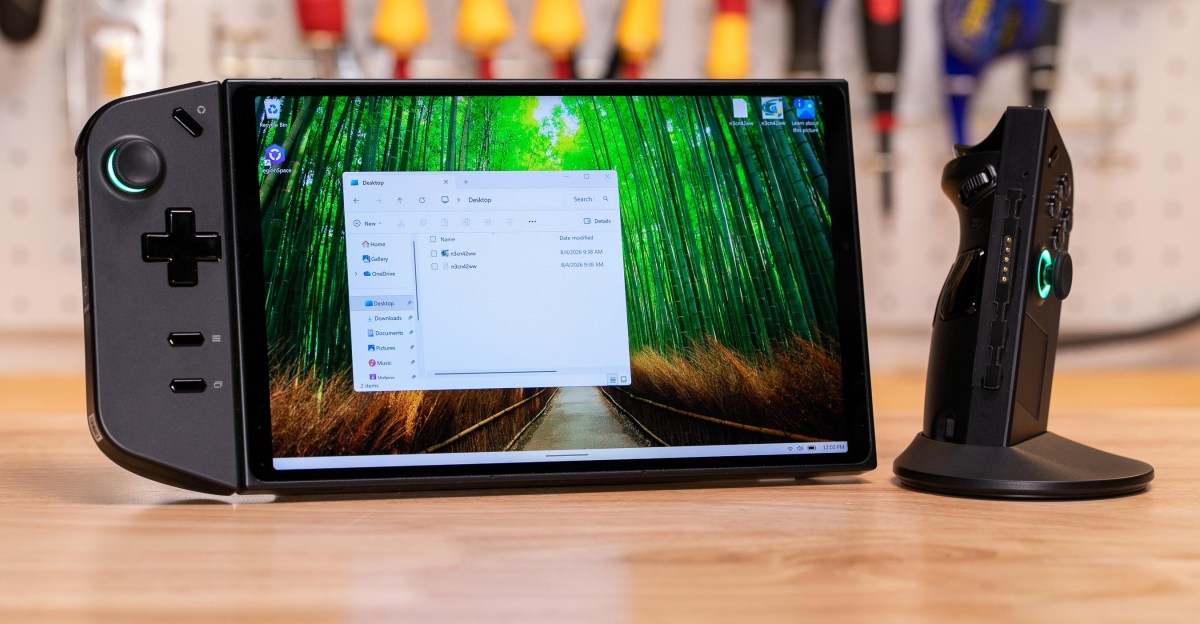
Even then, you might have been safe. The other day, I chose violence and decided to install the forbidden BIOS V42 on my own Legion Go review unit, and… after a long, scary sequence of black screens and progress bars and warnings and more black screens that lasted six whole minutes, it booted up just fine. (Plays games, even lets me log into Windows by typing my PIN with the gamepad controls. I couldn’t do that right before the update.)

Assuming Daniel_Legion is legit, it sounds like the investigation is still ongoing. A team in Europe was able to reproduce the issue with three out of three devices tested, but other teams weren’t able to see it at all, he told the Lenovo forums. “As such the issue is most likely related to specific component used on mainboards in certain batch or batches, or the issue needs to have specific circumstances to manifest,” he wrote.
I strongly feel that a company shouldn’t need to fully investigate before reassuring customers. They should say “if we did it, we will fix it, even outside of warranty.” That’s what Framework did with its device-bricking BIOS update.
Follow topics and authors from this story to see more like this in your personalized homepage feed and to receive email updates.