


We have been here before, but I think it really might happen this time. We have had a prime minister before who used to be against proportional representation but who was in favour of it in No 10.
Tony Blair was against before he was for, and in 1998 he “warmly” welcomed the plan drawn up by Roy Jenkins, the Liberal Democrat grandee nicknamed TGPB or The Great Pooh-Bah by Paddy Ashdown, the Lib Dem leader, for a proportional system similar to the one that was being drawn up for the Scottish parliament.
His welcome, however, was insincere. Blair had a healthy attitude towards referendums, which was to promise them but never actually to hold them. So he promised a referendum on changing the voting system, but said that because Jenkins’s plan required redrawing constituency boundaries it would have to wait. It is still waiting.
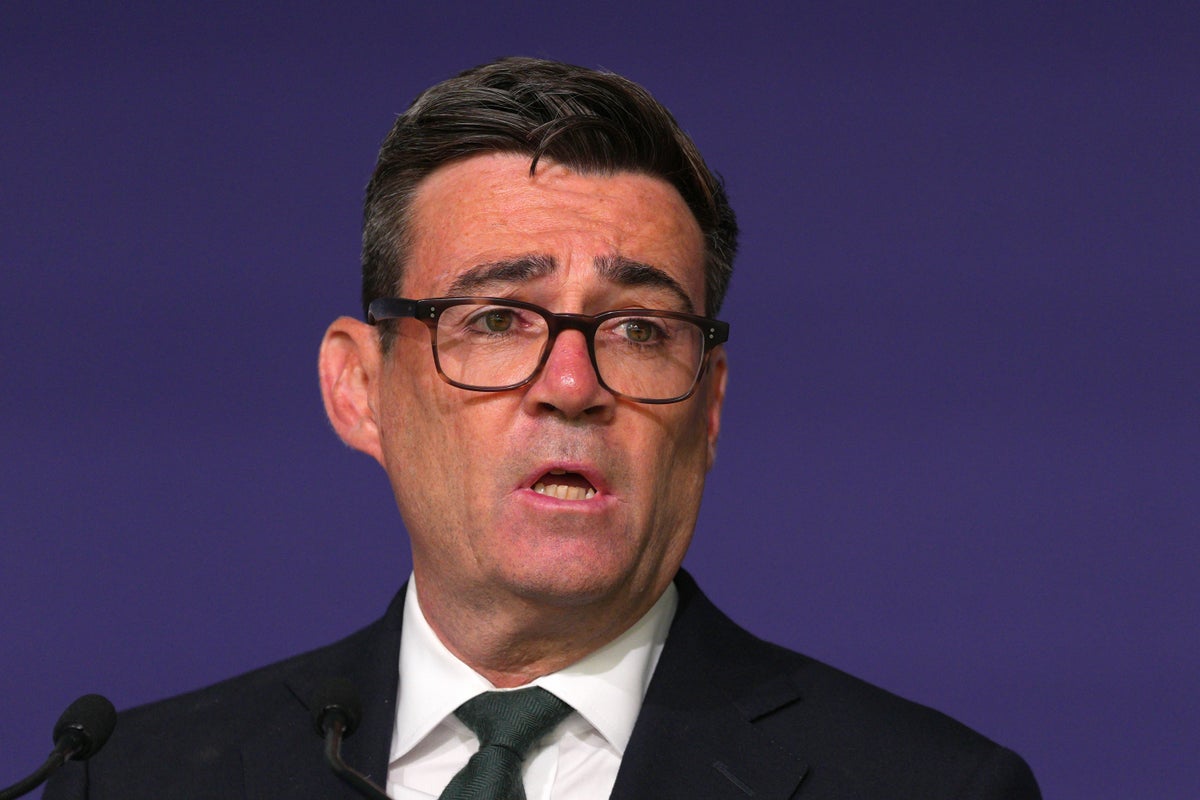
Andy Burnham is in a different position. He, too, used to be against electoral reform. He led the opposition in the outgoing Labour cabinet in 2010 to Gordon Brown’s offer to Nick Clegg of a change in the voting system as the price of a coalition.
But since then he seems to have undergone a genuine conversion. He supports proportional representation – as do the overwhelming majority of Labour Party members – and his position is that it doesn’t need a referendum. He wants to put the promise of PR in Labour’s next manifesto and then implement it if he is re-elected.
This would allow him to swerve around the failure of the 2011 referendum, which David Cameron agreed with Clegg. Burnham can say that he is not trying to reverse that vote, because it was on the Alternative Vote system, which would have ensured that MPs have the support of a majority of voters expressing a preference, but which would not be a proportional system.
If the result of the next election is anything other than a Conservative majority, therefore, PR ought to happen. Labour, the Lib Dems, the Greens, Reform, the Scottish National Party and Plaid Cymru are all likely to support it in their manifestos. All of them, apart from Labour, did last time.
If either Labour or Reform wins a majority on their own, there is always the possibility that Burnham or Nigel Farage may decide that there cannot be much wrong with the system that delivered for them. But the Blair fudge will be harder to get away with next time. And any kind of hung parliament more or less guarantees PR.
So I think PR is more likely to happen than not. It would be a big change to our constitution, and yet it has hardly been discussed. I have always been opposed to PR, on the grounds that it gives disproportionate power to small parties, but I recognise that it is hard to defend a system that gave Labour two-thirds of the seats in the Commons on one-third of the votes.
That said, some of the arguments for PR are weak. Many Labour supporters see it as a way of uniting the “progressive majority” and shutting out the right for ever. This is a sandcastle in the air. Just because Labour plus Lib Dems plus Greens won more votes than the Tories plus Reform at the last election does not mean the left and right blocs are fixed. What, after all, happened to the “progressive majority” in 2010?
If we are going to change the system, however, we ought to recognise that all systems have drawbacks and that they ought to be minimised as much as possible. At least the Lib Dems know what they want, namely the Irish system of preferential voting in large multi-member constituencies. Nobody else likes it because it means MPs represent a large area instead of a single constituency, but neither Labour nor Reform have decided what they do want.
Labour’s policy – passed by party conference in 2022 and ignored by Sir Keir Starmer – is that it is in favour of “proportional representation” and that the party “should convene an open and inclusive process to decide the specific proportional voting system it will introduce”.
Reform’s 2024 manifesto promised “proportional representation voting for the House of Commons”, but did not say more. Do they want the Irish, the Scottish or the Israeli model? (Kemi Badenoch avoided direct criticism of the Israeli government this week by blaming its policy on West Bank settlements on Israel’s strictly proportional national list system.)
I am surprised that advocates of PR have not nailed this down yet. If they don’t agree on a system before the next election, the negotiations afterwards are the main obstacle to change.
I am surprised, too, how little comment there has been on this year’s change to the Welsh Senedd voting system. It switched from an added member system, like the Scottish one and the Jenkins plan for the UK, to a multi-member constituency system. Only this isn’t like the Irish system, where voters can choose between members of the same party – it is a “closed list” system, in which voters can put an X by a party list, and the ones at the top of the list are elected.
I assume that Labour’s manifesto is heading for something like the Scottish/Pooh Bah system: constituency MPs plus top-up members elected from regional lists. But if so, it really ought to get rid of the second vote, which is now used by the SNP to try to get its Green allies elected by the back door on the regional lists. Instead of being used to “top up” the constituency results to make them more proportional, the system is being gamed to try to increase the number of independence-supporting MSPs.
We saw what happened last time a new voting system collided with an indifferent public – it was rejected in 2011 by a two-to-one margin. This time, if it is going to be imposed by parliament without a referendum, parliament had better get it right.