



It’s official: 71 per cent of England is currently in drought, affecting 45 million people.
This will come as no surprise to anyone with a working pair of eyes in their head – wherever you turn, this once green and pleasant land is more of a bleached-out beige husk this summer.
England and Wales experienced the driest July in 190 years, with some areas receiving no rainfall whatsoever as a result of what the Met Office dubbed “truly remarkable” conditions.
71%
The amount of England currently in drought
All regions of the country are currently experiencing pressure on their water resources, with impacts escalating across agriculture, public supplies, navigation and the environment. A fresh heatwave has seen the UK set a new record for the number of days above 36C in a single year, after temperatures reached 38C in some places on Thursday (13 August).
 open image in gallery
Things are so bad that Southern Water has now sought a rare drought order for a ban on “non-essential” use across parts of Hampshire and the Isle of Wight, which would prohibit the filling of public swimming pools and the use of car washes. If this sounds extreme, the alternative is much worse: if there is a continued lack of rain, some 165,000 people are at risk of running out of water, the company has warned.
Ministers are currently reviewing the request for a non-essential use ban (NEUB); it’s been 20 years since the last time one was granted.
No other water companies have indicated they are considering applying for similar measures, which could be down to the difference in infrastructure. Southern Water relies on drawing its water from the River Test, a rare chalk stream, rather than big reservoirs, in order to supply Southampton and the Isle of Wight. The Environment Agency (EA) has required the company to maintain the stream at higher levels to protect this globally significant environment since 2018.
 open image in gallery
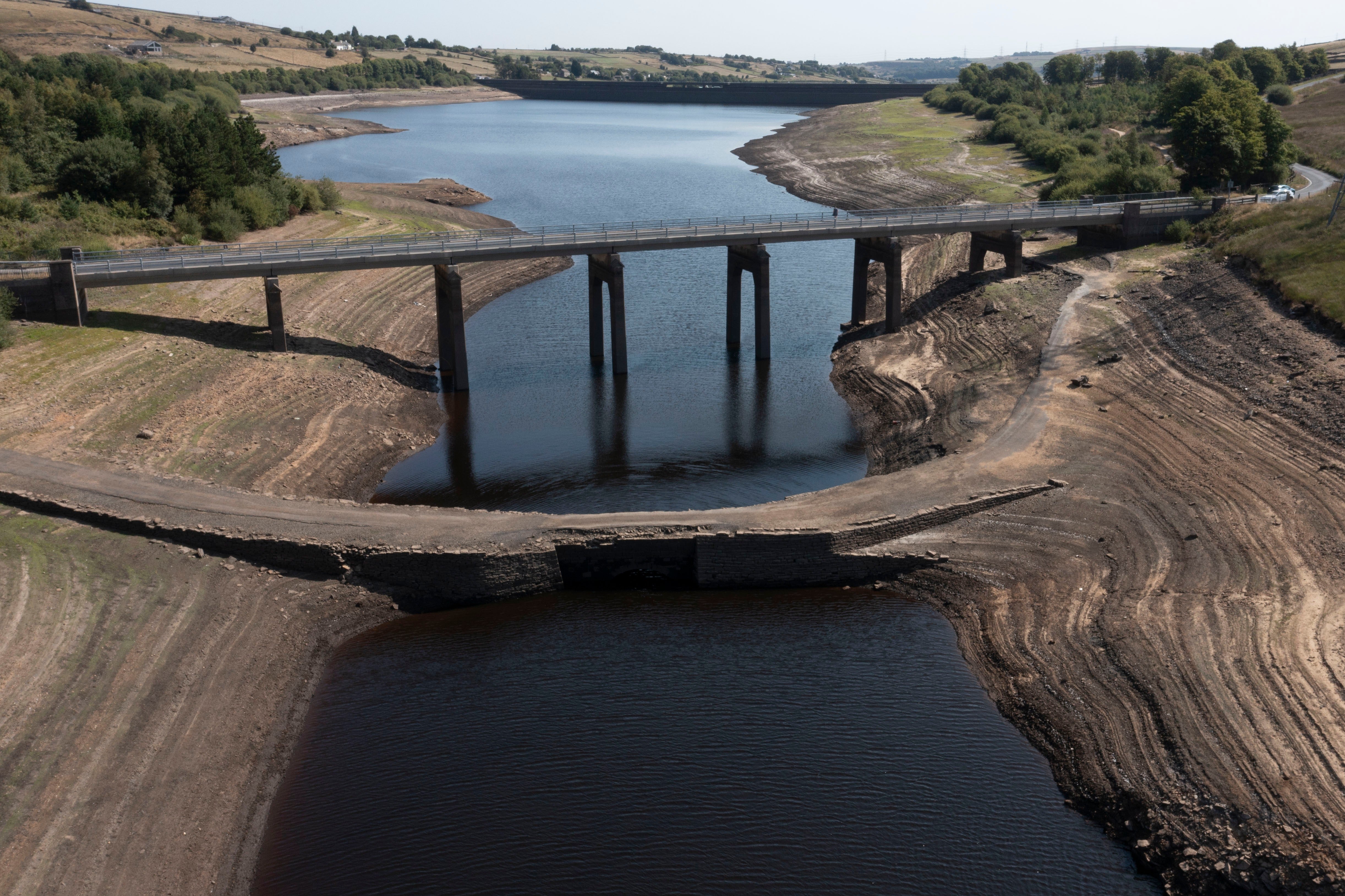
The prolonged lack of rain has left parts of the Test at half their usual flows or less; if limits are reached, Southern Water can draw from a service reservoir, but this would only suffice for a “day or two” before parts of the network struggled to maintain supply.
The issue is twofold for water providers: firstly, the dearth of rain means a reduced water supply; secondly, the very conditions that have brought about the drought – multiple heatwaves and record-breaking temperatures – have upped water consumption. When it’s hot, we naturally drink more, shower more, water our plants more.
Case in point: Southern Water has seen daily demand leap from 560 million to 660 million litres.
The problem is only going to get more pressing. By 2055, it’s forecast that England will need to find an additional 5 billion litres of water a day to meet demand for public water supply, according to the government.
5bn litres a day
The additional water needed to meet public demand in 2055
If summers like this are the norm amid the worsening effects of climate change, how can we future-proof our water supply? Is costly new infrastructure the only way, or can we be smarter and more strategic in how we use our water at a national level?
It’s an issue that’s being looked at by the National Drought Group, which includes the Met Office, government, regulators, water companies, the National Farmers’ Union, Canal and River Trust, anglers and conservation experts.
“In the face of the enormous challenges on water resources, it will need action from everyone,” the group says. “It needs more and faster infrastructure delivery, action on water efficiency, tackling leakage and reducing public demand.”
In the face of the enormous challenges on water resources, it will need action from everyone
Statement from National Drought Group
They’re looking to tackle it from multiple angles. One key measure the government is zooming in on is leakage – which is water that enters a water company’s system but does not make it to its destination. Water minister Emma Hardy has told water companies to do more to eliminate leaks. “As we move through this period of drought, I expect water companies to take every available step to minimise leakage,” she said.
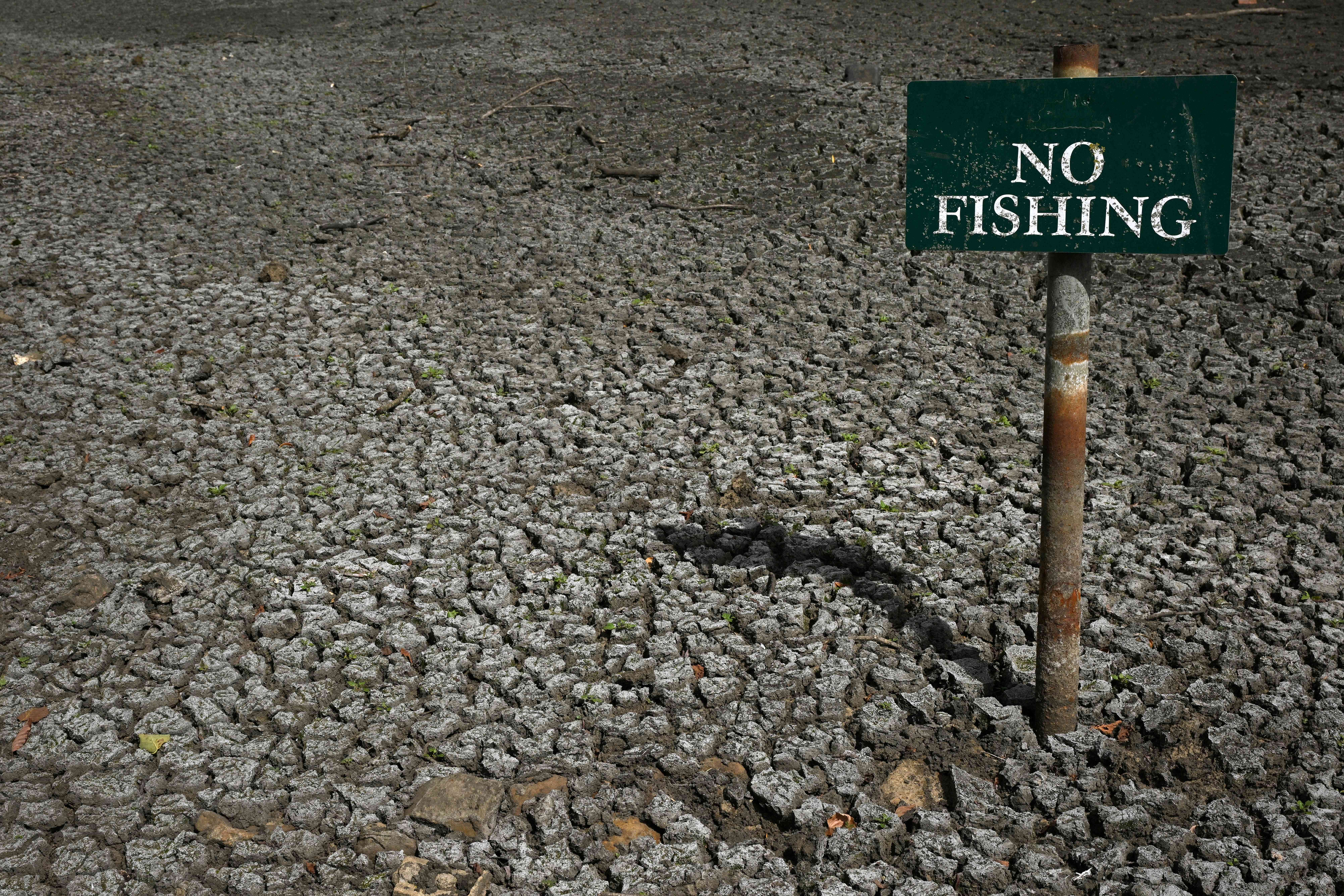
Not only do they waste water, but leaks also increase in the hot weather as pipes move in dry soils.
Over £700m has been committed by water companies to address the issue over the next five years, with the goal of reducing leakage by 50 per cent by 2050 (compared to a 2017-18 baseline).
 open image in gallery
For farmers, who are experiencing the sharp end of drought conditions, the EA is looking to step up support, including making it easier for farmers to build more on-site irrigation reservoirs. There’s also a push for more nature-based solutions, such as wetland restoration and catchment management, to help hold more water when it rains.
This is critical; a leaked military report, revealed in The Independent, has warned that prolonged high temperatures and volatile weather patterns now pose an existential risk to Britain’s food security.
Water transfer schemes are another vital strategy being touted. These see water moved from areas with high rainfall and low population, where there’s a surplus, to regions plagued by high demand and low supply, via pipes, aqueducts, canals and pumping stations. One such scheme, the Trent Witham Ancholme River Transfer Scheme, is already up and running in Lincolnshire, able to pump the equivalent of 60 Olympic-sized swimming pools every day.
200-400 litres a day
The amount of water a leaky toilet can waste
Creating more reservoirs is a high-level priority. Changes in the Planning and Infrastructure Act have been made to enable non-water sector companies to “build reservoirs that are automatically considered as nationally significant infrastructure projects”, which the government pledges will speed up approvals for large reservoirs.
And the biggest infrastructure project currently on the table is a promised additional 10 reservoirs by the year 2050, alongside new pipes to cut leaks. One of the former, Havant Thicket, is already under construction.
Combined, these will provide around an additional 700 million litres of water per day – far short of the 5 billion needed in 30 years’ time.
Turn that hosepipe off! Step away from the sprinkler! Let your lawn go golden and your car go dirty
Nicci Russell, Waterwise CEO
It’s why English water companies are also considering alternative solutions, and looking further afield at notoriously dry nations for inspiration. Australia, the US and countries across the Middle East all make use of a technology called desalination – whereby salt is stripped from seawater and then treated. Defra and the Environment Agency are advising companies to incorporate desalination plants into their Water Resource Management Plans to help shore up future supplies.
That’s the nationwide strategy, but individuals are going to need to play their part as well to ensure taps don’t run dry, experts have warned.
“Turn that hosepipe off! Step away from the sprinkler! Let your lawn go golden and your car go dirty,” instructs Nicci Russell, CEO at Waterwise. “Knock a minute off your shower time – imagine if everyone in England and Wales did that, saving 15 litres of water every time, and you can see how small actions by each of us make a real difference.
“We all need to save water – of course there is work to do for the water companies and governments, and big business, but we all need to step up.”
 open image in gallery
Other recommendations include tweaking bathroom infrastructure, such as opting for a low-flow shower head – they use around 6 litres per minute, compared to the 10-15 litres per minute of a standard shower head, saving 40 to 90 litres of water during a 10-minute shower – and getting a Cistern Displacement Device (CDD) from your water company if you don’t have a dual flush. This device is often available for free and can reduce each toilet flush by at least a litre.
Leaky toilet? Fix it ASAP – it can waste 200-400 litres a day.
Turning off the tap while brushing your teeth or shaving is an easy hack, as is scraping instead of rinsing dishes before you load them into the dishwasher, and filling your washing machine to its recommended load size for peak efficiency.
Using a washing-up bowl to catch excess water can reduce wastage by up to 50 per cent, plus the water can be poured over plants (along with water from dog or cat bowls, or any other water that would be otherwise poured down the drain). Installing a rain butt to collect rainwater also enables you to hydrate the garden using recycled instead of fresh water.
Speaking of plants, the Horticulture Trades Association recommends watering them in the early morning or evening. “This helps plants take up water and reduces the risk of rapid evaporation during warm spells,” reads the official advice. Try to get the water as close to the roots as possible, rather than on the leaves. “A less frequent but deeper watering is much more valuable and useful than regular light applications of water, as it is key to get the water down to where the plants need it – ie, the roots.”