


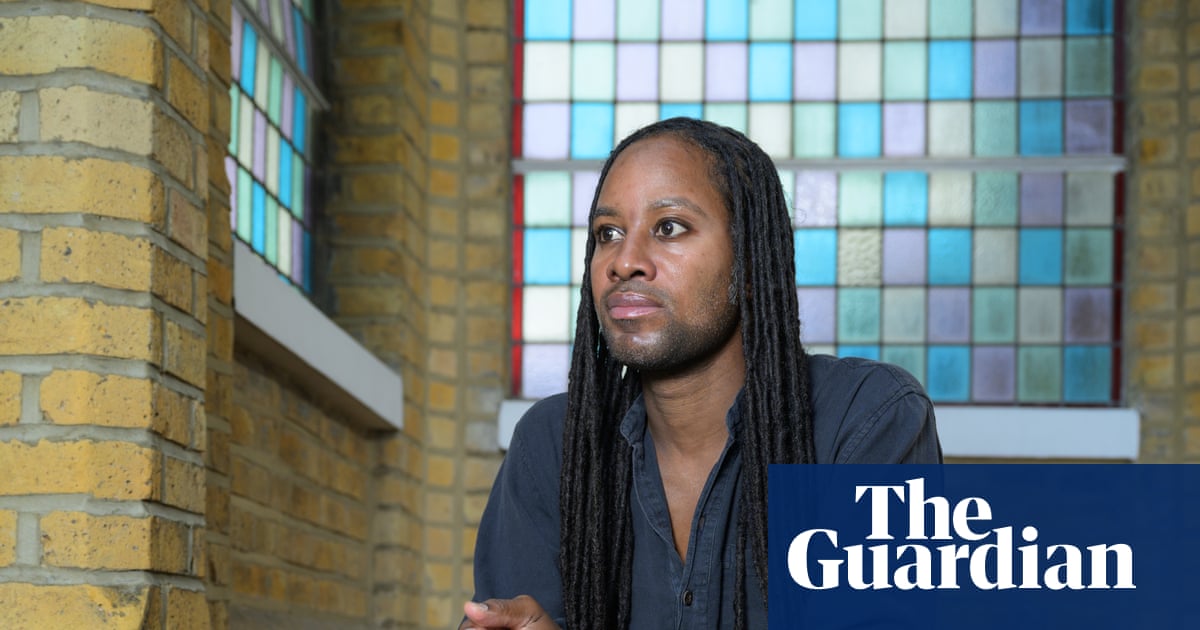
‘Always cracking jokes’: questions raised over Jason Arday’s claim he was non-verbal as a child
Fellow pupils at his primary school have challenged Cambridge academic’s story, though others support it
The story of Jason Arday’s extraordinary rise to becoming the youngest black professor in the history of the University of Cambridge is all the more remarkable for one claim: that he did not learn to speak until just shy of his 12th birthday.
This claim was mentioned in a letter announcing his resignation last week, which came amid mounting questions about both his academic work and statements he had made about his past.
Arday wrote that becoming a professor at Cambridge was something he “could scarcely have imagined” as an autistic child who was “unable to speak until I was 11 years old”.
His memoir, Great and Unfortunate Things, was published by Simon & Schuster in the US on Tuesday and is due to be published in the UK on 27 August. It tells the story of how he joined Cambridge aged 37 despite being non-verbal throughout his childhood and only learning to read and write aged 18.
But interviews with former schoolmates have produced conflicting accounts of his childhood. Two remember him speaking at primary school, describing a chatty child who loved making jokes, while two others say they did not hear him speak until he reached secondary school.
Jonathan Stewart, 40, told the Guardian he remembered Jason Arday from when they were children growing up in south London. He described him as a good mimic who entertained other pupils by putting on accents and singing songs.
Stewart, a YouTuber who says he was in the year below Arday at Heathbrook primary school in Nine Elms, said the academic was known as the class clown. “He was always cracking jokes. He was the comedian guy, he would even put on voices,” claimed Stewart, who says he regularly attended church with Arday.
Stewart said that in the Sunday school minibus that would pick them up, Arday would entertain his peers by singing the jingle from the 90s advert for My Baby All Gone. He said Arday, a talented goalkeeper, would bring in his own pair of gloves and dive to save the football, even on the school’s concrete playground.
Magnus Okuonghae, 40, a former captain of Colchester United, who was also in the year below Arday at Heathbrook, said: “I don’t remember too much about him but I certainly recollect him being able to speak.” Both Stewart and Okuonghae said they were in touch with people who had been in Arday’s class.

Arday writes in his memoir that as he approached the age of 12 the local council was on the verge of pulling his speech therapy support because he had made so little progress.
“But miraculously, just a few days shy of my 12th birthday, I spoke. It was at the start of one of my sessions, and Katrina [his speech therapist] had just said: ‘Hello, Jason.’ At that moment, I was fiddling with my hearing aid, which was bothering me, and then I took it out of my ear and said hello back to her.”
Arday said his mother was present to witness the moment, and that beforehand he had “said bits of words and made various noises out of context” but never replied with the correct phrase or at the right time.
Arday denied the accounts provided by Stewart and Okuonghae and organised for the Guardian to be sent statements by two school friends, Nick Clark and Mike Freeman, who said the account in his memoir accurately reflected the boy they remembered at school.
Clark said: “As a boy, I remember Jason not speaking and being regularly removed from class for additional support throughout his time at Heathbrook. I was not in his secondary school, but we joined the same football team at 13, when we became great friends, playing football together ever since.”
His mother, Caroline Russell-Clark, also sent a statement saying she had helped out at Heathbrook for a couple of years when Jason was very young.
after newsletter promotion
“When my son, Nick Clark, was in nursery at Heathbrook, I was asked to help three-year-old Jason, who had serious learning difficulties … I helped him listen to stories and read to him on many occasions,” she said. “He moved up to reception [class] and the deputy headteacher … asked me in to help support him, and another child. She gave me reading tasks to do with him and also asked me to explain various activities. Jason never spoke to me but he was well behaved and an engaging child.”
Russell-Clark said Arday had remained in the same class as her son throughout primary school. “I do not remember him speaking until he was playing in the same football team as my son aged 14/15.”
Freeman said: “I remember him not speaking during our time at Heathbrook primary school. He was regularly taken out of class for his educational needs. His severe special needs didn’t stop him playing football and games with me and others as he was still friendly and could communicate through play and actions.”
Arday resigned from Cambridge last week after being accused of plagiarism in his academic work. Questions were also raised about a long line of claims about his backstory, from endurance running, football exploits and charity fundraising to academic positions, qualifications and authorship. Arday said the “relentless accusations, speculation and public commentary have taken a profound toll on me and on those I love”.
Stewart said: “It took someone so long to get in the position that he got into and it’s tarnished. It’s gone and [the black community is] going to be scrutinised more than ever now. I can’t tell my sons: ‘Go look at him as somebody to look up to.’”
Arday claimed to have completed 30 marathons in 35 days, as well as running 600 miles in six days and raising £5m for charity over several years. After facing questions he revised some of those claims, and instead said he was part of a fundraising group that he was unable to name for legal reasons.
He also told the Guardian he had been the target of threats after his Cambridge appointment, including having a severed pig’s head delivered to his parents’ home. Subsequent investigations found no evidence to support this claim.
Simon & Schuster – which bought Arday’s memoir for a seven-figure sum, according to the academic – is pressing on with its publication and launch in the UK. The publisher did not respond to requests for comment.
Additional reporting: Kevin Rawlinson
Explore more on these topics
- Jason Arday
- University of Cambridge
- Academics
- Race
- Autism
- Special educational needs
- Higher education
- features