


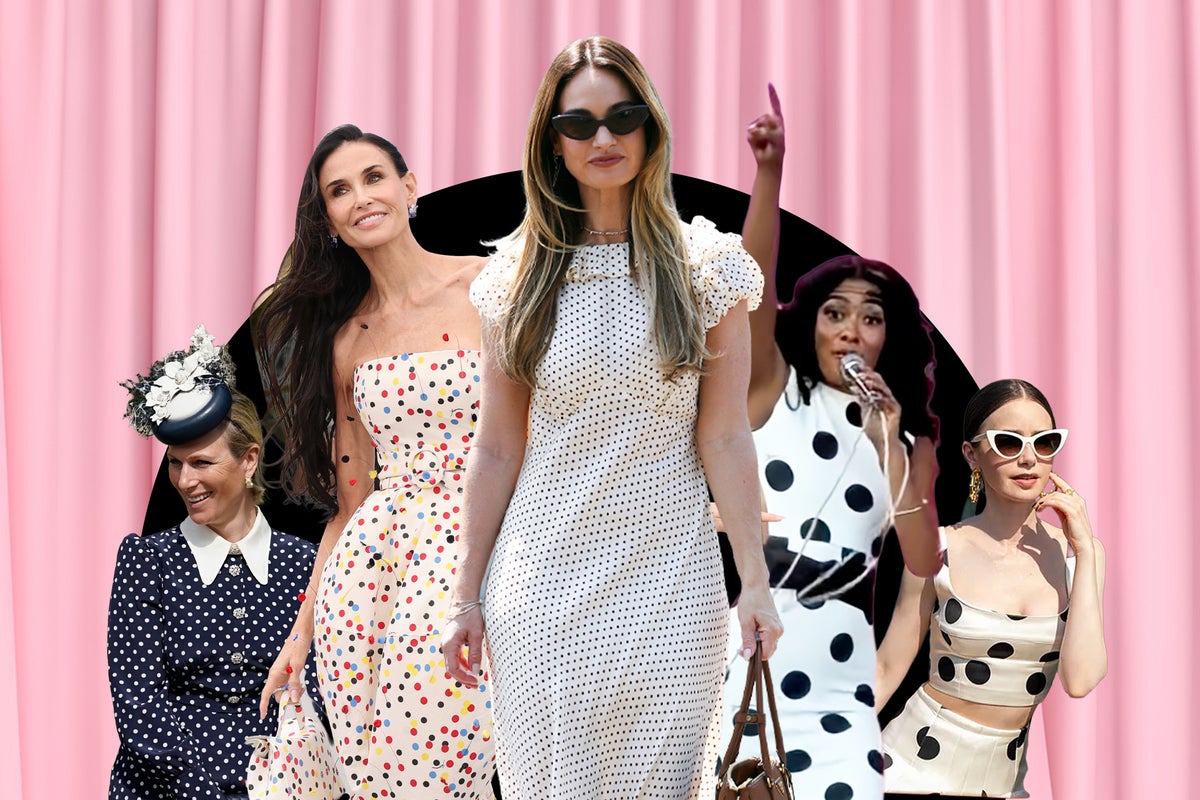
Yayoi Kusama thinks polka dots are everything. To her, they make up the universe. Since childhood, the 97-year-old Japanese artist hallucinated that polka dots were everywhere she looked, until they eventually became a central theme in her work, symbolising infinity, the cosmos and personal healing. “The sun, the moon, and the earth and stars are also polka dots,” she told Vanity Fair in 2019. “They cannot exist alone. Each and every one of us are polka dots.”
Walking through the streets of London this summer, I’m inclined to agree.
It’s hard to know where it started; the exact point at which we all went dotty. But something shifted around the springtime of 2026 when the dots – from meeting rooms to pub gardens – started coming thick and fast, reaching fever pitch in April when “Man I Need” hitmaker Olivia Dean went on her UK tour. “The guy on the merch stand outside the stadium asked if it was a theme or a coincidence,” one TikTok user commented on a video of swarms of girls in white-spotted brown or navy garments outside a venue before the gig.
When Dean took to the stage in Dublin, she was in on the gag, wearing a white midi dress with huge black spots. “Do you like my polka dots?” she asked the crowd. “I wore them just for you.”
When I asked Pinterest (the eternal favourite social media for mood boarding among the stylish, where users are 70 per cent more likely to make a purchase than on any other platform) whether their search statistics reflected this surge in popularity, the answer was whopping and conclusive: searches for “polka dot” were up 320 per cent from July 2025 to this year. Meanwhile, searches for “white polka dot” had increased by 1,500 per cent.
.png) open image in gallery
open image in galleryThe pattern, obviously, is nothing new. Marilyn Monroe wore polka dots in 1955’s The Seven Year Itch, Audrey Hepburn followed suit in Funny Face in 1957 and far later in 1990 – in a style that’s still emulated today – Julia Roberts donned a brown dress with white polka dots as Vivian Ward, post high-end glow up, in Garry Marshall’s romcom Pretty Woman.
But, allegedly, the first-known mention of the term appeared in the women’s magazine Godey’s Lady’s Book in 1857: “Scarf of muslin, for light summer wear, surrounded by a scalloped edge, embroidered in rows of round polka dots,” it was reported to have said. After that, the print continued to rise in popularity throughout the 20th century, appearing on a swimsuit worn by Miss America Norma Smallwood in 1926 and gaining further acclaim when animation Minnie Mouse made it her trademark in the 1930s. Although her spots were sometimes left out as they were too tricky to animate.
In more recent history, cast your mind back to 2019. The summer was hottest on record (38.7C), England won the Cricket World Cup, and a Zara dress captivated the nation like no garment ever has before. Yes, the Zara dress; a £39.99 midi frock with three-quarter-length sleeves and polka dots tip to toe that entirely, utterly, stole the heatwave season.
.png) open image in gallery
open image in gallerySo ubiquitous was the sudden wardrobe staple, there was even an Instagram account, @hot4thespot, (still with 17,300 followers), that was dedicated to sharing images of it in the wild.
“It’s a charming dress,” broadcaster Victoria Derbyshire told The Guardian after wearing the garment on her BBC show that July. “Polka dots are delightful and the flowing skirt suits any size or height.” The dress also covered the broadcaster’s cleavage and looked good with heels or trainers, she added. Casual. Office ready. Beach ready. It could do it all.
There’s a perennial nature to polka dots; They never really disappear, always in the background
Manisha Sabharwa, personal stylist
Evolutions of the Zara dress are now back on the high street. In M&S, their £42 polka dot ruffle midi skater dress has something decidedly 2019 about it. Elsewhere, Réalisation Par has endless dotty slip dresses for the cool girls, and you can’t step inside a Zara without being accosted by shoes, skirts, skorts – and even flip-flops – adorned with the print.
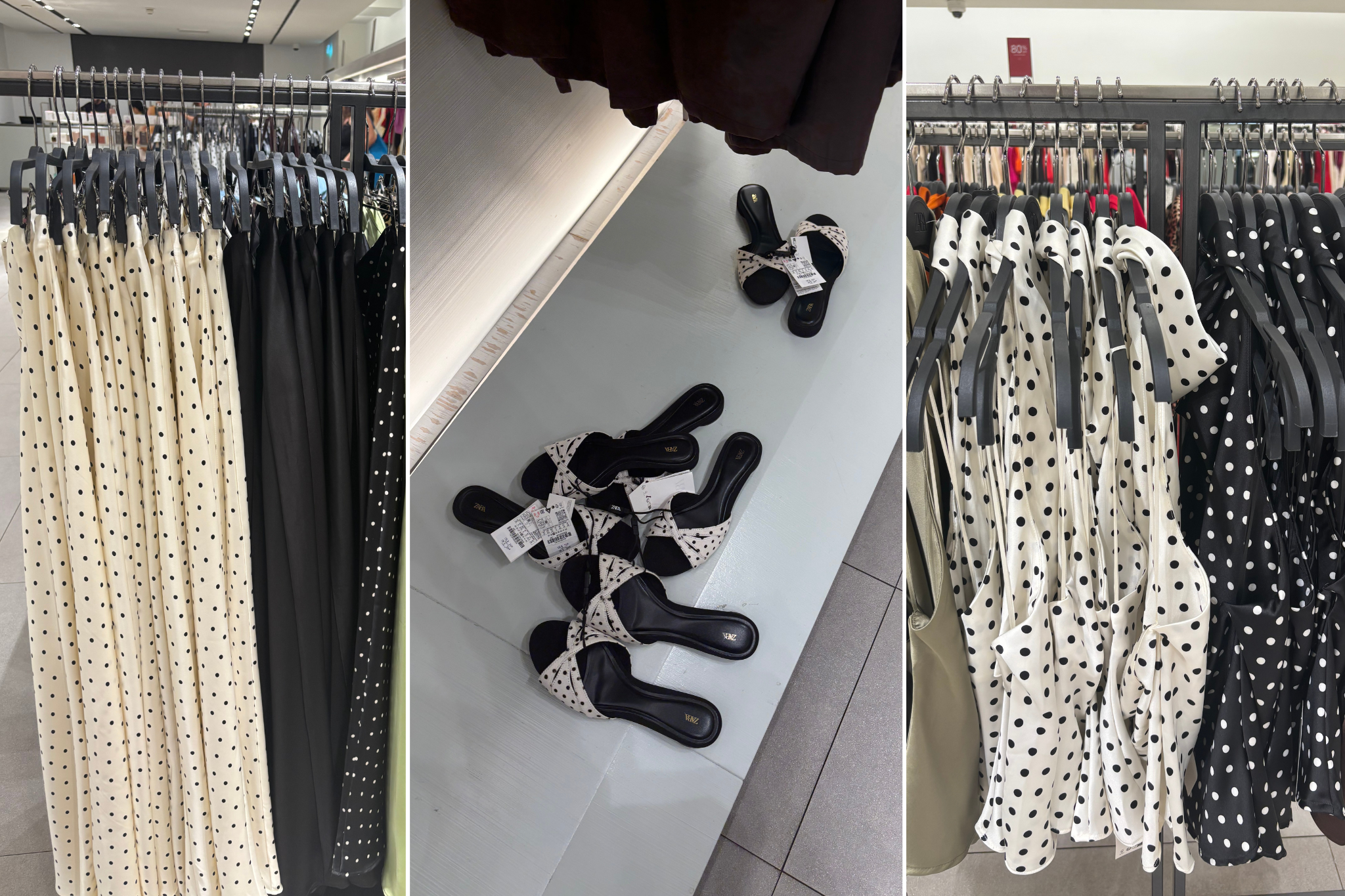 open image in gallery
Personal stylist Manisha Sabharwal said the spots had hit the streets of New York when she visited for work this summer, too. “It’s everywhere,” she says. “There’s a perennial nature to polka dots; They never really disappear, always in the background. They’re sort of in the same category as checks or leopard print but they’re not as serious or eye-catching.”
After months of minimalism dominating wardrobes, Sabharwal posits that the omnipresence of polka dots could signify a desire for fun, too. “There’s a softness and playfulness to them,” she says. “People were bored with fashion’s quiet luxury. So, coming into spring and summer, there’s been a hunt for personality; polka dots are the softest way to do that and romantic materials like lace, silk and chiffon pair together really beautifully.”
.png) open image in gallery
open image in galleryThis summer, it’s easy to feel gloom and despair as the world takes on a markedly apocalyptic tone. Fire clouds are sweeping across France. There are typhoons in Asia. Social media is stagnating spontaneous small talk and one in 10 people in Britain has no close friends to talk to. Prints like polka dots have a warm ability to break that barrier.
Sabharwal experienced the phenomenon when she wore the pattern to a meeting and a man crossed the room to tell her he lined all his suits with polka dots. “I thought that was so cool,” she says. “It was a great ice breaker – and that’s important, because it comes back to the point of fashion: to create conversation, make you feel something, generate a mood – to bring people together.” Olivia Dean might well agree.