


2027: Rep urges single-day poll, seeks amendment of Electoral Act
August 9, 2026 6:51 pm

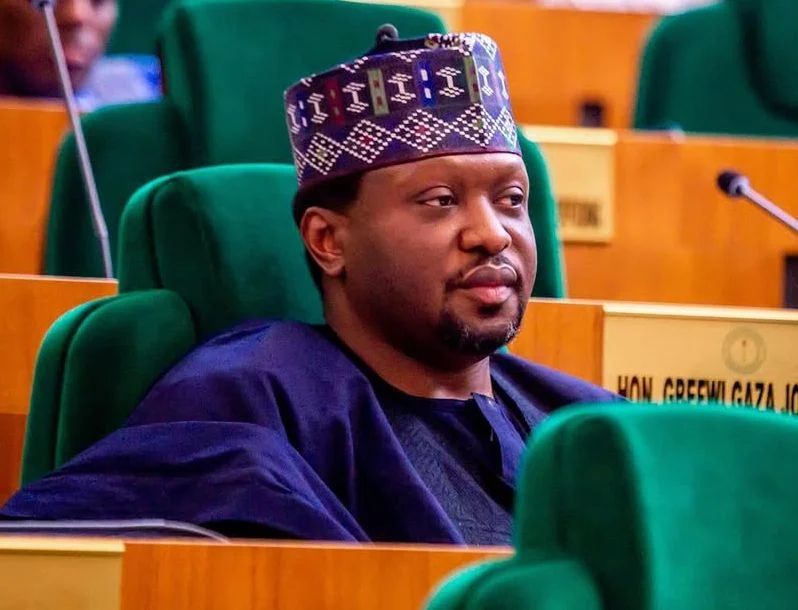
The Deputy Minority Leader of the House of Representatives, Abdussamad Dasuki.
The Deputy Minority Leader of the House of Representatives, Abdussamad Dasuki, has called on the Independent National Electoral Commission to reconsider the staggered arrangement for the 2027 general election and hold the federal and state elections on a single day.
Dasuki also raised concerns over Section 63 (2) of the Electoral Act, which, he warned, could potentially compromise the integrity of the 2027 general election by allowing ballot papers without the prescribed official mark of the electoral commission to be counted under certain circumstances.
A statement made available to PUNCH Online on Sunday noted that he said this at the weekend while receiving youths of the African Democratic Congress, who visited him to congratulate him on his emergence as deputy minority leader.
“Addressing the youths, the lawmaker said conducting the 2027 general election on a single day would save the country huge economic losses arising from the disruption of socio-economic activities associated with a staggered general election. He argued that a one-day election would also significantly reduce the financial burden on government, as allowances and other expenses for ad hoc electoral personnel, security agencies and other election-related logistics would be incurred for only one day instead of two separate election days.
“He said this had become necessary considering the paucity of funds for other needs having a direct impact on the welfare of the people. According to him, combining the elections would equally reduce the number of election-related trips that Nigerians and other participants would have to undertake, particularly in view of the country’s security challenges.
He explained that under the current arrangement, people travelling for election purposes could be required to make one trip in January for the federal elections and another in February for the state elections. A single election day, he said, would mean that such journeys would only have to be made once.
“Dasuki urged INEC to merge the federal and state elections and conduct them in either January or February 2027. He said the combined election would involve five ballot papers covering the presidential, senatorial and House of Representatives elections at the federal level, as well as the governorship and State House of Assembly elections at the state level”, the statement partly read.
The statement added that the deputy minority leader maintained that INEC had the capacity to manage the five ballot papers efficiently and effectively if adequate preparations were made ahead of the polls.
He further noted that the existence of eight off-cycle governorship elections would make a single-day election even more practicable, as governorship elections would not be held in 8 states during the 2027 cycle. He added that in those 8 states, the ballot papers would reduce to four.
Dasuki said the arrangement would not only simplify the electoral process but also help reduce the movement of voters, political actors, election officials and security personnel across the country.
“Considering the security situation in Nigeria, participants should not be required to make two separate journeys for elections when the process can be efficiently organised to take place on one day”, the statement quoted him as saying.
Raising concerns over a provision of the Electoral Act which, he warned, could potentially compromise the integrity of the 2027 general election by allowing ballot papers without the prescribed official mark of the electoral commission to be counted under certain circumstances, Dasuki wants Section 63(2) of the Electoral Act to be expunged.
He argued that the provision could create a loophole capable of facilitating the use of fake or unauthorised ballot papers during elections. He drew attention to the provisions of Section 63(1) and (2), particularly the apparent contradiction between the two subsections.
Quoting Section 63(1), he said: “Subject to subsection (2), a ballot paper which does not bear the official mark prescribed by the Commission shall not be counted.”
He, however, expressed concern over the qualification contained in Section 63(2), which provides: “Where the returning officer is satisfied that a ballot paper which does not bear the official mark was from a book of ballot papers which was furnished to the presiding officer of the polling unit in which the vote was cast for use at the election in question, he or she shall, notwithstanding the absence of the official mark, count the ballot paper.”
Rep Dasuki argued that permitting ballot papers without the prescribed official mark to be counted could expose the electoral process to abuse and make it difficult to distinguish genuine ballot papers from counterfeit ones.
He assured that the minority leaders are working to ensure that it is corrected before the 2027 elections.
The lawmaker also commended the recent increase in the salaries of members of the Armed Forces, describing the measure as a step in the right direction.
Rotimi, with over 12 years of quality media experience, reports entertainment and politics
All rights reserved. This material, and other digital content on this website, may not be reproduced, published, broadcast, rewritten or redistributed in whole or in part without prior express written permission from PUNCH.
Contact: [email protected]