


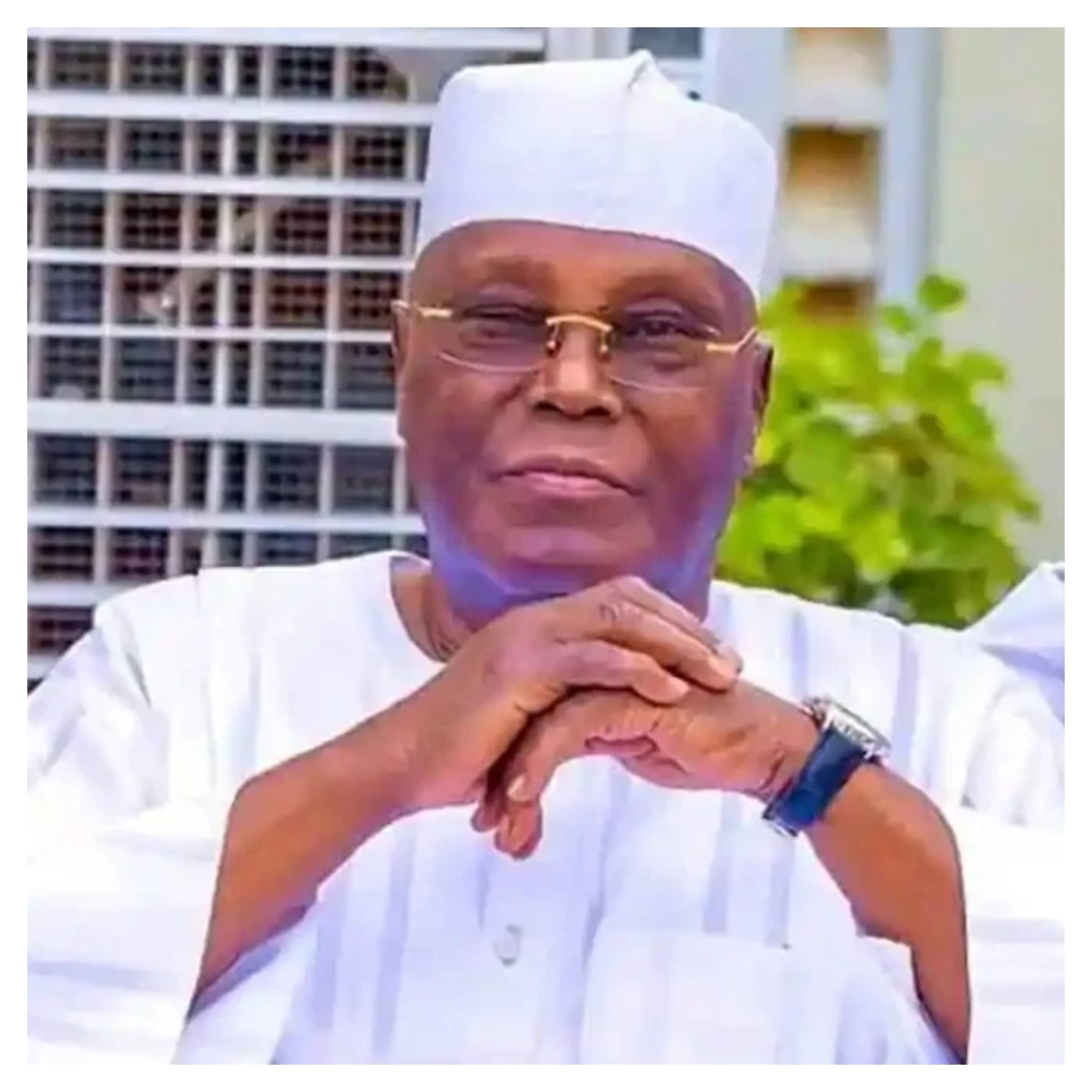

The Presidential candidate of the African Democratic Congress (ADC), Atiku Abubakar, has renewed his promise to restore petrol subsidy if elected president in 2027, reopening a fresh national debate over the controversial policy.
Recall that Atiku, who campaigned for the removal of fuel subsidy during the 2023 presidential election, last week said he would restore the same policy if elected in 2027.
His spokesperson, Paul Ibe, on Tuesday reiterated that the proposed intervention would be temporary and would aim at giving Nigerians and businesses time to recover, stimulate economic activity and improve productivity.
The proposal drew criticism from President Bola Tinubu, the Nigeria Democratic Congress (NDC) presidential candidate, Peter Obi, and many other prominent people.

Lagos rent crisis: CAN demands urgent govt intervention

Fela not originator of Afrobeats – Tekno claims

Don’t let Atiku deceive you about fuel subsidy – Sowore warns Nigerians
Also, experts have weighed in, with some supporting the proposal, stating that it would help revive the economy, while others think otherwise.
Fuel subsidy political fallacy, not solution Nigeria needs — Dr Ishak
A lecturer in the Department of Criminology and Security Studies at the Federal University Dutse (FUD), Dr Suleiman Ishak Muhammad, described the proposal to restore fuel subsidy as a political fallacy.
Speaking in an exclusive interview with DAILY POST, he said Nigeria needs economic diversification and stronger institutions rather than a return to subsidy.
Ishak said the country should be discussing how to diversify its economy, create jobs, improve electricity supply and reduce corruption instead of promising Nigerians the return of fuel subsidy.
According to him, fuel subsidy was introduced in the 1970s following the global rise in oil prices and was formalised in 1977 under the military administration of General Olusegun Obasanjo through the Price Control Act.
He said the policy required filling stations to sell petrol at a price not higher than the government-approved price.
He argued that the policy later became associated with corruption, money laundering and fraud in the petroleum sector.
“Since then, there has been increasing corruption, a high rate of money laundering and a lot of oil-related corruption. The oil industry became one of the most corrupt industries in Nigeria and globally,” he said.
He recalled that a multibillion-dollar fraud was detected in the Nigerian National Petroleum Corporation in 2012, arguing that such cases showed the problems that had surrounded the subsidy system.
“Fuel subsidy is a scam. It is a venture at which corruption eats up everything in Nigeria,” he said.
According to him, money that was supposed to be used to keep fuel prices low was often lost through corruption, while states struggled to pay salaries, create jobs and provide basic services.
He questioned why successive governments continued to borrow from international institutions to finance their activities despite the huge amounts being committed to fuel subsidy.
“With subsidy, we were still financing even the taxes and the loans we are paying. If you look at it very well, it is a scam,” he said.
Fuel subsidy removed without plan — Ishak
Ishak, however, acknowledged that the removal of fuel subsidy by President Bola Tinubu in 2023 created serious hardship for Nigerians.
He said the policy contributed to inflation, increased the cost of living and forced many small businesses to close.
According to him, the major problem was not only the removal itself but the fact that it was done without adequate measures to cushion its impact on citizens.
“Tinubu removed the fuel subsidy without backup, without any usual plan for that fuel subsidy,” he said.
He said Nigerians were told that the savings would increase funds available to states and enable them to pay salaries and provide services, but argued that this had not adequately addressed the problem of corruption.
“If you remove this subsidy and add it to the state inflows, yes, they can pay salaries and do other things. That is development. But the corruption still continues,” he said.
The lecturer said he disagreed with the idea that a president could simply decide to remove or restore fuel subsidy at will.
He described the issue as being linked to Nigeria’s international financial obligations and the way the country’s economy has been managed over the years.
“Removal of fuel subsidy is not just a political decision. It is beyond decision. It is an international pressure,” he said.
Ishak argued that Nigeria had accumulated loans with conditions attached to them, while global economic pressures had also influenced the country’s approach to subsidy.
“It is an international projection based on how we poorly manage our economic resources from inception to date,” he said.
He, therefore, questioned how Atiku would control corruption and manage the economy if he restores subsidy.
“If Atiku Abubakar restores fuel subsidy, how is he going to control corruption so that the money will not keep wearing away? How is he going to hold the economy? How is he going to pay salaries? How are we going to ensure employment? And how are we going to improve our GDP and GNP?” he asked.
Rather than focusing on fuel subsidy, he urged Atiku to explain how he would diversify Nigeria’s economy and reduce its dependence on crude oil.
“Why are we solely relying on oil? It is not working anymore,” he said.
He argued that Nigeria’s economy should focus more on agriculture, manufacturing, mining, small-scale industries, digitalisation and other productive sectors.
He also said Nigeria did not have complete control over its oil resources because of existing financial obligations and agreements tied to the country’s resources.
“Whoever comes on board and promises us oil, Nigeria is no longer having that autonomy in determining what oil price should be,” he said.
He urged Atiku to focus on digitalising the economy, creating jobs and fixing the country’s electricity sector, which he described as one of the major factors affecting industrial development.
“One of the viable factors destroying the Nigerian industrial sector today is electricity failure,” he said.
Subsidise agriculture, others, not fuel
Ishak said he did not believe Nigerians should depend on government subsidies as a long-term solution to economic hardship.
“Fuel subsidy is a gift and Nigerians cannot rely on it. I expect Atiku to be talking about diversifying the economy,” he said.
He urged the government to support agriculture, provide access to grants and loans and strengthen the financial sector so that Nigerians could invest and produce.
He also called for improved quality assurance, reduced corruption and policies that would encourage Nigerians to become productive.
“We have good economists in Nigeria. Let’s utilise their ideology. Let’s make production and quality assurance a reality. Let’s reduce corruption and reorient our people towards development and achievement,” he said.
The academic cited China as an example of a country that built its economy through production and diversification rather than depending mainly on crude oil.
“Look at China, for example. It doesn’t depend on oil. It provides a platform for digitalising its economy to ensure inclusion,” he said.
He said Nigeria needed economic inclusion that would give people in both rural and urban areas opportunities to participate in the economy.
“Those in rural and urban areas should have something doing so that the chain of production will keep moving,” he said.
Ishak further urged political leaders to address insecurity, saying economic development could not happen where people’s lives and property were not protected.
He also called for stronger links with Nigerians in the diaspora and policies that would help Nigerian products access markets across Africa.
He concluded that the 2027 political debate should go beyond promises about fuel subsidy.
Tinubu could have been Nigeria’s best president after subsidy removal — Ojo
Political analyst Kabiru Ojo has said President Bola Tinubu could have been the best president in Nigeria’s history after removing fuel subsidy if his administration had partnered with the Dangote Refinery through a crude oil subsidy arrangement.
Ojo made the remarks in an exclusive interview with DAILY POST while reacting to former Vice President Atiku Abubakar’s renewed proposal to restore fuel subsidy in a different form if elected president in 2027.
Ojo argued that Atiku’s current proposal was different from the previous subsidy system because Nigeria now has a functioning local refinery capable of refining crude domestically.
According to him, “Atiku never changed his position on removing fuel subsidy. What changed is the strategy because we now have a working local refinery.”
He explained that the previous subsidy regime depended on importing refined petroleum products, which increased demand for dollars and weakened the economy.
“The old subsidy was built around importation. That was what put pressure on the dollar and affected the economy. What Atiku is talking about now is subsidising crude supplied to local refineries,” he said.
Ojo maintained that Tinubu had a similar opportunity immediately after removing subsidy in 2023.
“Tinubu could have been the best president ever in the history of Nigeria after removing subsidy if he had worked with Dangote Refinery,” he said.
He proposed that the government should have sold crude to Dangote Refinery at subsidised rates while monitoring the amount of crude supplied and the volume of refined products produced.
According to him, the government and the refinery could then agree on a sharing formula while regulating pump prices.
“If government subsidises crude instead of imported fuel, investors will come and build more refineries because they will benefit from the same arrangement,” he said.
He argued that such a policy would reduce Nigeria’s dependence on imported fuel, lower demand for foreign exchange and strengthen the naira.
“That will stop dollar demand, reduce pressure on foreign exchange and make the naira appreciate,” he added.
Ojo also insisted that every country subsidises essential sectors in one way or another.
“No nation leaves its citizens without some form of subsidy. It may be food, healthcare, fertiliser, farming or energy. Something is always subsidised,” he said.
He claimed that Nigerians were experiencing hardship because, in his view, nothing is being subsidised under the current administration while inflation continued to rise.
He also criticised the suspension of the naira-for-crude arrangement, arguing that continued reliance on imported crude had prevented the government from controlling fuel prices.
“If government had supported local refining from the beginning, Nigeria would have been enjoying the benefits by now,” he said.
Subsidy removal came when Nigerians needed it most — Economist
The removal of petrol subsidy came at a time when Nigerians needed government support the most and has contributed to the economic hardship being experienced in the country, an economist, Dr Abdulrazak Ibrahim, has said.
Ibrahim, of the Department of Economics, Northwest University, Kano, said the government should consider bringing back a form of petrol subsidy while also working towards producing all the fuel needed in the country.
He spoke while analysing the debate over calls for the return of fuel subsidy.
According to him, former Vice President Atiku Abubakar was previously known as a supporter of subsidy removal, but his current position may reflect the impact of the policy since its implementation.
“We used to know Atiku Abubakar as a proponent and advocate of subsidy removal. But what this shift in his position is telling us is that likely he was unaware of the potential economic crisis that the removal of subsidy would inflict on Nigerians,” Ibrahim said in an exclusive interview with DAILY POST.
He said Atiku may have changed his position after seeing the effects of the policy over the past three years.
“Probably now that it has been removed and for about three years he must have seen the negative impact of the removal. Probably that is why now he is changing his position,” he added.
Ibrahim argued that the subsidy should not have been removed in 2023, particularly because it came at a time when Nigerians were already facing economic difficulties.
“In my view, initially, the subsidy shouldn’t have been removed because we removed subsidy at a time when Nigerians needed it the most,” he said.
He noted that Nigeria removed the subsidy in May 2023, at a time when several advanced countries were introducing measures to reduce the impact of rising global energy prices on their citizens.
The economist cited Germany, France and the United Kingdom as examples of countries that introduced energy support measures during the global energy crisis.
According to him, Germany introduced what it called an economic defence shield in late 2022, committing about £200 billion to measures aimed at reducing electricity and natural gas costs for households and businesses.
He said France also introduced a similar measure known as a tariff shield, which helped keep electricity and natural gas prices lower for households and some businesses.
“France also kept the price of natural gas and electricity for households and some businesses. In that programme, they spent roughly €45 billion within two and a half to three years subsidising electricity and natural gas for their people,” he said.
Ibrahim also pointed to the United Kingdom, which introduced the Energy Price Guarantee during the same period.
He said the UK spent about £70 billion on the programme to support electricity and natural gas prices for residents in parts of the country.
He further said the United States continues to provide substantial support for fossil fuel production.
“Even in the United States of America, up to today, the United States is spending roughly 20 to 31 billion U.S. dollars subsidising fossil fuel production annually,” he said.
The economist said the examples showed that wealthier countries were willing to support their citizens and businesses during periods of energy crisis.
“These are advanced countries with a very high income compared to Nigeria. But within the same period, during that global energy crisis, they mounted these programmes, while at the same period our government withdrew the subsidy that we used to have,” Ibrahim said.
He said the removal of the subsidy significantly changed the cost of living in Nigeria, particularly through the increase in petrol prices.
According to him, the price of petrol rose from below N200 per litre to more than N1,300 per litre after the removal, with serious consequences for households and businesses.
“That has changed everything. It turned down the lives of Nigerians and created so many job losses. It created hardship, and the cost of living keeps rising,” he said.
However, Ibrahim acknowledged that the economic difficulties facing Nigerians could not be blamed on subsidy removal alone.
He said other government policies, particularly the floating of the naira, had also contributed to the current economic situation.
“We can actually say it is not the impact of this policy, subsidy removal alone. There are some other policies like the floating of the naira, among others, that contributed to the economic condition in which we found ourselves,” he said.
Despite this, he argued that subsidy removal was one of the major factors that changed the economic situation.
Ibrahim said a decision by the government to revive a properly designed subsidy would be a welcome economic policy, particularly because Nigeria remains a low-income country.
“In my view, it is a very welcome idea if any Nigerian leader comes and revives and returns to that subsidy, specifically subsidising petroleum and natural gas,” he said.
He, however, stressed that any new subsidy arrangement should not simply return to the system that existed before 2023.
According to him, the government needs to properly calculate the country’s actual fuel consumption and determine the amount of subsidy required based on real demand.
“We need to calculate not the previous subsidy we had. We need to calculate the actual litres, the actual consumption of Nigerians,” he said.
Ibrahim also urged the government to reduce Nigeria’s dependence on imported refined petroleum products by increasing domestic refining.
He said Nigeria currently produces a significant portion of its fuel needs locally but still depends on imports for part of its consumption.
“Now we are producing around 60 per cent of the oil within the country. We are still importing around 40 per cent. The country should strive to produce 100 per cent of its consumption,” he said.
He said achieving full domestic production would make it easier for the country to design an effective subsidy policy while reducing exposure to fluctuations in international fuel prices.
Nigerian Newspapers: 10 things you need to know Friday morning

Do not tarnish our image – Police warns officers in Jigawa against misconduct

No contact yet with abductors of Niger worshippers – Commissioner
