


“Do what I say, or you’re not invited to my birthday party!”
“I’m not going to be your partner on the project unless you give me the treat from your lunch!”
These kinds of threats are tactics many school-age kids use to solve conflicts. Parents and teachers sometimes assume these common threats are basically harmless.
After all, are they so different from comments kids might hear from grown-ups in their lives? It’s a small step from “Daddy better get you to school on time or Mommy is going to be angry with him!” to “If you don’t give me that toy you won’t be my best friend anymore!”
 open image in gallery
The adult and the kid versions are both signs of bullying behavior. I’m a child psychologist, and I know that kids imitate the behaviors they observe at home. Bullying is tied to poor outcomes not only for the child who is bullied but for the bullies themselves, who run a higher risk than their peers of experiencing depression when they become teens. Youth who are bullies also are more likely to engage in aggressive and rule-breaking behavior, have substance use problems and hang out with other adolescents who share these tendencies.
The good news is that parents can change the ways they handle their own conflicts to demonstrate for children how to use healthier and more positive ways to interact with others.
Getting people to do what you want
Across cultures, regardless of temperament, most children act with two goals in mind: to get or do things they want and to avoid things that they don’t want.
Kids want things like hugs and affection, praise, cool toys, yummy food and treats. They want to play, have fun and spend time with family and friends. Alternatively, they don’t want to do things that seem tiring, stressful, scary or boring, like cleaning up, doing chores, getting ready for bed or completing difficult or tedious schoolwork.
Think about all the ways you can get someone to do something that’s undesirable to them, especially if you have power over them. You can use positive tactics, such as direct encouragement, incentives and praise. You can try negative tactics, such as threats, manipulation and force. Some – asking politely, saying please and thank you each time – work better than others, such as nagging or pleading.
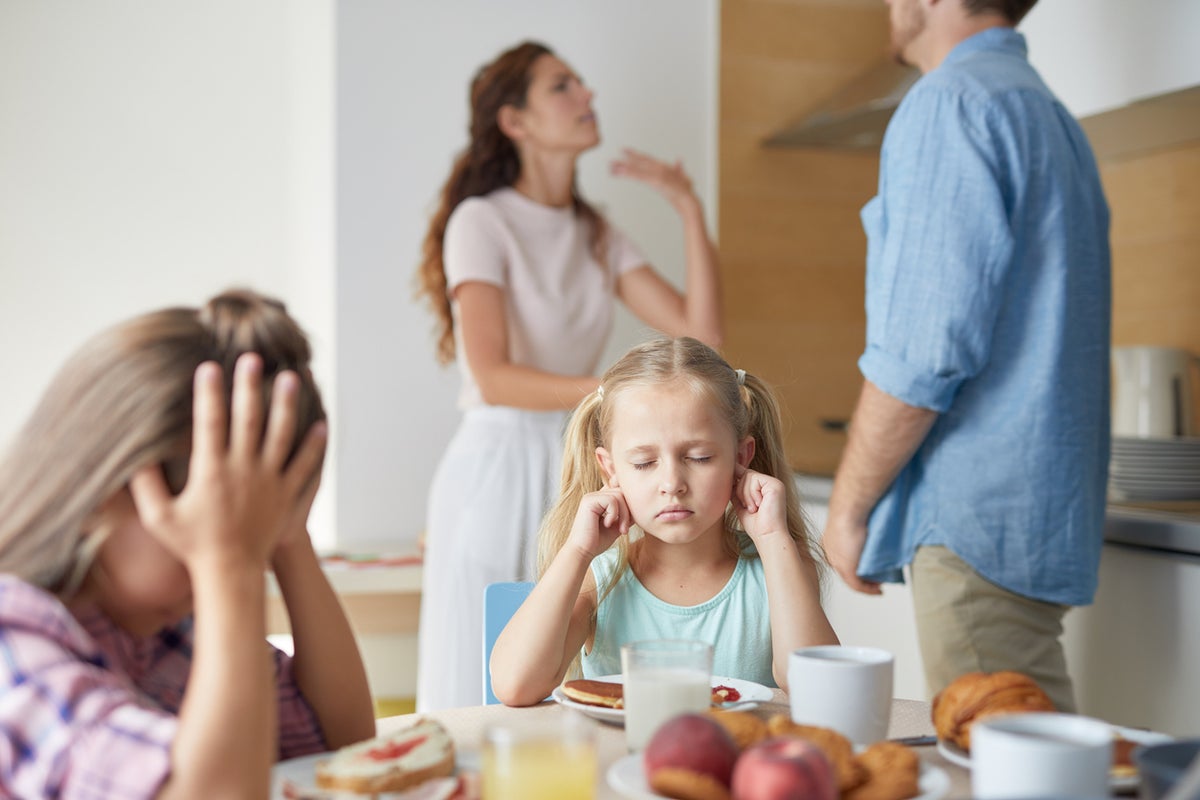
Children learn which tactics work and are acceptable by seeing how adults, who hold power over them, employ them.
On one extreme, observing aggression between parents increases risk for children’s heightened aggression and violence in their own social relationships. Stanford psychologist Albert Bandura’s seminal 1961 “Bobo Doll Study” found that preschool children who saw an adult hit and kick a life-size inflatable figure were more likely to be aggressive toward that figure when frustrated.
In my own research, I focused on children who were exposed to domestic violence between parents as early as in infancy. As adults, these now-grown children were more likely to be both victims and perpetrators of violence with their romantic partners. People were particularly likely to be violent as adults if they were exposed to domestic violence when they were in preschool, as opposed to later in childhood, suggesting early childhood is a particularly important time for parents to model healthy conflict resolution.
Many people don’t regularly use physical force on each other or on their kids to get what they want, so children also pay attention to how subtle tactics such as manipulation, threats and exclusion work. If children constantly hear, “If you don’t do this, you’ll lose that, or I’ll do this to you,” they learn that threats are acceptable and effective at getting others to comply.
What about even more subtle behavior, such as parents criticizing each other or giving one another the silent treatment?
If children regularly hear adults pointing blame or diminishing others’ self-worth – for example, “Mommy is so disorganized, she can’t keep herself together!” or “Daddy is so lazy, Mommy always has to do all the cooking AND the cleaning” – they are more likely to use these strategies to gain social dominance.
For children, this becomes, “You can’t play with us because your dress is ugly” or “You aren’t smart enough to be my partner.” Kids can pick up on each other’s weaknesses and learn to exploit them to get what they want.
For older children who observe one parent giving the other parent the silent treatment, “freezing out,” “canceling” or “ghosting” others now become potentially useful strategies.
Modeling kindness
But what about the flip side: If parents modeling aggression or disrespect is harmful for children, is modeling respect, kindness and compassion helpful? The answer is yes.
Parents who make respectful requests of one another, thank and praise each other, and work as a team model healthy social strategies for their kids, and these patterns have long-term benefits. Armed with these positive skills, children are not only less likely to bully others to get what they want, but they are more likely to recognize – and resist – being bullied themselves.
For example, if Mom is more patient and empathetic, whereas Dad is able to be more stern and “hold the line,” parents can work as a team and play to each other’s strengths. This might look like Mom making the morning routine happen with warm and directive encouragement, while Dad takes charge of enforcing bedtime routines.
About the author
Angela J. Narayan is an Associate Professor of Psychology at University of Denver. This article was first published by The Conversation and is republished under a Creative Commons licence. Read the original article.
Then, a key ingredient to make this noticeable to kids is that both parents praise each other’s strengths in front of the kids: One parent says, “Thanks to Mom for getting us out of the house on time!” The other says, “Thank goodness that Dad keeps us organized!” This subtle yet detectable respect goes a long way. It also demonstrates how to leverage relationships to further your own interests, but in a positive and healthy way.
Kids who are accustomed to using kindness and respect to get what they want are less likely to tolerate unkind, mean or manipulative behavior from bullies. Kindness becomes internalized, and it empowers kids to walk away from a bully.
Kids watch grown-ups for signs of how to act. Parents hold power over what kids get done and how, but they also have the power to show kids how to treat one another and how to do difficult things while also feeling good about them. The key is modeling kindness, teamwork and gratitude to get things done well – and to do this across your child’s life, ideally as early in their development as possible.