


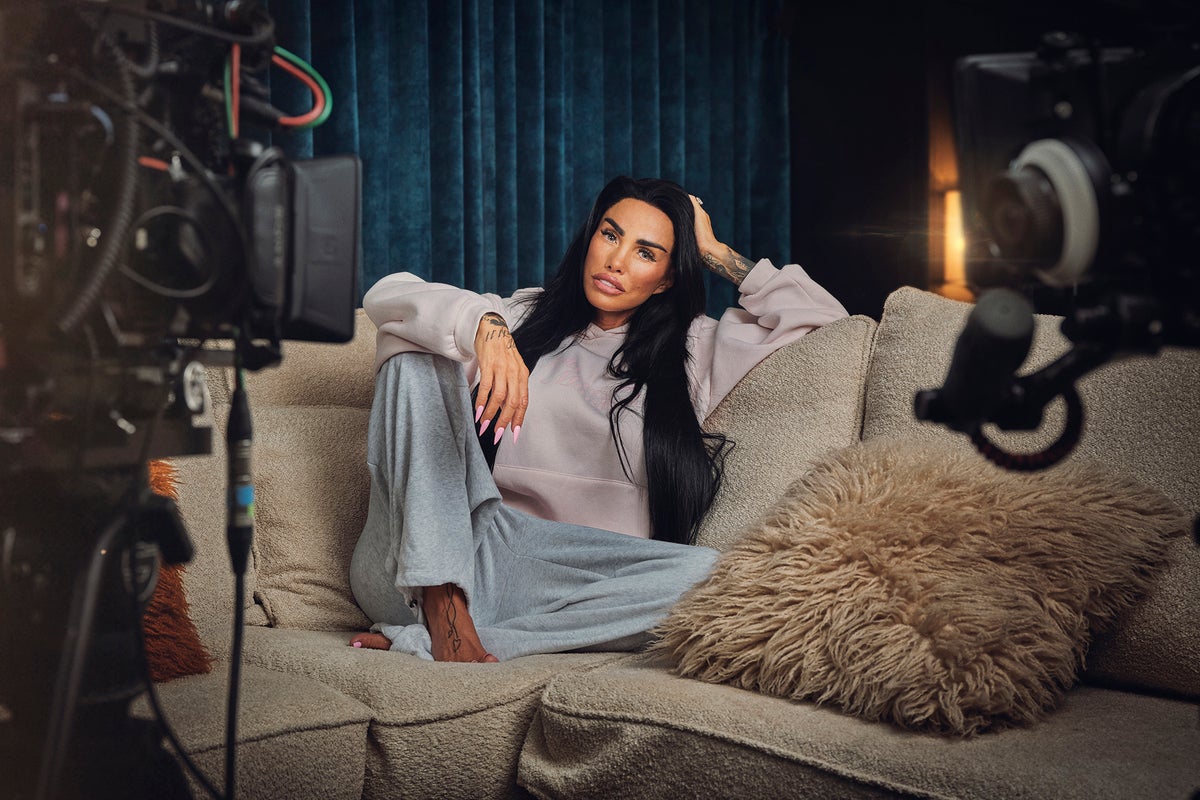
If you were writing a social history of Britain at the turn of the millennium, what image would you put on the cover? A white-shirted Tony Blair visiting troops in Iraq? That looming Big Brother eye? Or Jordan, aka Katie Price, staggering out of a nightclub, captured in the glare of camera flashes? That’s the world that new Sky documentary, Katie Price: Nothing to Hide, seeks to capture in a four-part biography of Britain’s most notorious glamour model.
Born Katrina Infield in late-Seventies Sussex, she would be known by many names. To her family, she is often “Kate”; to readers of The Sun, she was “Jordan”; and now, professionally, she is “Katie Price” (or “The Pricey”, who, as per her slogan, we should “never underestimate”). It encapsulates something of her journey from a slightly gawky child to an ambitious pin-up, and then a descent into tabloid ignominy. “It’s about time I look at what I’ve really done,” she tells viewers. She is sat on a beige sofa. Her teeth are luminous, her arms covered in tattoos, long acrylic nails protruding like claws. During the expansive, confessional interview, she vapes and snacks and muses. “I am what I am, I’ve got nothing to hide.”
This commitment to interrogating her past is aided by a roll call of important figures from her life. Her mother Amy, stepdad Paul, and siblings Dan and Sophie all appear. Former lovers like Dane Bowers, Gareth Gates and Alex Reid show up (though there is no testimony from her most high-profile romance, Peter Andre, or her current headline-grabbing husband, Lee Andrews).
Series director Paddy Wivell, known for entertaining documentaries on hard-hitting subjects like the war in Ukraine and the UK’s prisons crisis, has the sort of deep access that most filmmakers could only dream of. But usually – as with Channel 4’s recent Tony Blair documentary or Netflix’s series about David Beckham – that comes at the price of sanitising the subject.
Price might be candid (“I’m not the best looking,” she admits, “but I’m very photogenic”), but she is not especially reflective. She glosses over her bad decisions, accepting culpability without psychological interrogation. That “nothing to hide” begins to feel defensive. Admission is, after all, not synonymous with introspection.
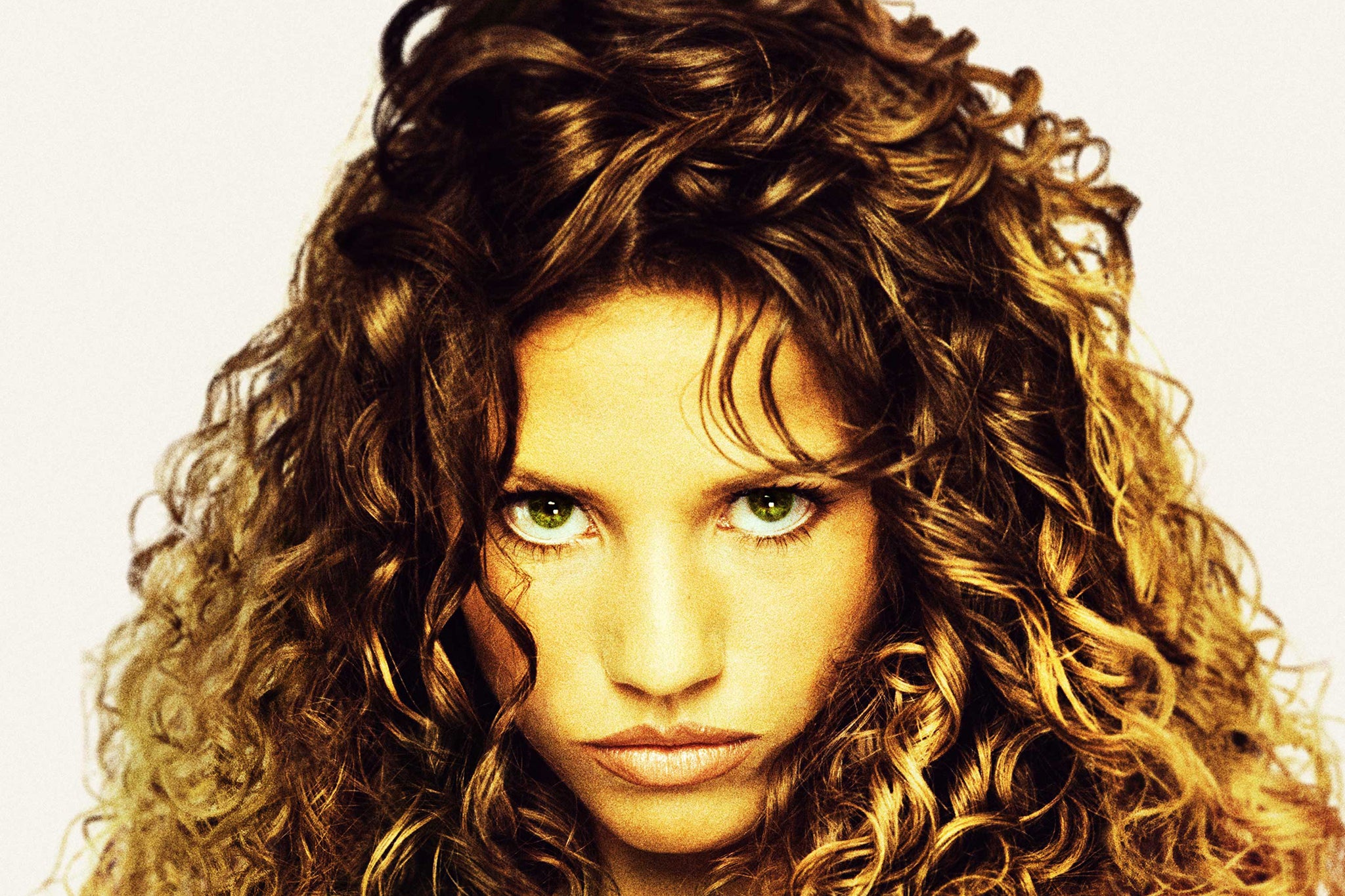
Price has always defied easy definition. She was an icon of an era where lads’ mags were a genuine cultural force in the British media. “Every bloke that worked on a building site went out and bought The Sun,” observes celebrity paparazzi George Bamby. “They didn’t buy it for the crossword; they bought it for Page 3.” And even within this subculture, Jordan, as she was then, held a place of special distinction.
Readers of The Sun were offered a vote on whether she should get a boob job (surprisingly, 80 per cent voted against it; she did it anyway), countless column inches were expended on her dalliances with footballers and pop stars, and after the birth of her son Harvey, she became a shock absorber for moral opprobrium. “DID WILD PARTYING MAKE MY HARVEY GO BLIND?” a particularly distressing headline, shown on screen, reads. “I’ve monetised my life since I was 17,” she recalls thinking. “Why would it change just because I’ve had Harvey?”
And yet, she is clearly a great mother to Harvey, who is blind, autistic and has Prader-Willi Syndrome. She claims she has raised him without the contribution, either emotionally or financially, of his father, former footballer Dwight Yorke. When she went on I’m a Celebrity… Get Me Out of Here! in 2004, she came across as sweet and funny. She shed the name Jordan and the image that went with it. But her life has proven cyclical: romantic, legal and financial issues continue to plague her.
 open image in gallery
Watch Apple TV+ free for 7 day
New subscribers only. £9.99/mo. after free trial. Plan auto-renews until cancelled.
ADVERTISEMENT. If you sign up to this service we will earn commission. This revenue helps to fund journalism across The Independent.
Watch Apple TV+ free for 7 day
New subscribers only. £9.99/mo. after free trial. Plan auto-renews until cancelled.
ADVERTISEMENT. If you sign up to this service we will earn commission. This revenue helps to fund journalism across The Independent.
The challenge for a documentary like Katie Price: Nothing to Hide lies in saying something bigger about celebrity culture in Britain, the exploitation of young girls, and how that has evolved in the internet age. From the episodes made available to critics (the third and fourth episodes were unavailable prior to broadcast), Wivell favours intimacy over grander points.
This misses a trick. “When Lady Diana died, there was a hole in the paper for things, and so Kate filled it,” reveals Jeany Savage, a legendary glamour mag photographer. But the show stops short of inspecting the forces in play during that transition to a relentlessly pornographised, voyeuristic celebrity culture. It puts the onus on its subject. And while Price is charismatic and her story full of shock value and cautionary tales, it feels like a parochial entertainment, replicating some of the leering quality of Noughties tabloid journalism, rather than the social history it might’ve been.