


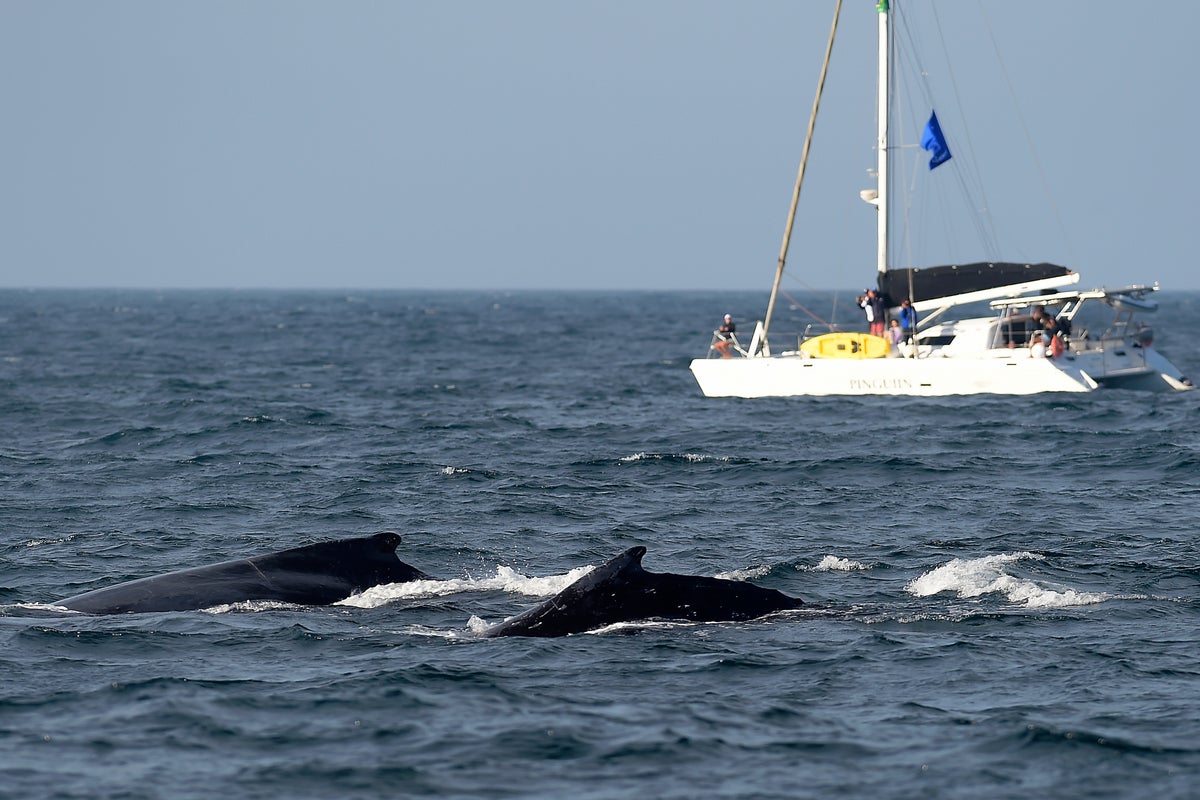
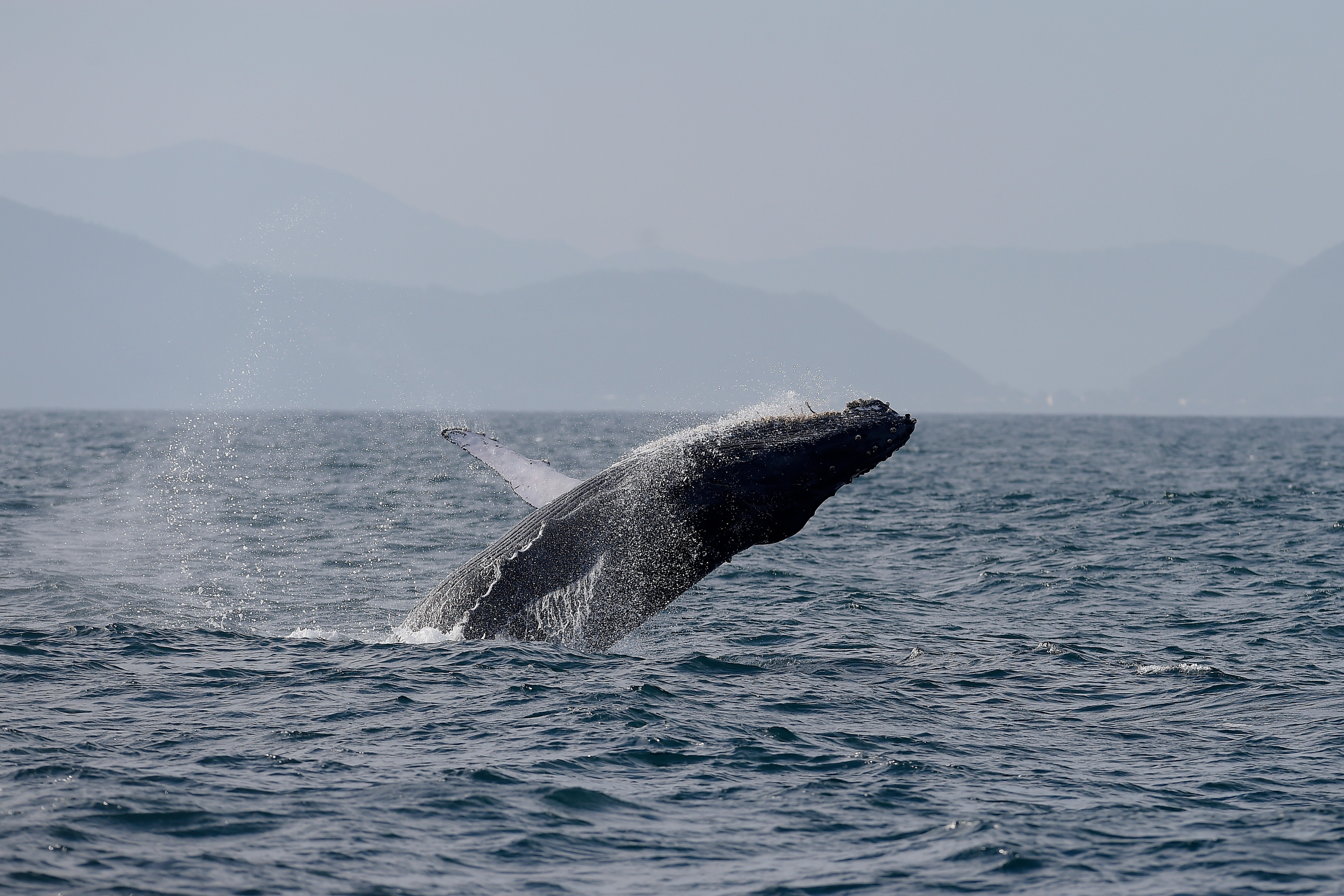
Humpback whale sightings are soaring off Rio de Janeiro’s coast, marking a remarkable comeback for a species once decimated by commercial whaling.
This resurgence has ignited a booming demand for whale-watching excursions, offering tourists a chance to witness these magnificent marine giants during their annual migration.
The species’ population has dramatically increased from an estimated 2,000 to approximately 35,000 over the past four decades, now approaching pre-whaling levels, according to Enrico Marcovaldi, co-founder of the Humpback Whale Project.
This impressive recovery means the whales are increasingly observed in Rio’s iconic Guanabara Bay. Marcovaldi expressed his enthusiasm, stating, “It’s wonderful. It shows that the whales are making a recovery, are healthy and thriving, and hopefully they’ll continue to do so.”
This powerful return follows the International Whaling Commission’s landmark 1982 decision to implement a global pause in commercial whaling for all species and populations, which took effect from the 1985/1986 season.
The whales’ presence has also spurred new tourism ventures. Louise Raulais, who co-manages the Rio Ocean Club, is among those offering unique experiences.
Her company this year began leading sailboat trips for small groups of five to 10 people to observe the whales.
 open image in gallery
Raulais emphasized that a biologist always accompanies these trips to provide information, aiming to foster a desire to protect these creatures and the ocean.
She believes these encounters are transformative: “These animals are so iconic and charismatic that they have the power to transform people, to change the way they see the world.”
Humpback whales are renowned for their extensive migrations, traversing vast distances across major oceans in predictable patterns, often learned from their mothers.
They feed on krill and small fish during warmer months and breed in tropical waters over winter.
Between June and November, thousands of humpback whales journey through Brazilian waters, traveling roughly 2,500 miles (4,000 kilometers) from their Southern Ocean feeding grounds to breeding and calving areas off northeastern Brazil.
Most of these majestic creatures gather around the Abrolhos Bank, a vital coral reef region spanning the coasts of Bahia and Espirito Santo, recognized as one of the South Atlantic’s most biodiverse marine environments.
To deepen understanding of these animals, the Humpback Whale Project has launched a scientific expedition, running from June 26 to July 9.
This mission seeks to study the whales’ behavior, size, and health, identify their travel routes and key gathering areas, and measure how far offshore they venture.
Biologist Pedro Fróes, a member of the expedition, highlighted their exploratory nature: “They’re exploring this area. They want to find out whether, in the future, it could become a place for them to rest, to mate, or to give birth to a calf.”