


Cannibalism’s taboo status in human societies may not stem from revulsion, but rather from its impact on populations, new research suggests.
Scientists from Poland and the Czech Republic, Michal Misiak of the University of Wroclaw and Petr Turecek of Charles University in Prague, employed a mathematical model to explore the phenomenon. Their findings indicate that the sustained practice of cannibalism can lead to societal collapse by causing debilitating illnesses among those who consume human flesh.
“We looked at the human body as a potential source of food, analysing both energy gains and hidden costs,” Misiak said in a statement released on Wednesday by Wroclaw University.
“From a caloric perspective, a person turns out to be an average meal … The key problem, however, lies elsewhere: the risk of infection. Pathogens have an easier task because they end up in an organism with almost identical physiology.”
Their model shows the risk of disease rises exponentially when cannibals consume other cannibals, as even cooking does not eliminate prions, or misfolded proteins, that can cause fatal neurological diseases.
One of these, kuru, was once common among the Fore people of Papua New Guinea, who cooked and ate their deceased relatives, believing they were freeing the spirit of the dead person.
 open image in gallery
The researchers said these risks probably contributed to the emergence of one of humanity’s strongest taboos, which was based at least in part on its protective function.
“Taboo acts as an evolutionary safeguard,” Misiak said. “Our results suggest that this was a biologically justified response to the growing risk of epidemics. Communities that didn’t curb cannibalism simply didn’t survive.”
A study in 2023 found that cannibalism may have been a routine burial practice in Europe about 15,000 years ago.
Researchers at the Natural History Museum (NHM) in the UK analysed remains uncovered across Europe dating to the late Upper Palaeolithic about 15,000 years ago.
The study, published in the Quaternary Science Reviews journal, found that groups of ancient Europeans across the continent who practiced funerary cannibalism carried similar genetic ancestry.
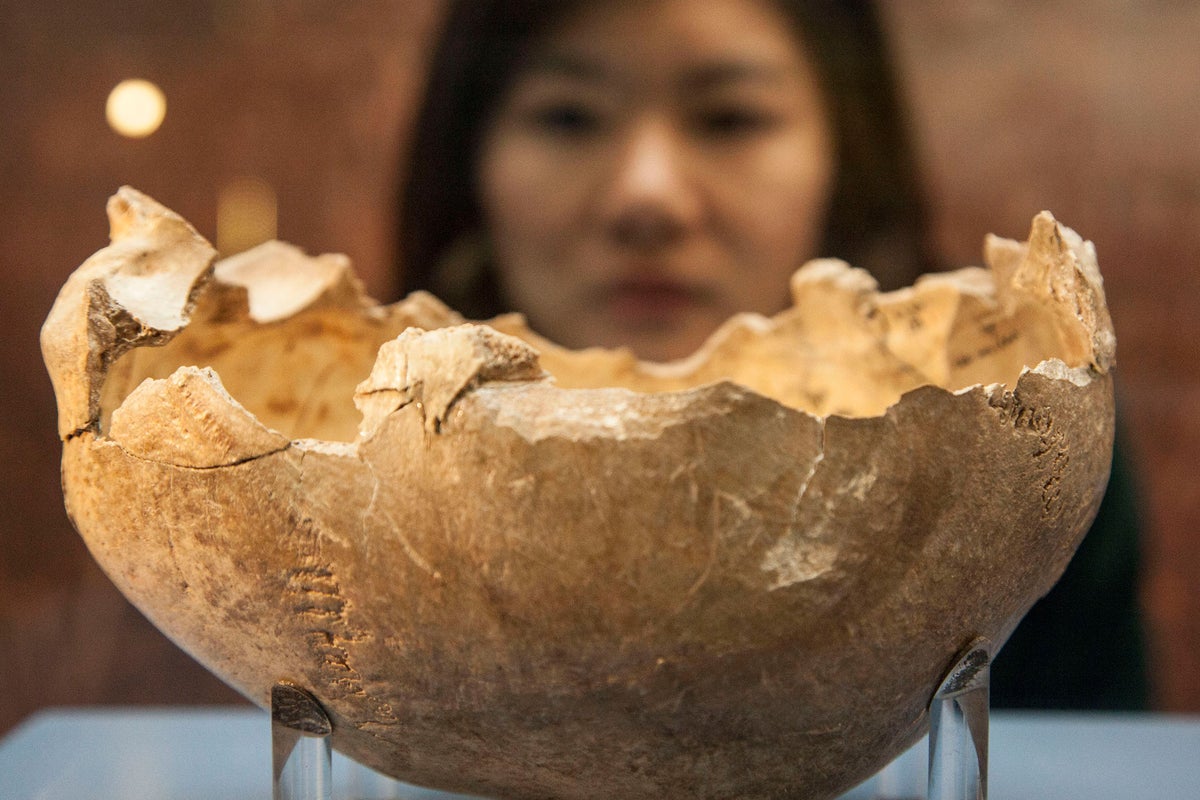
As part of the research, scientists assessed the famous Palaeolithic site Gough’s Cave in Cheddar Gorge renowned for the discovery of three manipulated human skulls into the shape of cups alongside over 100 human bone fragments modified by cut-marks, breakages, and human chewing marks.
The analysis suggests cannibalistic behaviour was seemingly common amongst Magdalenian human groups of northwestern Europe and that the discovery of cannibalism at Gough’s Cave was not an isolated incident.