


Three in four Nigerian children can’t read by age 10 — FG
June 30, 2026 8:47 pm

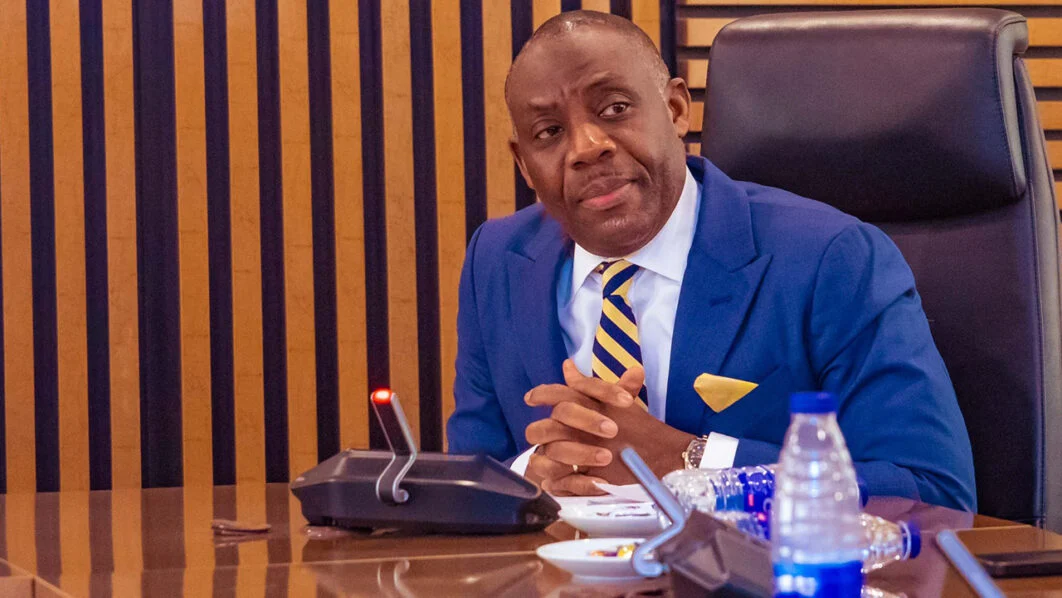
File: Education minister, Tunji Alausa
The Federal Government on Tuesday raised fresh concerns over Nigeria’s deepening learning crisis, revealing that about three out of every four children at the basic education level are unable to read and understand an age-appropriate text by the age of 10.
The Minister of Education, Dr. Olatunji Alausa, disclosed this in Abuja at the Federal Ministry of Education and Universal Basic Education Commission Roundtable Convening Meeting on Digital Resources Available to Achieving Learning Outcomes, describing the situation as unacceptable and warning that Nigeria must urgently embrace technology-driven learning to reverse the trend.
Explaining the scale of the crisis, Alausa said, “Learning poverty means that by the age of 10, a child cannot read and understand an age-appropriate text. In Nigeria today, three out of every four children are learning poor. That is simply unacceptable.”
He said the disturbing statistics underscored the urgent need to transform teaching and learning through digital technology.
“We don’t have a choice. We have to use technology. It is no longer feasible to continue to do things manually. Digital learning is the future, and we must deploy it to every part of the country, including the most rural communities.”
The high-level meeting brought together officials of the Federal Ministry of Education, the Universal Basic Education Commission, Commissioners for Education from across the states, Chairmen of the State Universal Basic Education Boards and other education stakeholders.
Alausa urged state governments to fully utilise the digital learning platforms already developed by the Federal Government.
He listed the platforms as the Nigeria Learning Passport, Inspire, Ignite, EduRevamp, E-Learn, the Greenfield Learning Management System and virtual classroom solutions, explaining that they were designed to complement classroom teaching rather than replace teachers.
According to him, the platforms provide curriculum-aligned lessons delivered by some of Nigeria’s best teachers and can help bridge the shortage of qualified teachers, particularly in Mathematics, English Language, Physics and Chemistry.
He explained that schools facing shortages of subject teachers could connect learners to live or recorded virtual lessons while allowing students to interact with teachers online and ask questions.
The minister, however, lamented the poor utilisation of the platforms despite substantial investment by the Federal Government and development partners.
He disclosed that although the Nigeria Learning Passport currently has about 2.3 million users, the figure remains insignificant compared to Nigeria’s estimated 67 million learners in primary, junior secondary and senior secondary schools.
“This is still extremely low. We have invested significant resources in these platforms. If they are not used, then it becomes a wasted investment. We cannot continue to suffer in the midst of plenty,” he said.
Alausa commended the United Nations Children’s Fund for supporting the development of the Nigeria Learning Passport, noting that the platform proved invaluable during the coronavirus pandemic and was subsequently deployed to sustain learning for children affected by insecurity and prolonged school closures.
He added that the digital resources could also improve teachers’ professional development by strengthening their digital literacy and classroom teaching skills.
The minister called on state governments to organise orientation programmes for school principals and teachers to ensure effective utilisation of the platforms while monitoring their implementation across schools.
He further disclosed that the Universal Basic Education Commission was constructing digital learning resource centres equipped with computers, smart boards and solar-powered electricity systems in schools nationwide to expand access to technology-driven education.
Earlier, the Executive Secretary of the Universal Basic Education Commission, Dr. Aisha Garba, said technology had become indispensable in building an inclusive, resilient and future-ready education system.
She said the commission had established digital learning centres in primary and junior secondary schools, deployed smart interactive boards, strengthened education data systems and introduced digital monitoring and evaluation platforms.
Garba also disclosed that the commission had inaugurated Digital Champions to drive digital transformation within the agency and support state governments in implementing education technology initiatives.
According to her, technology alone cannot transform education unless supported by effective coordination, strong partnerships, sustained capacity building and a willingness among stakeholders to embrace innovation.
She said the roundtable was designed to deepen collaboration among the Federal Ministry of Education, the Universal Basic Education Commission, state ministries of education, the State Universal Basic Education Boards and development partners to accelerate the adoption of digital learning resources across Nigeria.
Garba expressed confidence that the initiative would improve learning outcomes while advancing President Bola Tinubu’s human capital development agenda through quality education.
Nigeria has consistently ranked among the countries with the highest levels of learning poverty globally. According to the World Bank and the United Nations Children’s Fund, learning poverty measures the percentage of children who cannot read and understand a simple age-appropriate text by the age of 10. The indicator combines children who are out of school with those who are in school but have not acquired foundational reading skills.
Education experts have attributed the country’s learning crisis to chronic teacher shortages, overcrowded classrooms, inadequate funding, poor learning materials, insecurity, poverty and prolonged school closures, particularly during the coronavirus pandemic and in conflict-affected communities.
In recent years, the Federal Government, with support from development partners, has invested in digital learning initiatives, including the Nigeria Learning Passport and other virtual education platforms, to improve access to quality instruction, strengthen teachers’ capacity and ensure learning continues during emergencies. The latest push for wider adoption of these technologies forms part of ongoing efforts to improve foundational literacy and numeracy and reduce the country’s learning poverty rate.
Deborah Tolu-Kolawole is a journalist at Punch Newspapers with four years of experience covering Nigeria’s vast education sector as well as related areas such as politics, health, security, and labour. She blends rigorous reporting with digital storytelling to bring clarity and insight to complex issues affecting learners, educators, and policymakers. Deborah was a nominee for The Future Awards Africa (TFAA) Prize in Journalism, recognising her impactful reporting and contributions to Nigerian media. Her work reflects strong newsroom experience, editorial judgment, and a commitment to accurate, audience-focused journalism. In addition to her reporting, she is fluent in multiple languages and serves as a contributing member of The Punch editorial board.
All rights reserved. This material, and other digital content on this website, may not be reproduced, published, broadcast, rewritten or redistributed in whole or in part without prior express written permission from PUNCH.
Contact: [email protected]