


NHS maternity services are “no longer fit to consistently deliver high-quality, compassionate care” for all, a review has found.
Families have spoken out about how they believe they were among those harmed by failings identified in a review by Baroness Amos. She is demanding that the NHS urgently revamp maternity triage services after babies died when mothers called in with concerns which were ignored. Baroness Amos’s team interviewed 450 families and received 10,500 written responses.
Two mums have told the Mirror about the worst moment of their life in the hope that it will help prevent others going through the same experience.
 View 6 Images
Elleasha Varia with baby Keyun
Former teacher Elleasha Varia ended up losing part of her bowel and was separated from her newborn son for nine days after her concerns were dismissed.
The former teacher, now 33, had always been told she would need specialist care during any pregnancy, as she had been born with a bowel defect and needed corrective surgery in 2019. But when she became pregnant in 2021 and repeatedly asked to be referred to a bowel specialist, her concerns were brushed aside by the maternity team.
At about six months pregnant, in 2022, she developed intense pain. She said: “I told the consultant I felt like my insides were burning and ripping. They said I shouldn’t have gotten pregnant if I couldn’t handle pain.”
Her pain became so bad it was not helped by morphine – and when Mrs Varia went into Leicester General Hospital at nearly 33 weeks pregnant, she started vomiting blood. But maternity staff gave her a heartburn remedy and told her she was “stressed”.
 View 6 Images
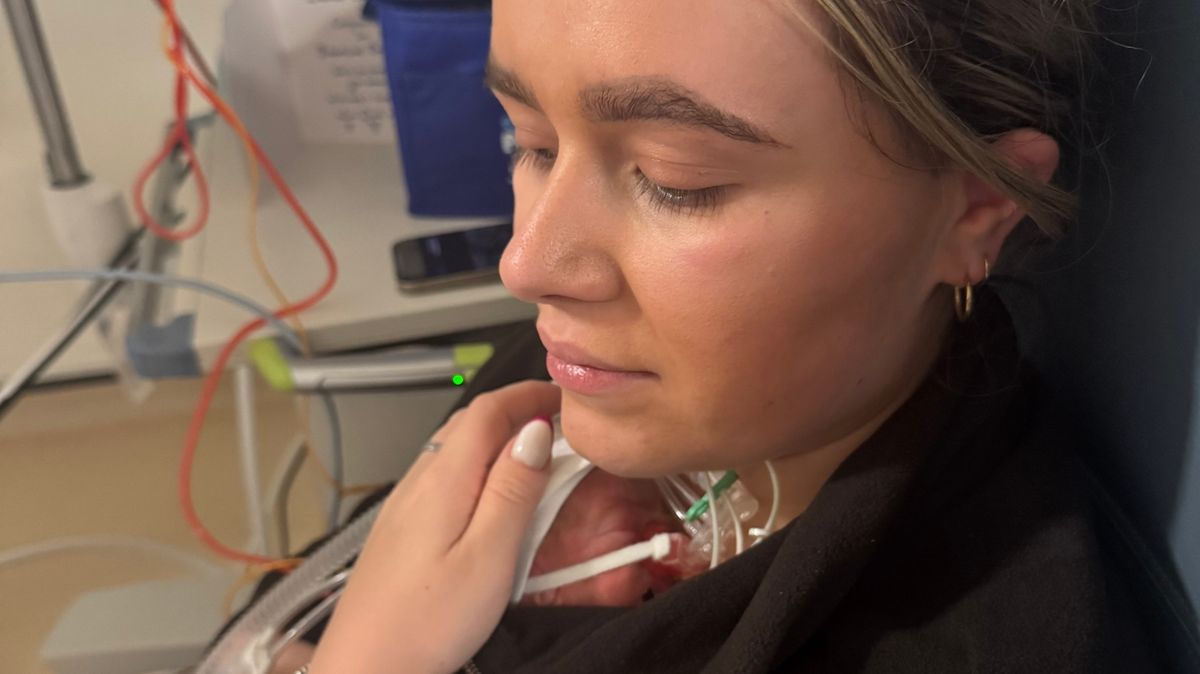
Elleasha with Keyun before he was taken away
She believed her bowel was obstructed, as it had happened in the past. But it was two days before she got an MRI scan which confirmed it.
Despite the diagnosis, she never saw a bowel doctor and had an emergency C-section at 33 weeks pregnant without any specialist supervision. The surgery perforated her bowel, meaning she spent only a minute with her baby before she was put under general anaesthetic and rushed off for more surgery.
Her son Keyun, now four, needed neonatal care as he was born prematurely. But bed shortages meant he was moved to a hospital two hours away, despite Mrs Varia pleading with staff to let him stay in Leicester, where she was receiving treatment in intensive care.
 View 6 Images
Elleasha with Keyun now
She underwent more surgeries to remove parts of her bowel which had been permanently damaged and her husband had to call her with updates about Keyun.
“I was treated like I was a vessel and once my baby was born I didn’t matter anymore,” she said. “I wasn’t included or valued in his care.”
Mrs Varia, who now works as a family support worker in neonatal care, has since had two more children but was supported throughout her pregnancies by an obstetric consultant and a bowel specialist, which meant everything went smoothly.
She added: “During my first pregnancy and birth, all my rights were stripped from me, from my right to be able to give birth with any dignity, to having my wishes respected as a mother. But my second and third pregnancies prove that, when you get the correct care, it can go well. I don’t want anyone else to go through what I went through the first time.”
Julie Hogg, Chief Nurse at University Hospitals of Leicester NHS Trust, said: “We’re very sorry for the distress and trauma Elleasha and her family experienced during her maternity care in 2022.
“Learning from Elleasha’s experience has informed changes in how care is planned and delivered for women with complex needs, as well as those in urgent or complex clinical situations where early birth and specialist intervention are required.
“We aim to keep mothers and babies together, but this is not always possible in cases where the baby or mother need specialist care.”
 View 6 Images
Chelsea with her husband and little Bonnie
Little Bonnie Thompson died last November after a series of “missed opportunities, poor communication and failures to listen” to her parents’ concerns.
Her parents Chelsea Gowar, a former business manager, 26, and Oliver Thompson, an electrician, 28, had been trying for a baby for almost two years and experienced multiple miscarriages before they found out they were expecting Bonnie.
“We were overjoyed – we thought this time everything would finally be different after so much loss,” said Miss Gowar, from Littlehampton, West Sussex.
But when she experienced severe headaches, visual disturbances and raised blood pressure around six months into her pregnancy, maternity staff at Worthing Hospital said they were symptoms of anxiety – even though these can be red flags for the serious pregnancy condition pre-eclampsia.
 View 6 Images
Little Bonnie Thompson
Over the next two weeks, she repeatedly went back saying her baby’s movements had reduced. A scan showed there was reduced blood flow to the baby – suggesting a problem with the placenta – but her case was not escalated.
Miss Gowar said: “Our concerns as parents were repeatedly minimised. I knew something wasn’t right, but I was made to feel like I was overreacting because of my history of miscarriages. It made me question my own instincts.”
When checks showed problems with Bonnie’s heartbeat, the couple were taken for an emergency caesarean at Queen Alexandra Hospital where Chelsea said staff were “patronising, dismissive and confrontational” and did not tell them when their daughter developed sepsis or had blood transfusions.
She said: “Rather than being supported as parents, we were made to feel as though our concerns were an inconvenience and we felt excluded from decisions about her care.”
Article continues below
After six weeks, Bonnie was transferred to the couple’s local hospital in Worthing. She died four days later, shortly after receiving a blood transfusion. The exact cause of her death is still being investigated.
A spokesperson for University Hospitals Sussex NHS Foundation Trust, which runs Worthing Hospital, said: “The loss of baby Bonnie is an unimaginable tragedy, and we offer our deepest condolences to Chelsea and Oliver for their loss. We will fully support the coroner in their investigations and remain in close contact with the family. We are committed to listening, learning and taking any action to ensure families today receive the safest care possible.”