


One hundred and fifty years ago, a revolution was born out of pig iron and coal within the depths of the now-picturesque South Wales Valleys.
From roaring white hot blast furnaces, the town of Ebbw Vale produced iron that made the rails for the first steam locomotive railway line in Stockton and Darlington, and then a century later the steel that holds up Sydney Harbour Bridge.
It’s even said that 40,000 bricks at the feet of the Empire State Building in New York come from near the town.
Until the 1960s, some 12,000 people worked at the town’s steelworks, once the centre of a thriving local community, with regular pay packets feeding packed cinemas and social clubs.
But roll the clock forward 50 years and where there was once the sound of churning machinery and the clash of metal, there is now, well, silence. The steelworks are gone, demolished in 2002. The surrounding coal mines, which produced 2 million tons of coal a year, closed.
The town centre, still grasping onto one of the region’s last weekly markets, features the familiar assortment of pound shops, bookies and amusements.
Even the town feels wiped off the map, with road signs seemingly absent from England, all the way up to just over 10 miles away. Ironically, the only direction marker on the M4 is a logo for the now-closed Festival Park shopping centre on the edge of town.
 open image in gallery
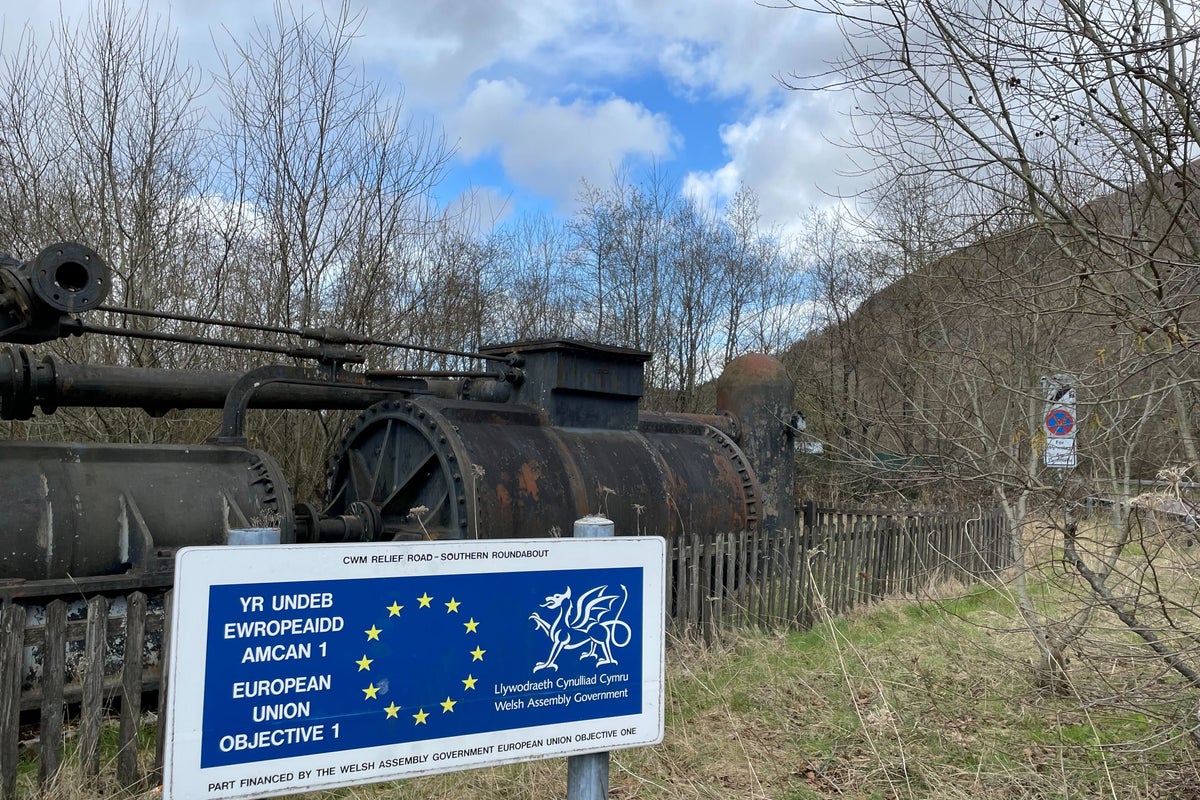
In fact, the most noticeable sign when driving in is not for the 20,000-population town but one on the European Union in front of an ironworks relic that marks the €1.9bn funding for West Wales and the Valley 20 years ago.
And it’s not the only reference to the EU.
There are many plaques and signs reflecting the showering of millions of pounds of funding on the Blaenau Gwent region.
Why then, when Britain voted in the EU referendum 10 years ago did almost two-thirds of people (62 per cent) vote Leave? It’s a conundrum many in the media have explored, including The Independent on several occasions, our last visit coming seven years ago.
But the answer is not as black-and-white as some may suggest.
 open image in gallery
“Yes, there’s been money from the EU but there’s been hardly any regeneration,” says Phill Edwards, who runs the town’s weekly market. “There’s been cosmetic surgery; new plaques, shiny new bits of infrastructure, but in terms of change supporting major growth, there’s been very little.”
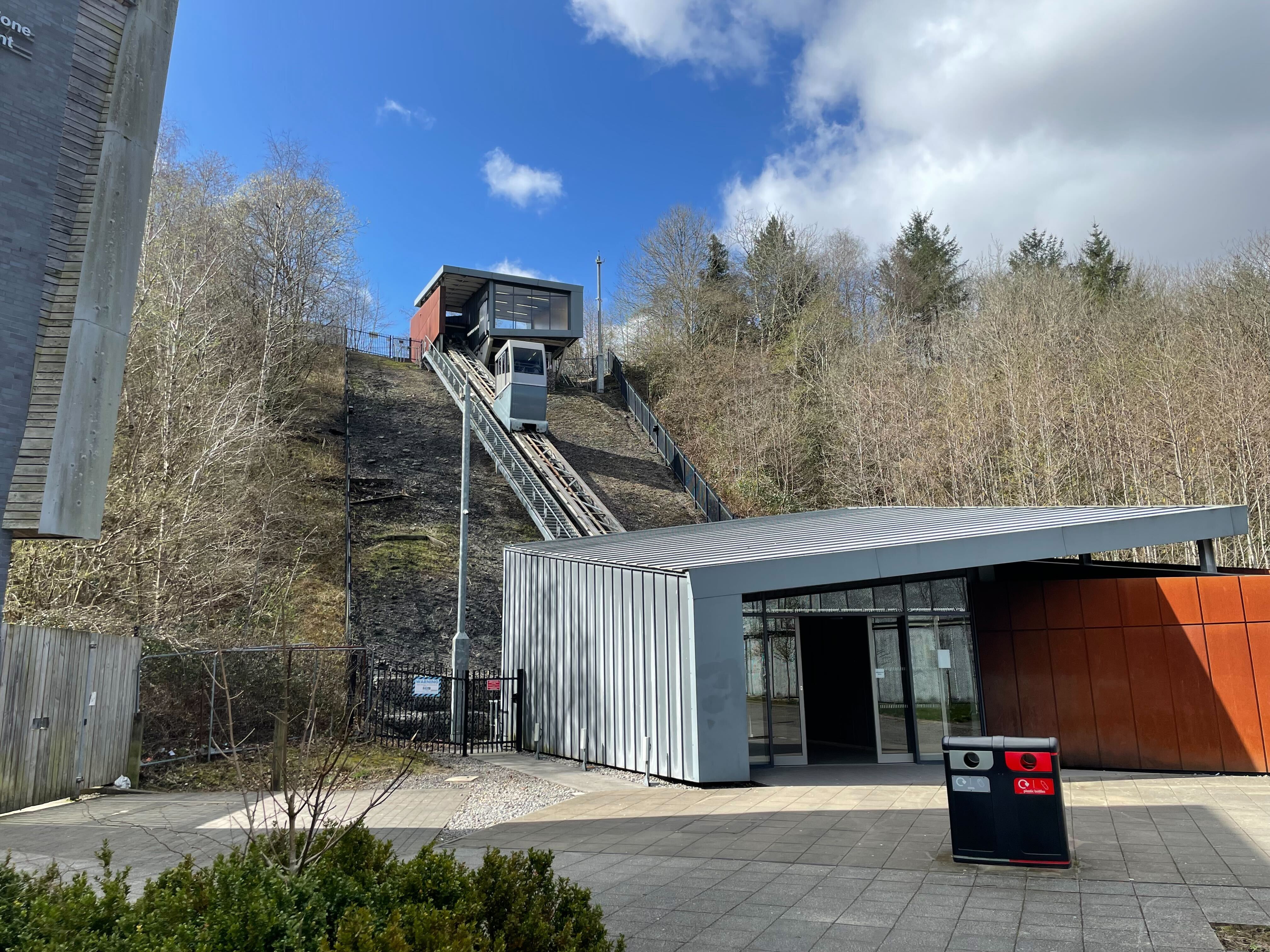
Mr Edwards is stood next to a cable car that takes pedestrians from the high street to the town’s revamped railway station and former steelworks site, where there is now a college and employment park.
The £2.3m lift, mockingly called the Stannah stairlift, along with flagship £350m regeneration of the steelworks was paid for, partly, by EU funding.
However, it has broken down hundreds of times since opening in 2015, and costs £41,000 a year to run, according to the BBC.
 open image in gallery
“Waste of money,” says Mr Edwards. “What’s wrong with a flight of stairs when money could be spent on much more worthwhile projects that really make a difference for people?
“You see, the EU money, it’s all about creating things that shine and sparkle. It’s not right to suggest we’ve turned our back on investment [by voting Leave], because for real people, it was never there.”
More than £80m of EU funding also went to the the upgrade of the A465 Heads of the Valley road, which was completed last year, and more than £8m from the EU went to reopening a railway line linking Ebbe Vale to Cardiff in 2008.
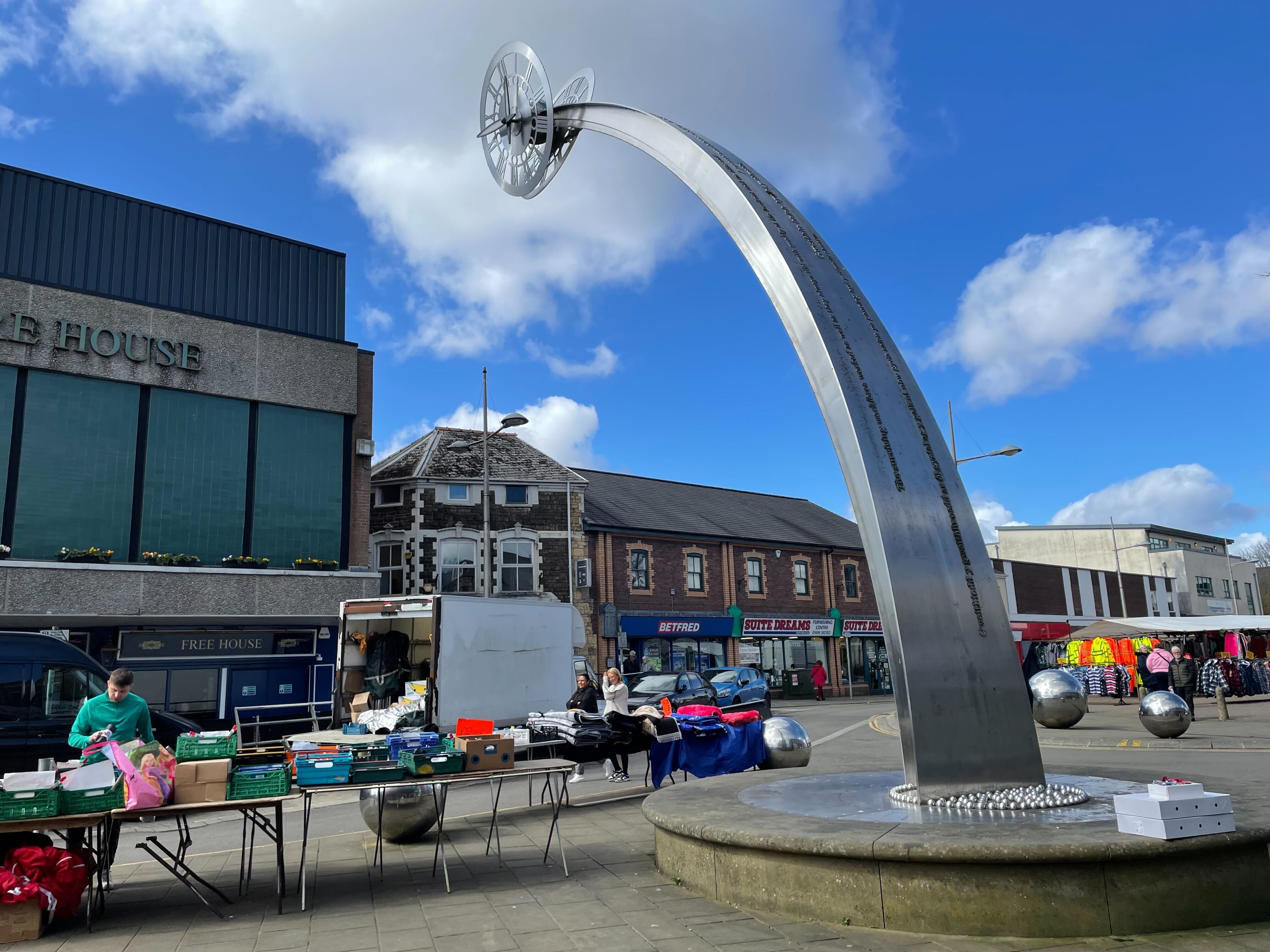
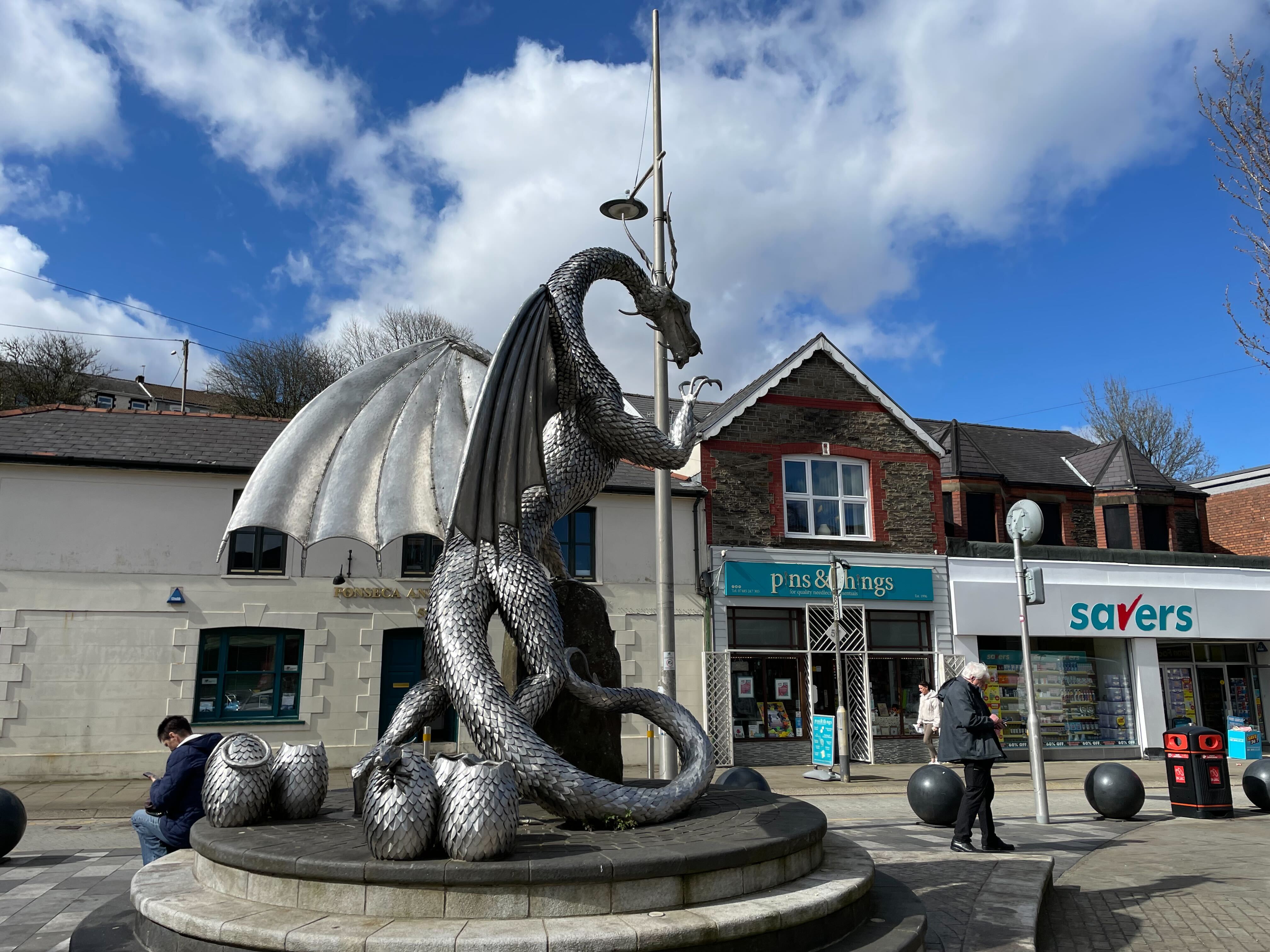
But in the town centre, locals are more likely to point out the £22,000 spent on a steel dragon on the high street, and a 11-metre high clock, called Echos, that more often described as a “cheese cutter” – both paid for through a EU-supported town regeneration project.
 open image in gallery
They sit on a pedestrianised street where there is also a Wetherspoon pub on the site of the 1939-built Astoria cinema, where a pint of Greene King IPA costs just £1.65. There’s also Wayne Grist Family Butchers and a Methodist church converted into the town’s library.
On the Friday, the town’s market is on with everything from rugs, shoes and near and past sale-by-date chocolate and sweets.
And although a strong community spirit is in view, it fails to mask the fact many here are struggling economically and physically.
According to the New Economics Foundation, Blaenau Gwent has just 7.6 job vacancies per 100 univerisal credit recipients.
Life expectancy for both men and women is among the lowest in England and Wales in the area where 31 years ago Aneurin Bevan, founder of the NHS, was MP.
 open image in gallery
Brexit, it appeared from speaking to locals, provided hope for a change.
Sweet stallholder Dominic Roberts says: “I voted because of the extra support for the NHS, but it was all broken promises. We was hoodwinked, completely.”
Paula Coleman, owner of a small gift shop on the high street, says: “I thought it was going to mean more jobs, a better standard of living. People hoped for more. It hasn’t come and now we live with it.”
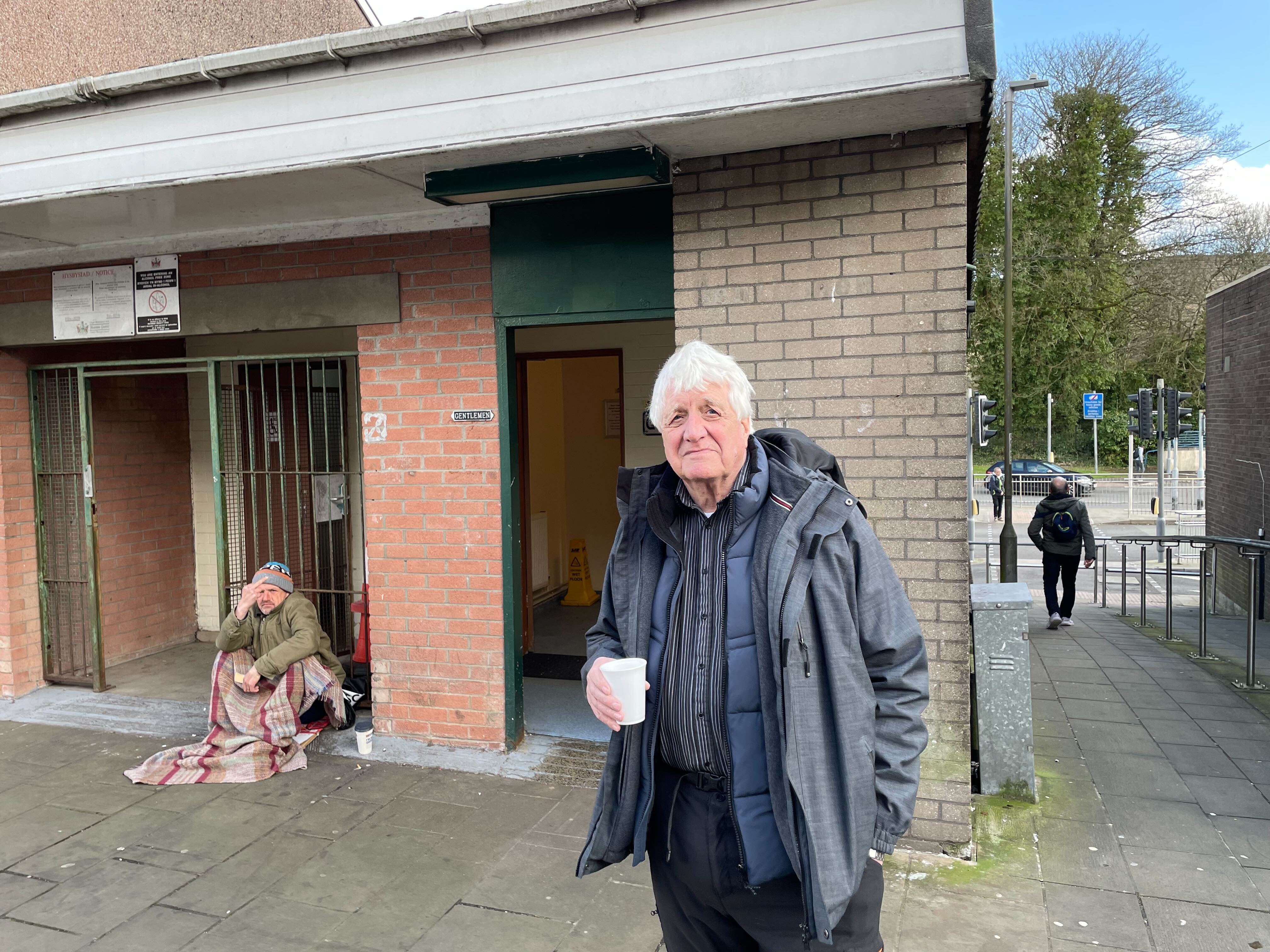
Carl Hobbs, 70, stood outside the Wetherspoon, says: “Worst thing we ever did. We had a lot of grants given by the EU. But we were fed a lot of wrong information. Told we deserved better.”
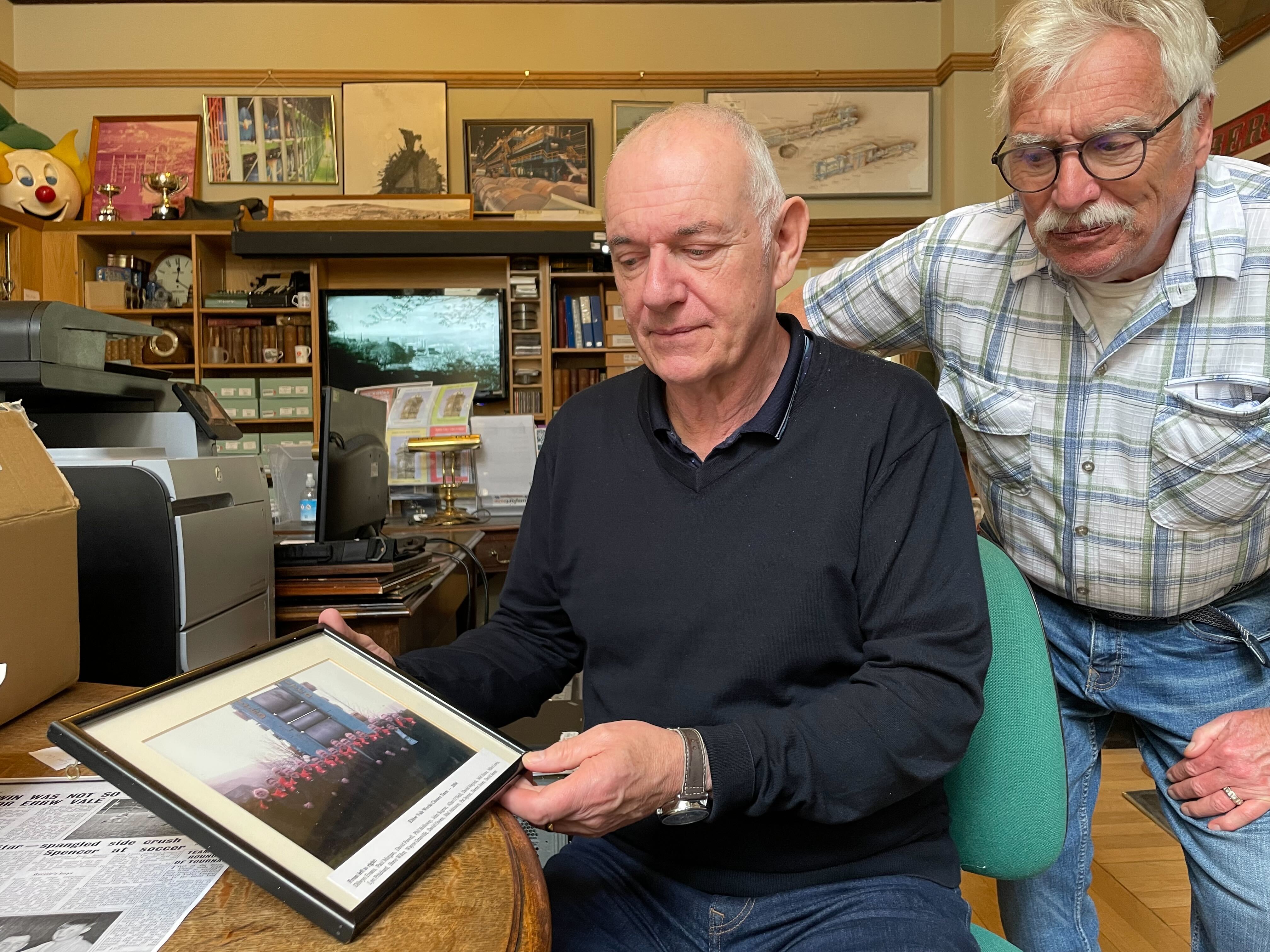
At the former steelworks site, three of the final workers at the plant are volunteers helping at the Ebbw Vale Works Museum, is located in the grand former headquarters where marble floors and internal stone arches illustrate a past golden age.
.jpeg) open image in gallery
open image in galleryAlan Waite, 73, with 35 years’ service at the plant, voted Leave because of the money, he says, was being sent to Europe.
He accepts the town received money for regeneration from the EU, but says: “Yes, that’s great, but it was nowhere near the amount of money we were sending over there.”
Roger Burchell, also 73, who worked at the steelworks for 33 years, adds: “Farage is a good talker, he said what we wanted to hear.”
A replacement for lost EU funds, rolled out in April 2022, was the Welsh government’s shared prosperity fund (SPF). No more “vanity projects”, promised the then Welsh secretary Simon Hart in 2021.
But a report by the Welsh government flagged concerns over a lack of cooperation with the UK government on the spending, with councils complaining of difficulties submitting bids.
But money has trickled through it.
Just in June last year, a new engineering campus at Coleg Gwent was opened thanks to £1.5m from the fund.
 open image in gallery
This year, it was replaced by the local growth fund, which will provide £1.5bn in grants over the nexy three years to support economic growth.
“Many hoped that Brexit would lead to money better spent, says Councillor Wayne Hodgins, an independent councillor for Brynmawr. “But it hasn’t happened here. And now you look back, and some will wonder if it was better than we did stay in the EU.
“Yes, the spending wasn’t always perfect, but there was a commitment I think we’ve struggled to get here, whether it be because of issues with the Welsh or UK governments.”
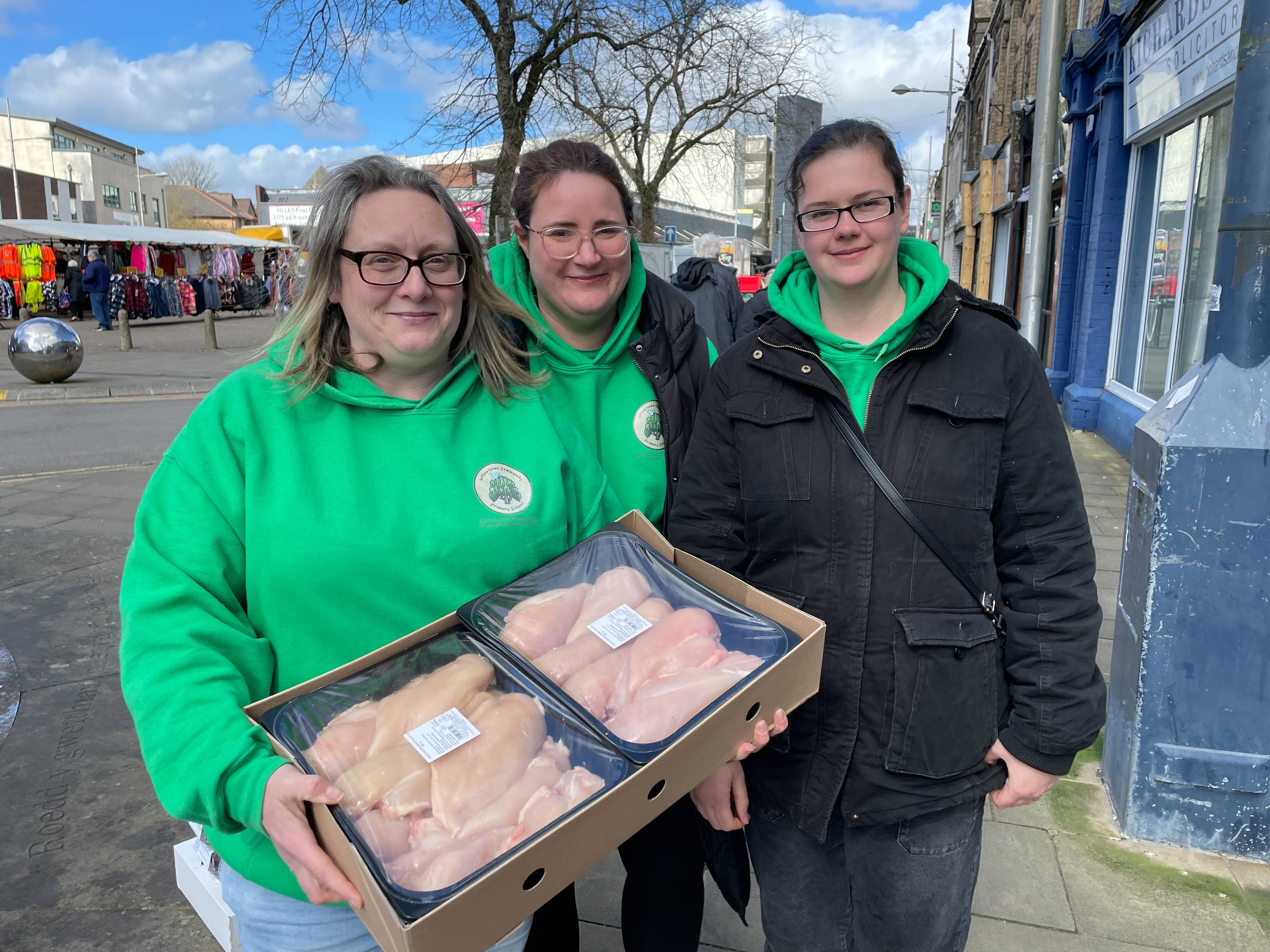
On the high street, three women laden with plastic bags of food walk quickly toward their car.
They are from the Big Bocs Bwyd Community Shop and Kitchen, and are taking donated food to cook and provide healthy meals for children at local schools, all at “pay as you feel” prices.
“We just want to believe in a better future for our town, our people,” says Emma Prosser.
“For too long we’ve been played like pawns, many have now lost interest, but we’ll never give up helping each other. And that’s what makes Ebbw Vale what it is, in Europe or outside it.”
Join the community
Sign up to our free Europe: The Way Back newsletter here or by using the form below:
What you will get by joining:
- A dedicated community: We are fully committed to the long haul, consistently campaigning to secure the absolute best deal for Britain within Europe.
- Free weekly newsletter: Every Wednesday, political editor David Maddox and political correspondent Millie Cooke will be in your inbox with exclusive reporting, analysis and insight on the biggest developments shaping relations between Britain and Europe. Each week, they will explain what’s happened, what it means, and what the key political figures, experts and decision-makers are saying about it.
- Essential continental updates: Stay informed with regular briefings on the biggest developments in European politics and the specific policies that could pave the way for closer EU relations.
There are even more benefits if you subscribe for just £1 for seven months:
- Exclusive content: Get the highest quality analysis, opinion and debate from political experts across the UK and Europe by subscribing to our premium service.
- The Brexit Effect: You’ll get exclusive access to extracts from Anthony Seldon’s major new book, The Brexit Effect, offering an unparalleled analysis of the 10 years since the referendum.
- Inform the debate: Receive exclusive invitations to live events, webinars, expert Q&As and podcast recordings.