


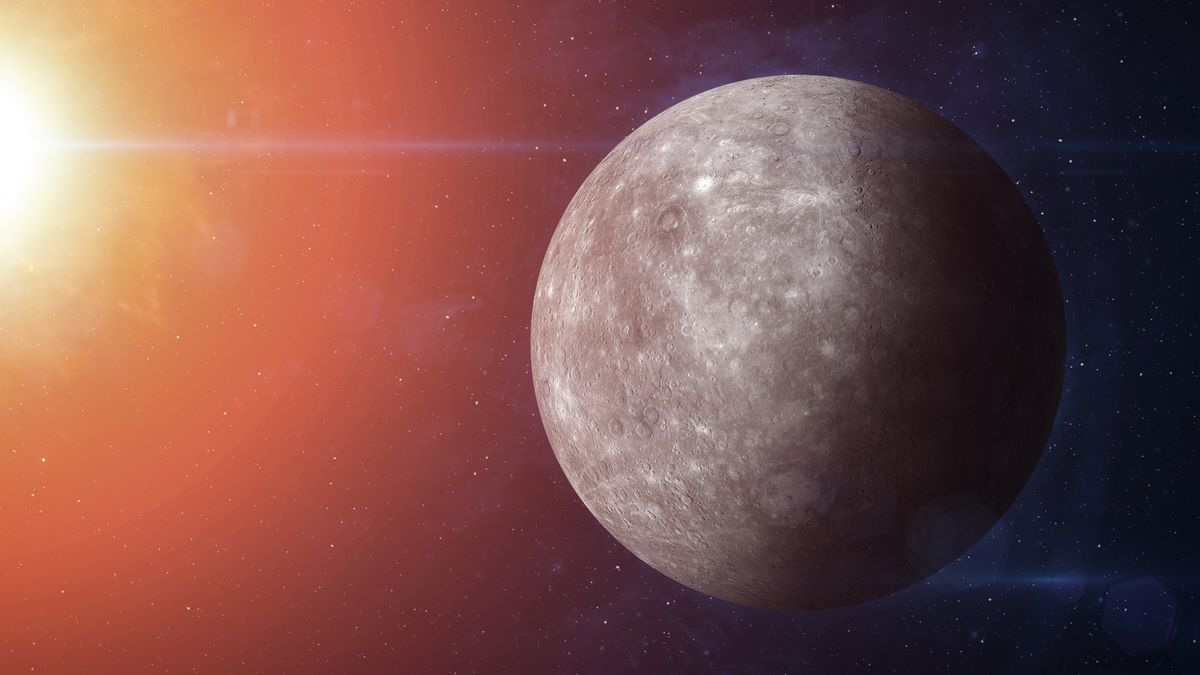
Mercury retrograde is almost upon us once again. The period, when the planet Mercury appears to move in an opposite direction from normal, is always spoken about a lot on social media, and will run from June 29 until July 23, in the star sign of Cancer.
It will give people a powerful push to reexamine their past emotional experiences and is a great time to revisit old, abandoned projects or reconnect with loved ones, but be mindful of your boundaries and avoid making drastic, impulsive life changes. As always, people are reminded to double-check the way they’ve worded texts, take extra care when they sign contracts, back up their tech, and re-evaluate their current path to see whether it aligns with where they actually want to be.
But can Mercury retrograde have an impact on your sleep as well as all of the above? It’s time to settle the debate: are these disruptions truly written in the stars, or are they fuelled by our own cosmic anxiety? Lake District hotel, Armathwaite Hall Hotel and Spa, sat down with astrologer Ryan Hunt to explore what Mercury retrograde actually entails.
“Mercury retrograde occurs when Mercury appears to move backwards through the Zodiac, said Ryan. “All planets go retrograde at some point, but Mercury and Venus, the inner planets, do so more frequently.
“To understand it, you have to know that two motions are happening in the sky at the same time: the daily east-to-west movement created by Earth’s rotation and the slower west-to-east journey of the planets through the Zodiac. These motions coexist, giving the illusion of backward motion.”
Ryan says: “In astrology, the primary influence on sleep is the Moon, not Mercury. When the Moon is full, people tend to sleep less and more restlessly. When the Moon is dark, they sleep more deeply.
“Mercury retrograde doesn’t directly impact sleep on its own. But it does interact with sleep when it coincides with lunar activity. You see the most noticeable effects when Mercury retrograde coincides closely with the Moon’s phase.
“Mercury retrograde often aligns with darker moon phases, which lean toward rest. So counterintuitively, these periods can sometimes be associated with better sleep, provided the Moon isn’t simultaneously full or near-full.”
Sleep expert Dr Lori Bohn explained that anticipation can often disrupt rest, meaning that when people anticipate the “chaos” of Mercury retrograde, it can also affect how well they sleep. “Stress levels rise, and cortisol levels remain elevated,” she explained. “That heightened cognitive and physiological arousal is what interferes with sleep quality”. Essentially, the anxiety surrounding the event creates the very restlessness people fear.
To counter this, Dr Bohn recommends these expert-backed strategies:
Regulate your rhythm
Going to bed and waking up at the same time helps regulate the circadian rhythm. She suggests a 60–90-minute wind-down: dim lights, switch off notifications and avoid stressful scrolling before settling down.
Physical relaxation
Activities like a warm shower or slow breathing activate the parasympathetic nervous system, which promotes relaxation.
Contain your worries
Write down worries two hours before bed and note a small next step for each. This signals to the brain that problems are contained, reducing nighttime rumination.
Optimise your environment
Limit caffeine after 1pm and keep your bedroom cool (ideally between 16 and19 degrees). Reserve the bed strictly for sleep and intimacy, to strengthen that mental association with rest.
Article continues below
The key takeaway? Mercury retrograde may not be the force disrupting your sleep, but the stress surrounding it could be. Paying attention to how you wind down, during this astrological period and beyond, could make all the difference.