


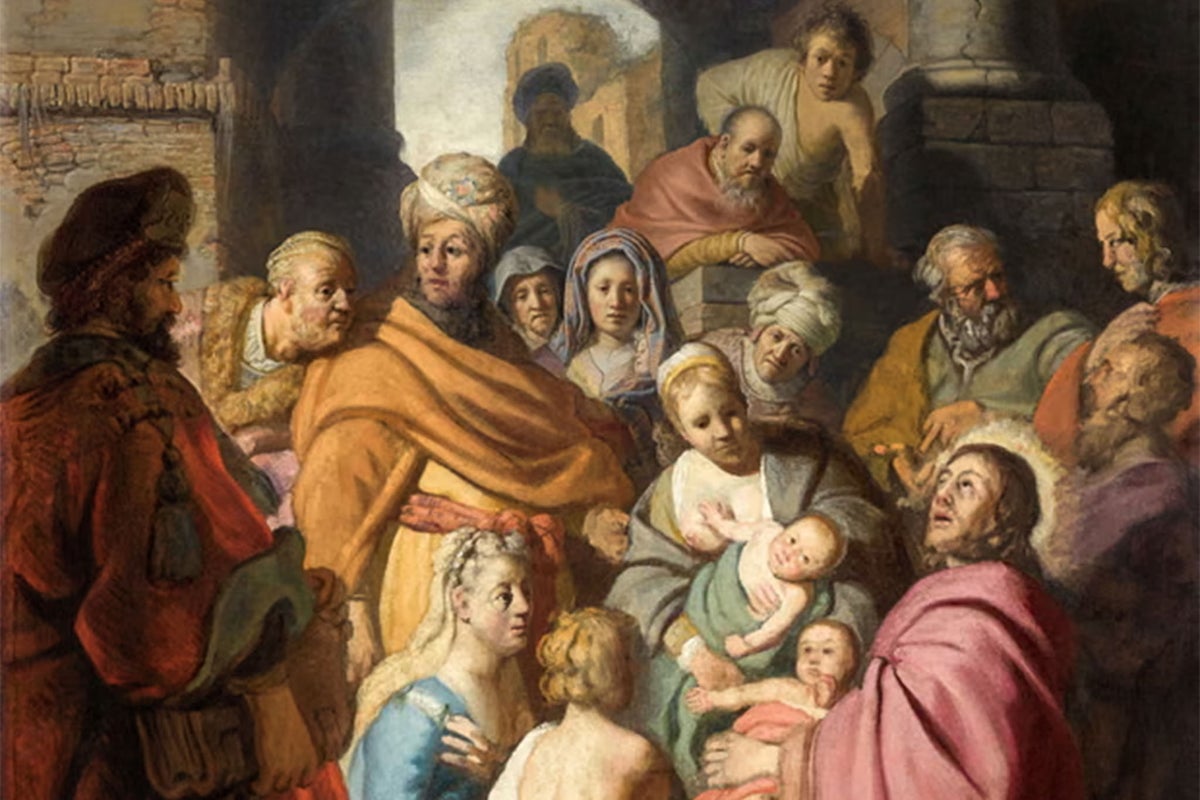
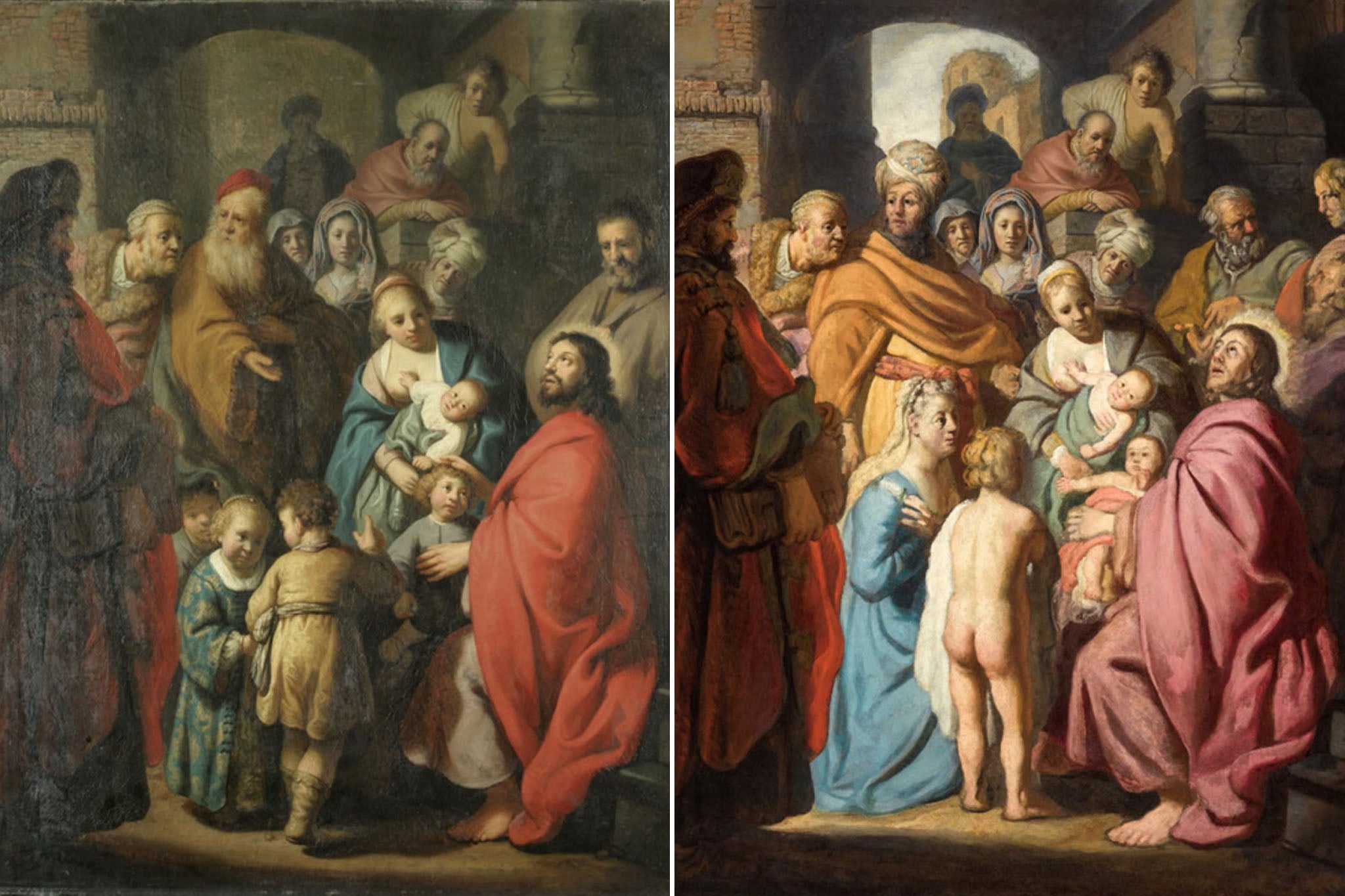
A painting by Rembrandt was altered by an unknown artist – who covered up a turban and replaced it with a Dutch cap.
The 17th-century artwork, titled Let the Little Children Come Unto Me, shows Jesus blessing a diverse group of adults and children, including people of different faiths and ethnicities.
As well as covering up the turban, the anonymous alterer also painted clothes over a child who had initially been depicted as naked. The painting has now been restored to remove the additions.
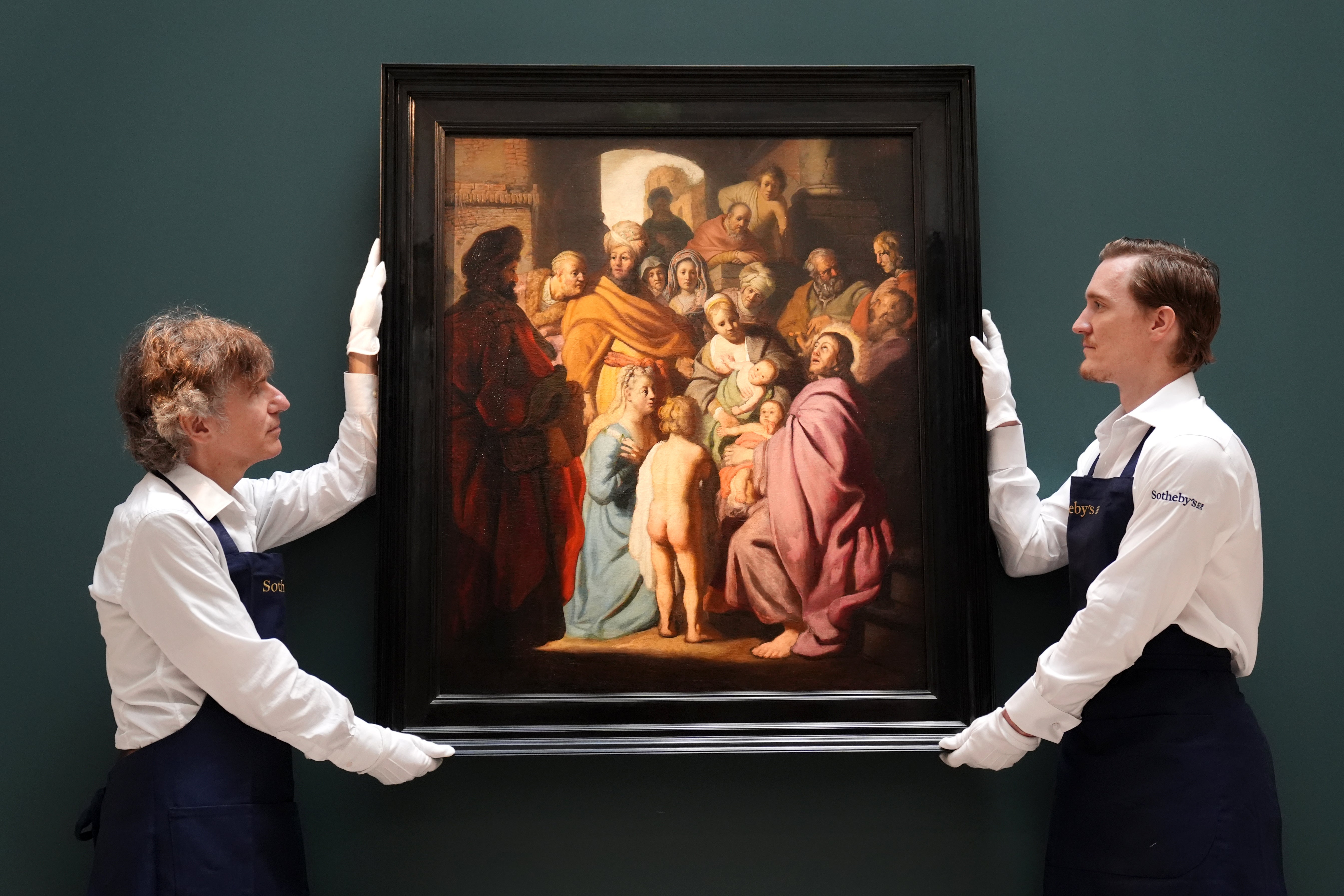
The artwork was discovered in 2014 at a German auction, where it had been listed simply as “Netherlandish 17th-century painting”. Having now been verified as a Rembrandt, it will go on auction at Sotheby’s with an estimate of £8m to £12m.
Alex Bell, the chair emeritus of Sotheby’s UK, told the Guardian: “It was made into a more traditional, conventional treatment of the subject by the later over-painting, the original having a more diverse cast of characters, including the prominent, turbaned figure in the middle.”
 open image in gallery
An art historian added that Rembrandt’s decision to depict Jesus blessing a diverse crowd would have been controversial at the time.
When he began working on the piece, large numbers of refugees were arriving in Holland, with many moving into the city of Rembrandt’s birth, Leiden.
Andrew Graham-Dixon explained: “There were people in Leiden who didn’t want to welcome them. But what we can tell from this painting is that Rembrandt is on the side of humanitarian relief … So, this is more than just a painting, I think it’s a statement of Rembrandt’s moral position.”
This is far from the first time that unwanted additions have been made to artworks.
Arguably the most famous edit ever made saw an elderly woman paint over a fresco of Jesus in a church near Borja, Spain, in 2012.
 open image in gallery
Cecilia Giménez painted over the centuries-old Ecce Homo by the 19th-century artist Elias Garcia Martinez – with her botch job going viral and being nicknamed “Monkey Christ”.
The alteration became so famous that it sparked a huge increase in the number of visitors to the church and officials say between 15,000 and 20,000 people visit Borja to see the portrait every year.
Giménez died at the age of 94 in December last year and her death was announced by the town’s mayor, who praised her for her dedication to the church.
Describing Giménez as a “great lover of painting from a young age”, Mayor Eduardo Arilla wrote in a post shared on Facebook: “Rest in peace Cecilia, we will always remember you.”