



Tech has helped us work smarter, not harder for decades: replacing paper maps with GPS, checkout workers with screens, handwritten letters with emails and customer service with AI chatbots.
But experts say the tech revolution has been detrimental for our brain health, harming our focus, memory and mental health.
“When life is too frictionless, your brain goes on autopilot, which can lead to decreased focus, memory, motivation, and overall effectiveness,” Debra Kissen, a clinical psychologist, told Everyday Health this month.
That’s partly why sociologist Kathyrn Jezer-Morton invented “friction-maxxing,” a term describing the art of reclaiming daily practices from Big Tech. Living a life with friction and inconvenience has benefits for your cognitive health and beyond.
“If people are putting in effort, it makes them more intentional and thoughtful,” Gloria Mark, a psychologist who studies human-computer interaction at the University of California, Irvine, told the BBC earlier this year.
 open image in gallery
Yes, living intentionally is often slower, more challenging and even boring. However, friction-maxxing requires more thought and intention. And being mindful reduces distractions that science has shown limit our full cognitive capacity.
That’s why experts recommend meditation to improve focus, according to the University of Florida.
There are many ways to meditate, including some that are considered friction-maxxing.
You can practice meditation while running, listening to music, drawing, folding laundry and handwashing your dishes — any activity that helps keep your mind concentrated on the task at hand.
These practices also have the ability to aid memory, including in patients with mild cognitive impairment, according to Harvard Health.
How?
Although the brain naturally loses connections between brain cells as we age, affecting our memory and the ability to process new information, taking on tasks that require effort and focus helps the brain to form new connections, health researcher Marc Milstein told The Washington Post.
“The more you deposit, the less you notice the withdrawals,” he said.
And the benefits of these tasks extend to peoples’ mental health, too.
A focused mind can help suppress feelings of anxiety and research last year from George Mason University has found better memory is tied to emotional well-being.
Older adults who wrote by hand, read aloud and did math for 30 minutes a day saw better results on cognitive tests, felt sharper and reported being less isolated, the university explained.
“Small daily actions can make a meaningful difference in brain health,” Jessica Fredericksen, Director of Brain Health at the senior care non-profit Goodwin Living, said in a statement.
 open image in gallery
Lastly, there’s evidence that tasks with friction help us to feel more fulfilled and rewarded after they are completed.
“When we make choices that seem immediately rewarding but don’t take a step back to ask if those choices are compatible with big-picture goals and values, we can get in trouble,” Emily Falk, professor of communication, psychology, marketing and operations, informatics and decisions at the University of Pennsylvania, told The Post.
“When we set up routines and environments to work with our brain’s tendency to want rewards, we can end up in a better spot,” she added.
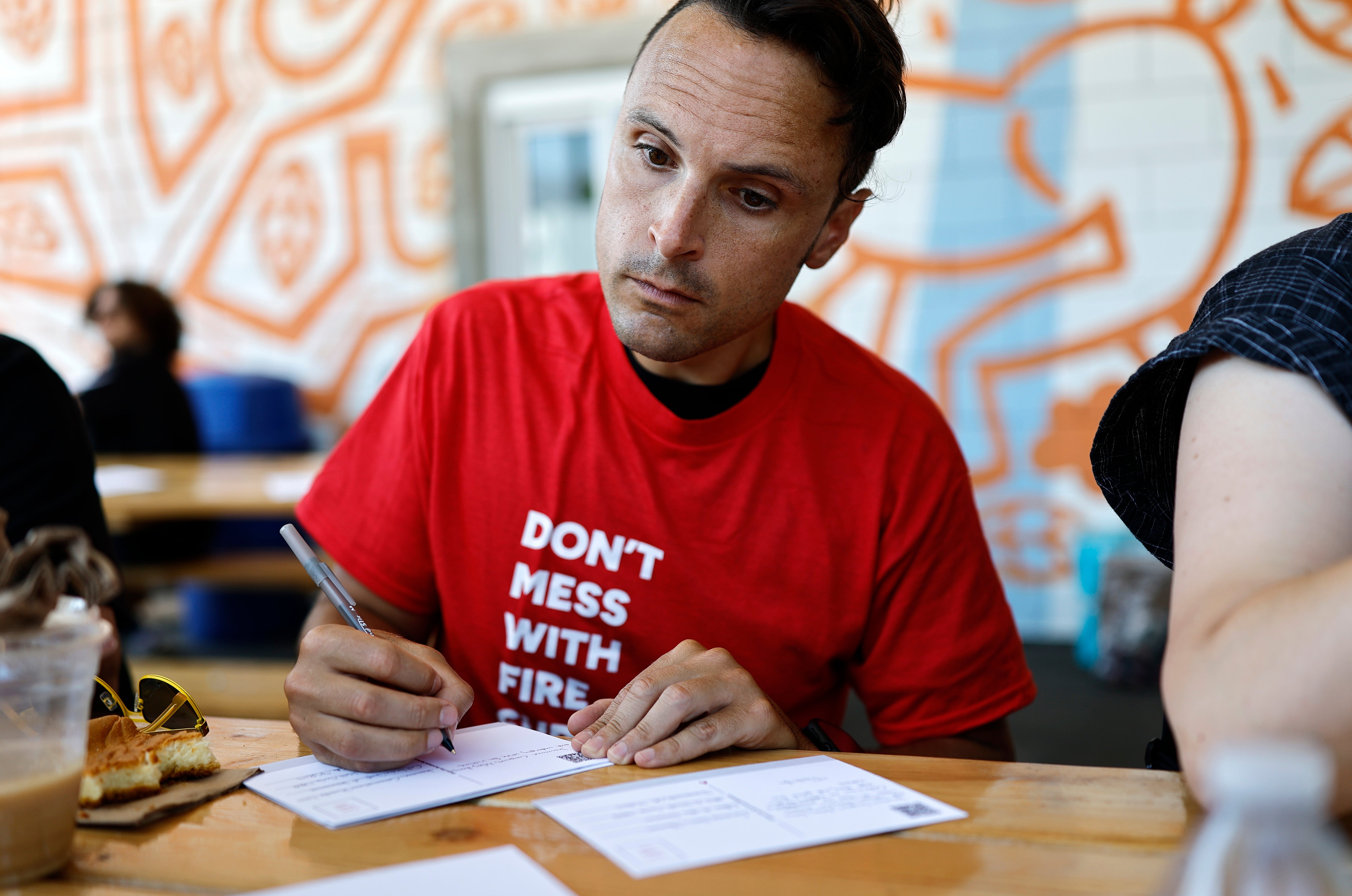
There are endless options for friction-maxxing but some easy ways to start include trying something you haven’t done in a long time due to tech.
Put down the video game controller and start that 5,000-piece puzzle. Cook your mom’s pancakes from the handwritten recipe card. Pay with cash instead of your Apple wallet. Shop small and in person,like NBA star Shaquille O’Neal, instead of ordering products on Amazon. Better yet, knit your own clothing.