


Passenger of Bedford crash says 90% of people on his carriage were injured
Teacher Brett Byatt was onboard train during incident that killed driver and left 33 people seriously injured
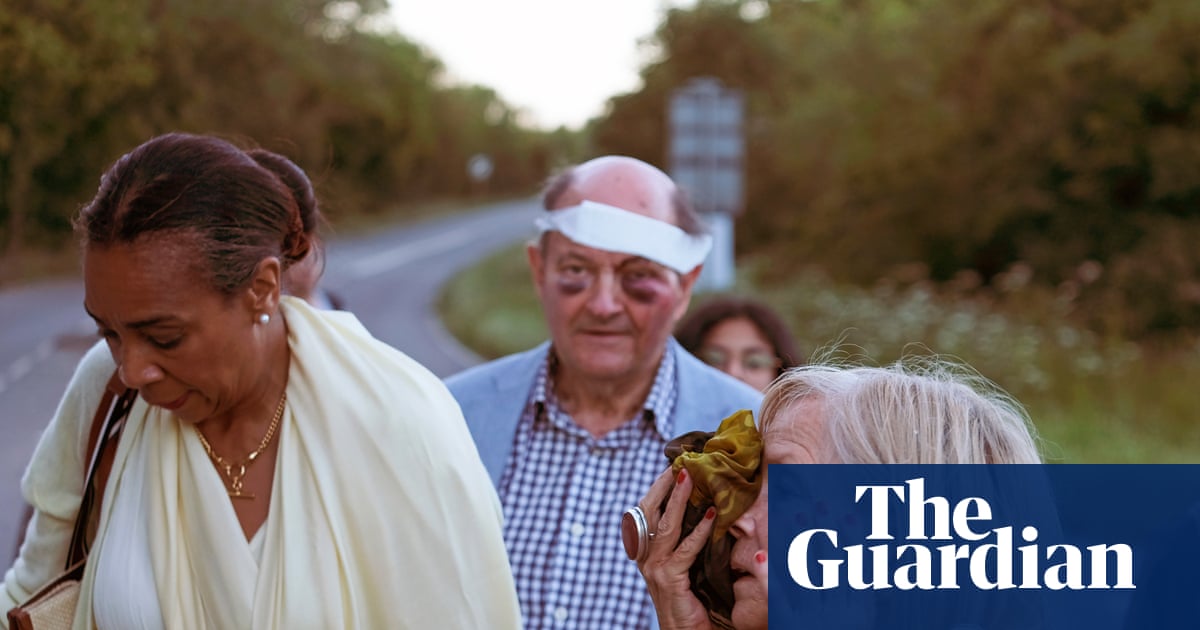
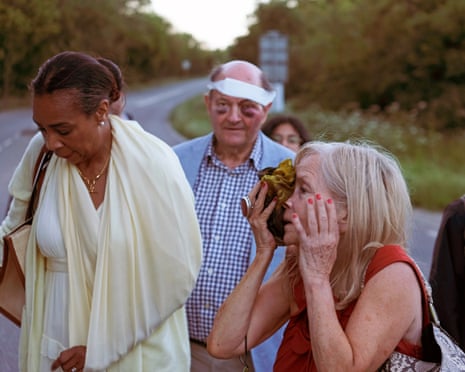
A survivor of the Bedford train crash has told how bodies were flung across the carriages, leaving people with broken bones and deep wounds after the rush hour collision on Friday night.
Brett Byatt, a teacher from Bedford, was onboard the East Midlands railway (EMR) service which rammed into another slower travelling train resulting in a crash which killed the driver, left 89 with injuries and 33 needing urgent hospital treatment.
Speaking to the BBC’s Today programme, Byatt said the train wasn’t going at full speed and estimates they were only five minutes into their journey when the collision happened.
He said: “The people in first class ended up with stomach and rib injuries, because they went into the tables they have in first class, and EMR trains, the way that they’re structured with seats, was probably the worst way it could have been structured for a train crash.
“They (the seats) face each other in the three by three and the two by three, and… when people flew into one another, the seats that they were on, like, broke backwards into the people behind them.”
Byatt, a teacher from Bedford, said he believes that 90% of passengers on his carriage were injured.
“I’d probably say from three to four of us were uninjured in a full carriage; everyone else had either a serious wound that was bleeding profusely, or a situation where they couldn’t stand, or they couldn’t move their neck, and I saw a woman snap her leg.”
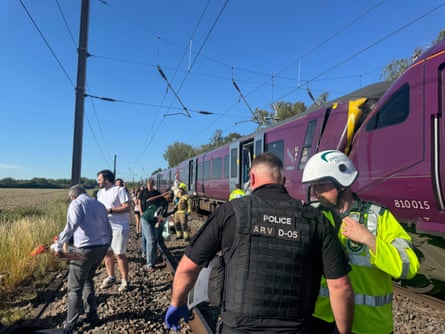
Immediately after the collision, Byatt and other passengers began attending to people with first aid until emergency services arrived 10 minutes later. He thinks he was uninjured because he was standing near the doors, clutching a stanchion.
Asked how he was feeling in the aftermath of the accident, Byatt said he initially felt shocked but is now “pretty angry”.
“I don’t know at whom, who specifically, but it’s more about the, we’ve got one of the oldest railway networks, and signal failures happen a lot, and now I’m just wondering, why would a train driver lose his life over this?”
Tony Miles, a prominent railway journalist, also told Today that the train will have a black box which will be able to tell investigators precisely what happened before the crash.
“The signal system has a data recorder, they will know every switch that was pressed, they’ll know every control that was activated in both of the trains, they will have second-by-second data from the trains as to what was going on, so I suspect that there’s probably people who’ve got a reasonable insight into what happened already, but that doesn’t mean they’ll release it,” said Miles.
Eddie Dempsey, general secretary of the National Union of Rail, Maritime and Transport Workers (RMT), said: “We are devastated to learn that a train driver and former RMT rep has tragically died as a result of (Friday’s) crash between Luton and Bedford.
“The thoughts of RMT are with their family, friends, colleagues and the Aslef trade union at this awful time.”
Dave Calfe, general secretary of the train drivers’ union Aslef, said: “Our thoughts tonight are with the family and friends of the driver who died in the crash near Bedford (on Friday) and with the passengers who were injured in the accident.
“We want to thank the emergency services who responded so quickly to help those on board.”
A team of rail accident investigation branch inspectors went to the site to gather evidence.