


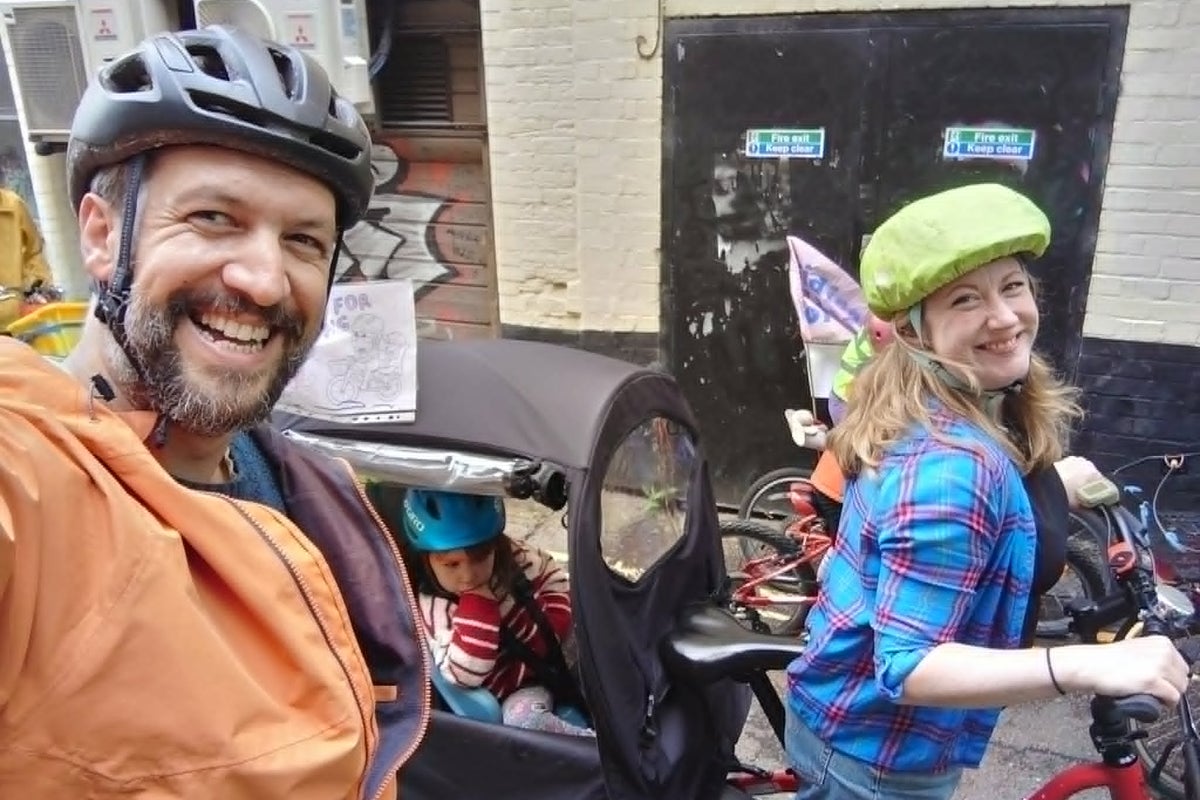
“Could we swap our car for a cargo bike?”
This was the question an exasperated Peter Fairchild asked his wife Emily after spending more than £600 to repair their 12-year-old Ford Mondeo estate, which still could not be driven in second gear.
It is a discussion that is happening – in some form or another – in an increasing number of households this year.
With no apparent let-up in the rising cost of petrol following the war in Iran, and the cost-of-living crisis continuing, many families are having to rethink how they travel – from doing the school run to dashing to the shops to going on camping holidays.
“After the birth of our child, we were using the car more and more, to the point it became routine and it felt hard to even think about stepping on a bike for everything,” says Mr Fairchild, 41, manager of the East Anglian Film Archive.
But when the repairs were needed for the couple’s car, including £600 on a new set of tyres, they bravely decided to take the plunge.
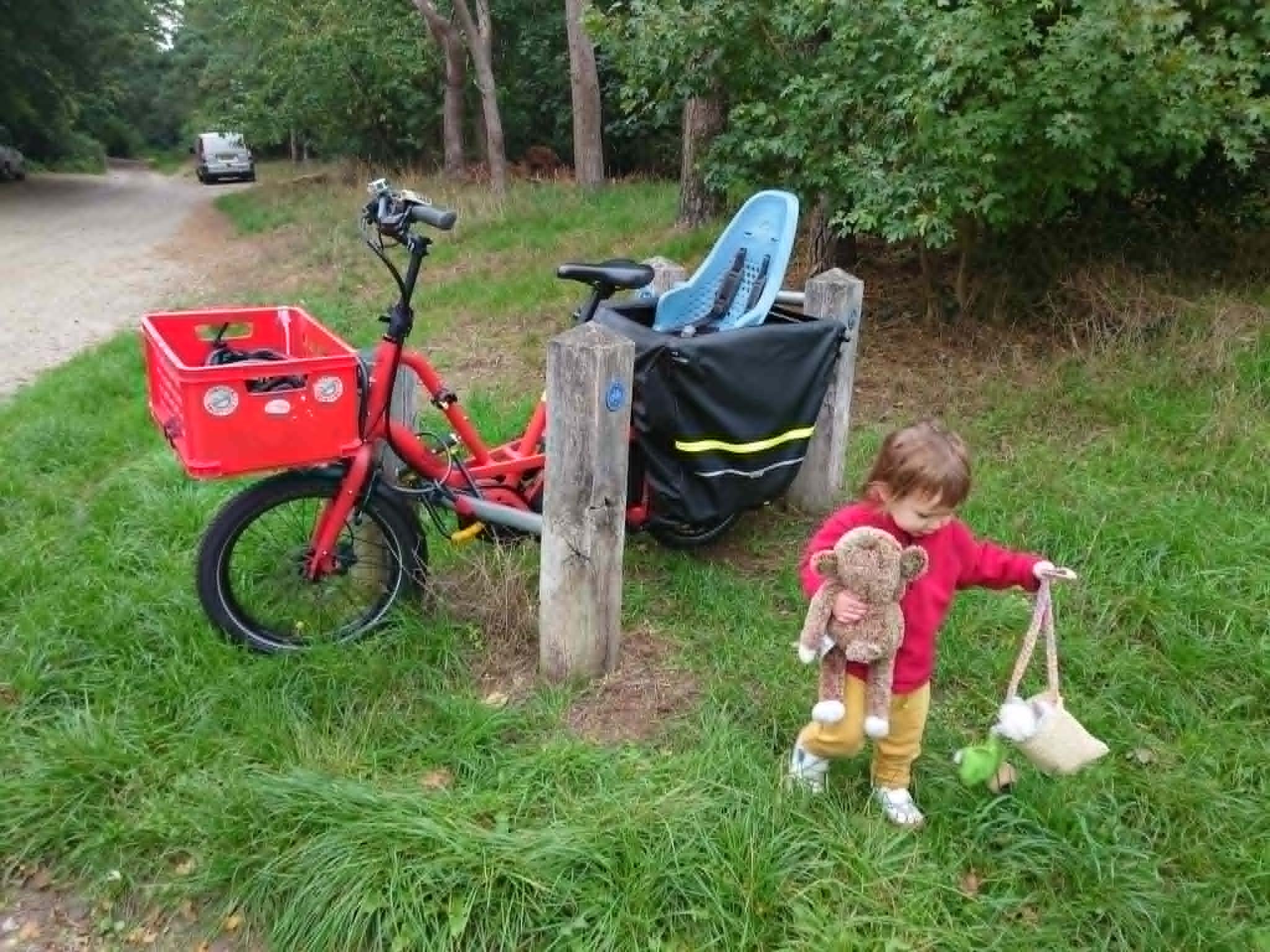
Using the government’s Cycle To Work Scheme, Mr Fairchild chose a family cargo e-bike worth £4,500, which he paid for through his salary at £250 a month.
 open image in gallery
“Before we knew it, we were using the e-bike for everything,” he says. “We’d take my daughter [Aubery] a mile to nursery, then cycle on three or four miles to work. We’d do the shopping, I’d use it to take my records to DJ sessions. We even cycled to go camping.
“That feeling of concern over leaving the car went away and very soon the car became a useless piece of metal sitting on the drive.”
After several months, Mr Fairchild decided to put the Ford Mondeo on Facebook marketplace, selling it for £600 despite the gear issue. Since offloading it a year ago, the family have rented a car just twice, and now consider themselves car-free.
Mr Fairchild believes they have cut more than £3,000 a year from their household spending through savings on petrol, car insurance and repairs.
“We were already financially tight, so that extra money gives us flexibility from being able to buy a coffee at work to making the food shop easier,” he said.
Mr Fairchild says using the e-bike had also improved his health – he’s lost three kilos in weight since starting to cycle – and has made family journeys more enjoyable. He wants other families to “take the plunge”, promising they would not look back.
 open image in gallery
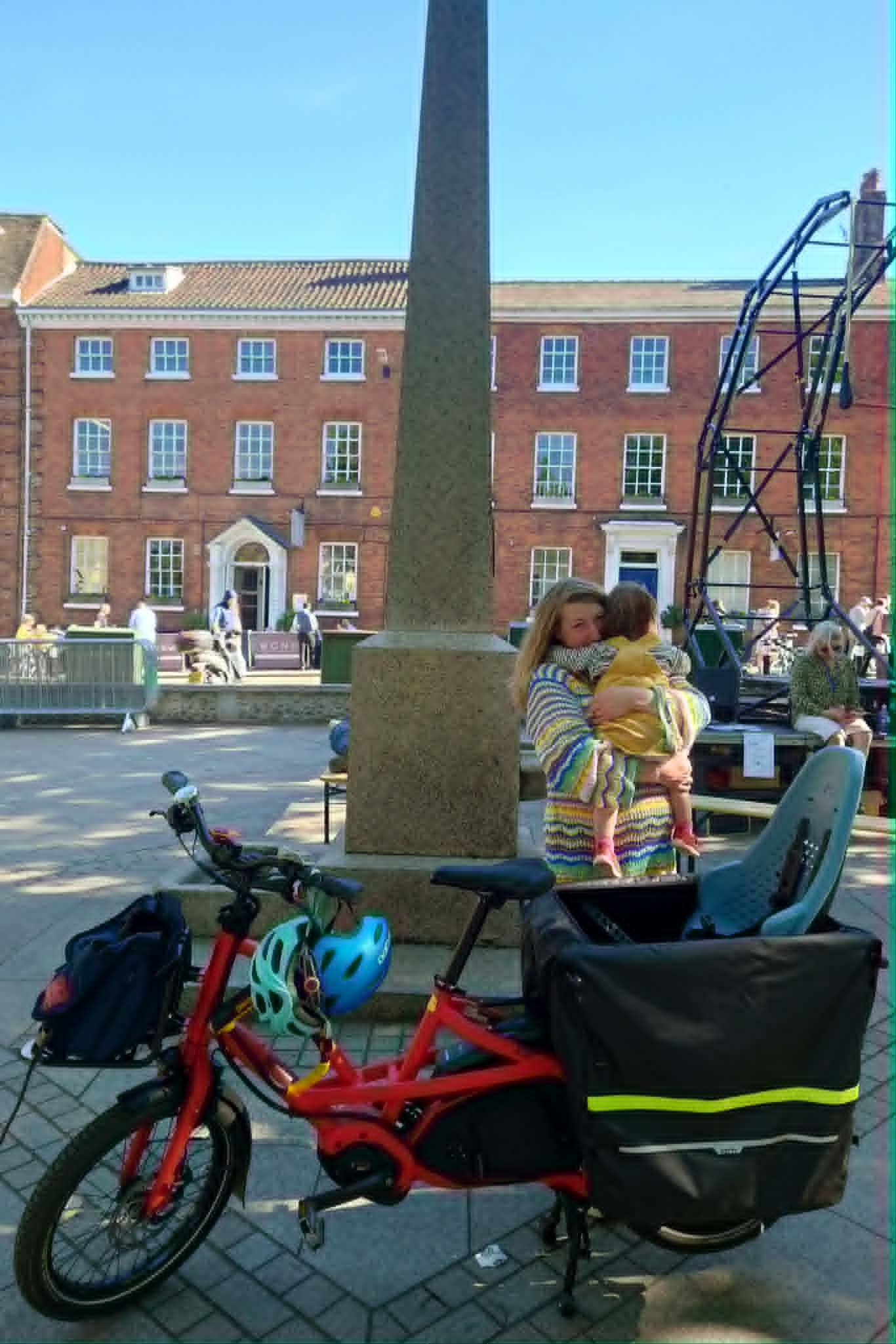
“Going around as a family is now much more fun,” he says. “We don’t stress over traffic or parking, and while we are cycling we are chatting, playing and simply being outside. Once you move into the mindset of not having a car, it is easy.”
The family are not the only ones switching to bikes. Latest data published this month by the City of London Corporation showed that the number of bikes in the capital had overtaken the number of vehicles for the first time.
However, groups like Cycling UK have called for greater focus on improving cycling routes to meet the growing demand.
Last week, the Department for Transport set a new target for more than half of short journeys in towns and cities to be walked, wheeled or cycled by 2035, with £4.5bn to be spent on active travel over the next five years.
Transport secretary Heidi Alexander said: “This is about creating healthier communities, helping households keep more money in their pockets and building a transport network that works better for everyone.”
Have you given up your car for cycling? Email your story to alexander.ross@independent.co.uk