



The Independent Money channel is brought to you by Credit Karma.
The average cost of a college education has doubled since 2000.
It’s soared to $38,270 per year for books, supplies and living expenses, making the average four-year degree a $153,000 commitment, according to analysis site Education Data Initiative.
That staggering financial toll has led to just 33 percent of Americans believing that college is “worth the cost because people have a better chance to get a good job and earn more money over their lifetime,” an NBC News poll observed in November.
For the other 67 percent, experts say there are plenty of jobs that don’t require a college education but pay $100,000 or more.
“The opportunity itself is definitely broad: in 2025 our database showed roughly 9.3 million U.S. job postings at $100,000 [or more] with no formal degree requirement, and about 93 percent of all $100,000 [or more] postings mentioned no degree requirement at all,” Jan Hendrik von Ahlen, managing director at job search site Job Leads, said in an email to The Independent. “So, the door is genuinely open.”
 open image in gallery
Making sparks
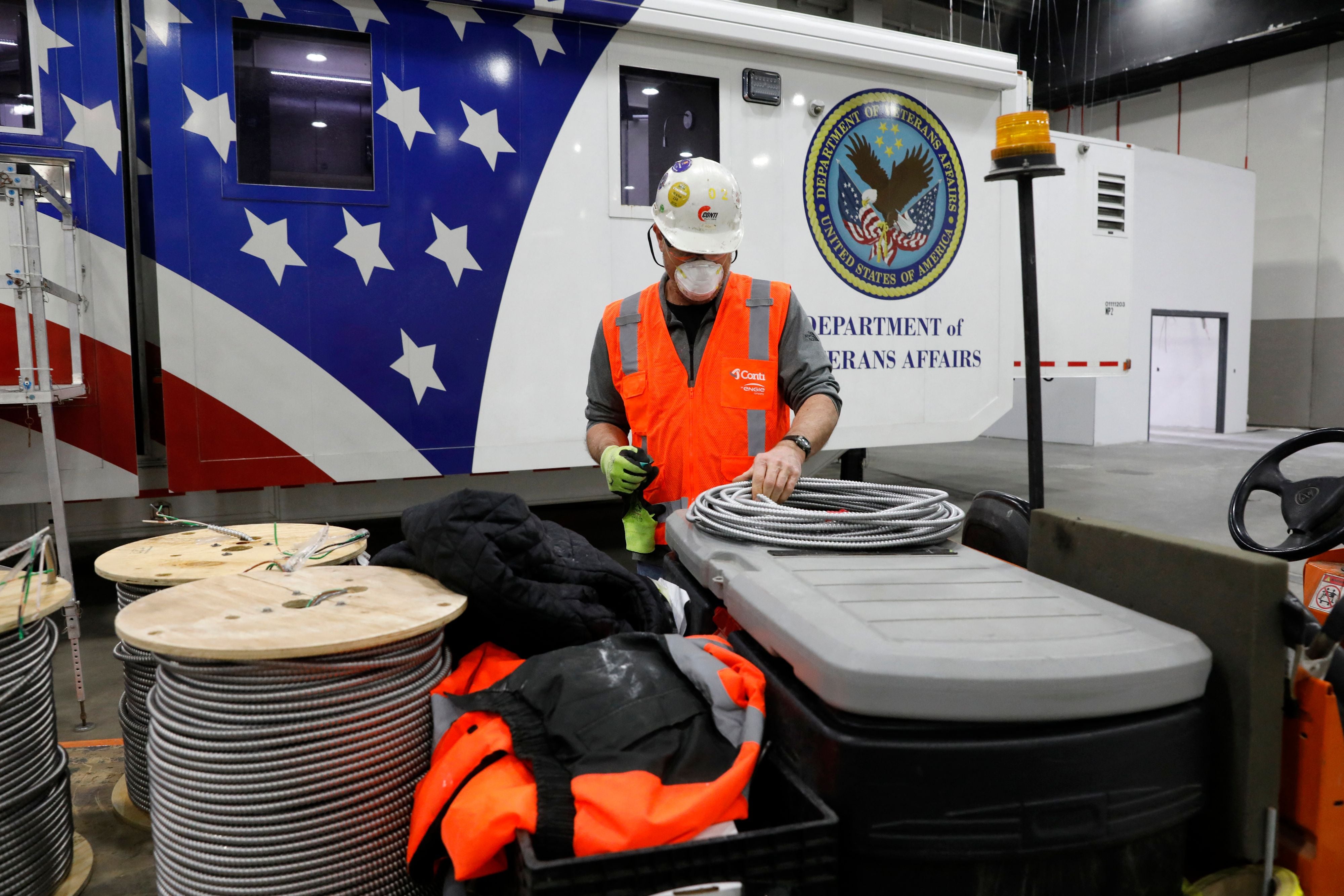
One job class that’s growing is the trades – hands-on manual labor like electricians, carpenters, plumbers and HVAC technicians, said Carl Murawski, an electrician, construction coordinator and internet personality with more than 200,000 YouTube followers.
“From what I have seen, the opportunity has increased in a lot of hands-on fields, especially as skilled labor has gotten harder to find,” Murawski told The Independent in an email. “There is still strong demand for people who can build, wire, repair, install, and maintain things in the real world. AI may change a lot of office work, but it still needs people to build the infrastructure behind it.”
An electrician is one job in the trades that doesn’t require a degree, and can pay $100,000.
It will take a few years as an apprentice and a good reputation to get a steady stream of high-paying work, Murawski said, but it’s possible.
“The median pay is lower than $100,000, but the top earners can get there, especially with licensing, overtime, union work, or commercial and industrial experience,” he said. “The benefit is that you learn a skill that follows you, and the work is hard to outsource.”
Electrician jobs are projected to grow 9 percent by 2034, according to the Bureau of Labor Statistics, which is “much faster than the average for all occupations.”
Job duties include installing, maintaining and repairing electrical power, communications, lighting and control systems, the bureau notes.
Membership in a union provides consistently higher salaries than the national average, according to Union Pay Scales, a crowdsourced wage resource for unions.
Members of the International Brotherhood of Electrical Workers can make as much as $182,500 a year in certain cities like San Francisco and San Jose, California. An apprenticeship, which is typically the paid starting role for a new electrician, lasts up to five years.
Going up
An elevator technician is another trade career that can bring in at least $100,000 a year without a degree.
It’s one of the higher-paying trade jobs, Murawski said, but like an electrician, it takes work to achieve a higher salary.
 open image in gallery
“It does require serious training, usually through an apprenticeship,” he said. “The benefit is steady demand, specialized skills, and good long-term earning potential, but it is technical work and not something you walk into overnight.”
The median pay for elevator technicians is $106,580, according to the Bureau of Labor Statistics, and job opportunities are projected to grow by 5 percent over the next eight years.
Job duties include installing, maintaining and fixing elevators, escalators, moving walkways and similar equipment.
Like electricians, union members can earn significantly more than the national average for elevator technicians. The top three cities for pay are San Francisco ($174,960), Boston ($154,520) and Honolulu ($153,860), according to Union Pay Scales.
Apprenticeships for elevator techs typically last two to five years, according to the National Elevator Industry Educational Program.
Always closing
A third job that pays well and doesn’t require a degree is commercial tech sales, said Joel Marotti, senior managing partner at career services firm Vertical Media Solutions. The path to higher pay tends to start at a sales development representative position and then peak at account executive.
“This is a really common role with a lot of opportunity, and it doesn’t really show up often in the no-degree list,” he told The Independent in an email. “But it’s one of the most reliable paths to a $100,000 or more.”
 open image in gallery
Part of the benefit of the job is that it’s tied to performance and not schooling, said workplace psychologist Tishayla Williams, founder of marketing firm TW Creative Collective.
This can be an important factor when it comes time to negotiate a raise, especially when you don’t have a degree, Williams said in an email to The Independent.
“Once a professional can point to revenue they generated, projects they led, or problems they solved, employers naturally pivot to those outcomes,” she said. “At that stage of a career, documented results become a far more powerful negotiating tool than a diploma.”
Typical duties for the position include generating leads, making sales presentations, meeting with commercial clients and closing deals.
The average pay for a commercial sales rep is $99,069, including an average bonus of $20,081, according to the Economic Research Institute. After five years, the average salary rises 14 percent to $112,528.
This article is sponsored by Credit Karma. We may earn a commission if you engage with their services using links in this article.