


The Weather Channel app now predicts bad allergy days
A new update now factors in weather conditions like wind to help you understand why you’re suddenly sneezing.
A new update now factors in weather conditions like wind to help you understand why you’re suddenly sneezing.
by Jun 11, 2026, 3:02 PM UTC Image: The Weather Company
 Andrew Liszewski is a senior reporter who’s been covering and reviewing the latest gadgets and tech since 2006, but has loved all things electronic since he was a kid.
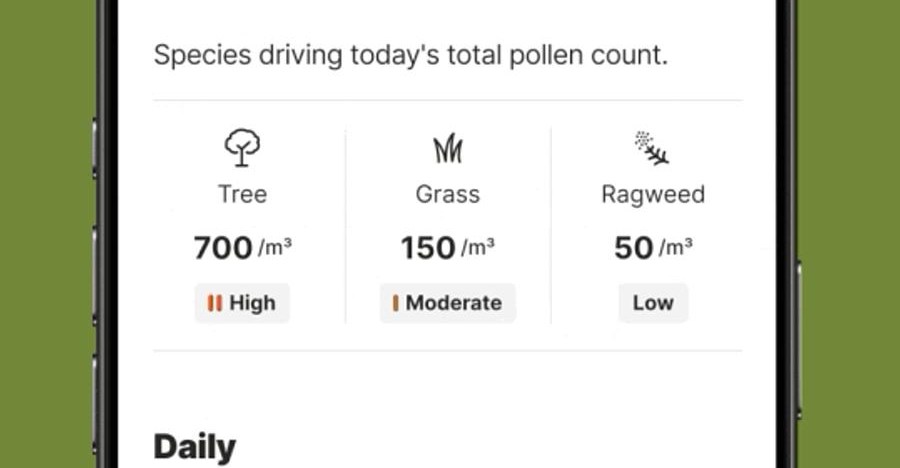
The Weather Company announced an “enhanced allergy experience” now available through its The Weather Channel app designed to help allergy sufferers better understand when their symptoms might flare up, and what’s causing them. While the app already provides static pollen counts, its “Health & Wellness” section is being expanded to take into account other factors such as how changing weather conditions could result in you experiencing more symptoms despite the counts not actually rising.
The new features now available in the free version of The Weather Channel app include “weather aggravator insights” that analyze how conditions like high winds or humidity levels can make airborne allergens feel like they’re having a greater affect, and a daily forecast of expected peak pollen levels so you’ll know when they’ll be at their highest.
Hyperlocal pollen forecasts based on your ZIP code reveal expected levels in your specific neighborhood while the app will share easy to understand graphics indicating if allergy risks are higher, lower, or the same as yesterday. Pollen tracking is also being added to the app’s five-day weather forecasts so you have a better understanding of how comfortable your week will be, and you’ll also be able to compare recent allergy forecasts to a past decade of historical pollen count data in your area.
Those paying the $4.99/per month or $29.99/year subscription for The Weather Channel app’s premium features will get even more details about allergens. Instead of the app providing vague tree pollen warnings, later this summer it will identify specific species such as cedar or oak to help you better understand what plants are actually causing your symptoms. The app will also add hourly pollen radar layers, hourly pollen forecasts for the next 24 hours, plus a symptom tracker so you can potentially correlate how you’re feeling to what’s going on outside.
Follow topics and authors from this story to see more like this in your personalized homepage feed and to receive email updates.